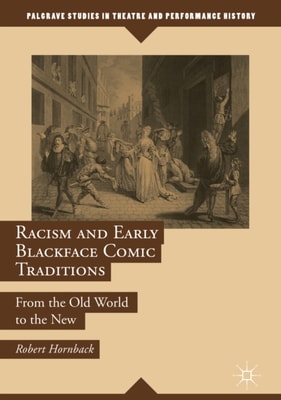
This book traces blackface types from ancient masks of grinning Africans and phallus-bearing Roman fools through to comedic medieval devils, the pan-European black-masked Titivillus and Harlequin, and racial impersonation via stereotypical 'black speech' explored in the Renaissance by Lope de Vega and Shakespeare.
This book is the first comprehensive critical assessment of the aesthetic and social ideals of Lady Augusta Gregory, founder, patron, director, and dramatist of the Abbey Theatre in Dublin.
This book analyzes recent physics plays, arguing that their enaction of concepts from the sciences they discuss alters the nature of the decisions made by the characters, changing the ethical judgements that might be cast on them.
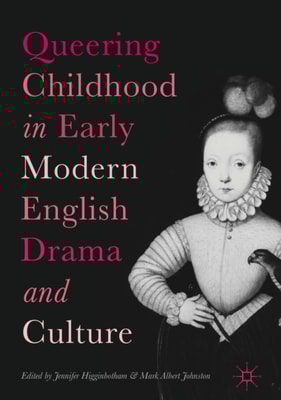
This volume analyzes early modern cultural representations of children and childhood through the literature and drama of Shakespeare and his contemporaries.
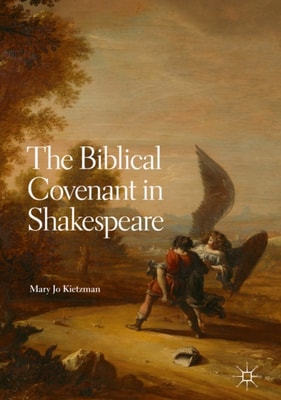
The theo-political idea of covenant-a sacred binding agreement-formalizes relationships and inaugurates politics in the Hebrew Bible, and it was the most significant revolutionary idea to come out of the Protestant Reformation.
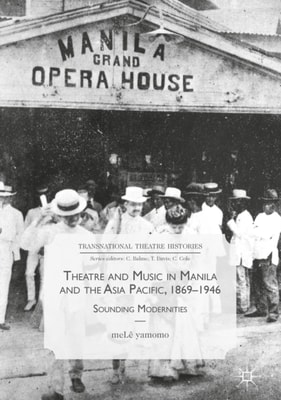
This book examines the intersection between sound and modernity in dramatic and musical performance in Manila and the Asia-Pacific between 1869 and 1948.
This book examines the trope of echo in early modern literature and drama, exploring the musical, sonic, and verbal effects generated by forms of repetition on stage and in print.
This book investigates how, alongside Beatrice Webb's ground-breaking pre-World War One anti-poverty campaigns, George Bernard Shaw helped launch the public debate about the relationship between equality, redistribution and democracy in a developed economy.
This book explores the textured process of rewriting and revising theatrical works in the Spanish-speaking Caribbean as both a material and metaphorical practice.
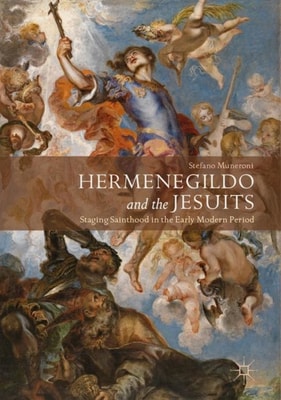
This book explores the cultural conditions that led to the emergence and proliferation of Saint Hermenegildo as a stage character in the sixteenth and seventeenth centuries.
This book offers the first broad-based survey of the way artists, audiences and society at large are making use of social media, and how the emergence of social media platforms that allow two-way interaction between these groups has been held up as a 'game changer' by many in the theatre industry.
This book theorizes the baroque as neither a time period nor an artistic style but as a collection of bodily practices developed from clashes between governmental discipline and artistic excess, moving between the dramaturgy of Jesuit spiritual exercises, the political theatre-making of Angelo Beolco (aka Ruzzante), and the civic governance of the Venetian Republic at a time of great tumult.
This book explores Bernard Shaw's journalism from the mid-1880s through the Great War-a period in which Shaw contributed some of the most powerful and socially relevant journalism the western world has experienced.
This book investigates how, alongside Beatrice Webb's ground-breaking pre-World War One anti-poverty campaigns, George Bernard Shaw helped launch the public debate about the relationship between equality, redistribution and democracy in a developed economy.
This book examines how the Cold War had a far-reaching impact on theatre by presenting a range of current scholarship on the topic from scholars from a dozen countries.
This collection of essays centres on Double Falsehood, Lewis Theobald's 1727 adaptation of the "e;lost"e; play of Cardenio, possibly co-authored by John Fletcher and William Shakespeare.
This book asserts the extraordinary quality of mid-twentieth century playwright Terence Rattigan's dramatic art and its basis in his use of subtext, implication, and understatement.
This book reveals for the first time the import of a huge network of connections between Tennessee Williams and the country closest to his heart, Italy.
This book explores the cultural conditions that led to the emergence and proliferation of Saint Hermenegildo as a stage character in the sixteenth and seventeenth centuries.
This book explores Bernard Shaw's journalism from the mid-1880s through the Great War-a period in which Shaw contributed some of the most powerful and socially relevant journalism the western world has experienced.
London West End revue constituted a particular response to mounting social, political, and cultural insecurities over Britain's status and position at the beginning of the twentieth century.
This book focuses on the re-evaluation of four Maxwell Anderson plays within the context of the emergence of the New Woman and the perception of a marriage crisis in the United States during the 1920s.
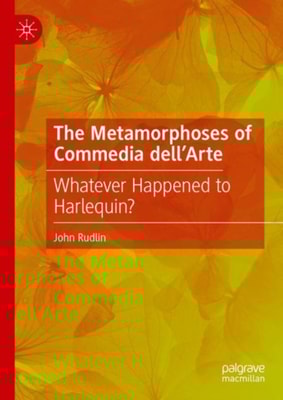
The Metamorphoses of Commedia dell'Arte traces the steps by which Commedia has been transformed by cultural contact outside Italy into popular forms which bear little resemblance to the original.
Shakespeare and Digital Performance in Practice explores the impact of digital technologies on the theatrical performance of Shakespeare in the twenty-first century, both in terms of widening cultural access and developing new forms of artistry.
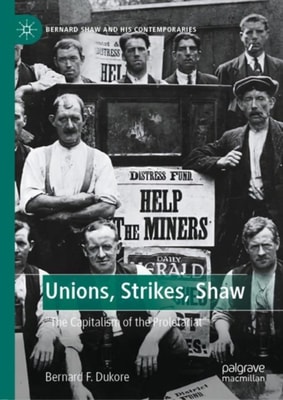
Unions, Strikes, Shaw: 'The Capitalism of the Proletariat' is the first book to treat Bernard Shaw-socialist, dramatist, public speaker and union member-in relation to unions and strikes.
This book explores, through a multidisciplinary approach, the immense influence exerted by Bernard Shaw on the Spanish-speaking world on both sides of the Atlantic.
The shift in temporal modalities of Romantic Theatre was the consequence of internal as well as external developments: internally, the playwright was liberated from the old imperative of "e;Unity of Time"e; and the expectation that the events of the play must not exceed the hours of a single day; externally, the new social and cultural conformance to the time-keeping schedules of labour and business that had become more urgent with the industrial revolution.
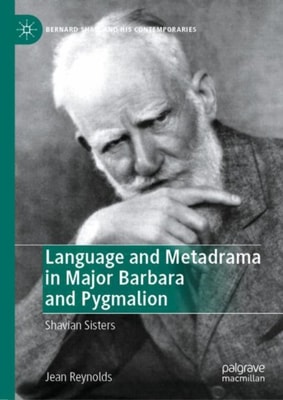
This book focuses on two important topics in Shaw's Major Barbara and Pygmalion that have received little attention from critics: language and metadrama.
This is the first book to view Shakespeare's plays from the prospect of the premodern death arts, not only the ars moriendi tradition but also the plurality of cultural expressions of memento mori, funeral rituals, commemorative activities, and rhetorical techniques and strategies fundamental to the performance of the work of dying, death, and the dead.