This book considers the influence that sixteenth-century and early seventeenth-century mathematical thinking exerted on the writing and production of popular drama between about 1587 and 1603.
This book is notable for bringing together humanist schooling and familial instruction under the banner of emotions and for studying seminal works of early modern literature within this new analytical context.
In Sex, Class and the Theatrical Archive: Erotic Economies, Alan Sikes explores the intersection of struggles over sex and class identities in politicized performances during key revolutionary moments in modern European history.
This textbook provides a global, chronological mapping of significant areas of theatre, sketched from its deepest history in the evolution of our brain's 'inner theatre' to ancient, medieval, modern, and postmodern developments.
This book revisits In-Yer-Face theatre, an explosive, energetic theatrical movement from the 1990s that introduced the world to playwrights Sarah Kane, Martin McDonagh, Mark Ravenhill, Jez Butterworth, and many others.
In the first book-length study of the work and legacy of West End actor-manager George Alexander since the 1930s, George Alexander and the Work of the Actor Manager examines the key part this figure played in presenting new drama by authors including Oscar Wilde and Henry James.
This book explores, through a multidisciplinary approach, the immense influence exerted by Bernard Shaw on the Spanish-speaking world on both sides of the Atlantic.
The shift in temporal modalities of Romantic Theatre was the consequence of internal as well as external developments: internally, the playwright was liberated from the old imperative of "e;Unity of Time"e; and the expectation that the events of the play must not exceed the hours of a single day; externally, the new social and cultural conformance to the time-keeping schedules of labour and business that had become more urgent with the industrial revolution.
This book details the Irish socialistic tracks pursued by Bernard Shaw and Sean O'Casey, mostly after 1916, that were arguably impacted by the executed James Connolly.
Shakespeare and Digital Performance in Practice explores the impact of digital technologies on the theatrical performance of Shakespeare in the twenty-first century, both in terms of widening cultural access and developing new forms of artistry.
This book traces blackface types from ancient masks of grinning Africans and phallus-bearing Roman fools through to comedic medieval devils, the pan-European black-masked Titivillus and Harlequin, and racial impersonation via stereotypical 'black speech' explored in the Renaissance by Lope de Vega and Shakespeare.
This book presents new insights into the production and reception of Irish drama, its internationalisation and political influences, within a pivotal period of Irish cultural and social change.
This volume analyzes early modern cultural representations of children and childhood through the literature and drama of Shakespeare and his contemporaries.
This book examines the trope of echo in early modern literature and drama, exploring the musical, sonic, and verbal effects generated by forms of repetition on stage and in print.
This book theorizes the baroque as neither a time period nor an artistic style but as a collection of bodily practices developed from clashes between governmental discipline and artistic excess, moving between the dramaturgy of Jesuit spiritual exercises, the political theatre-making of Angelo Beolco (aka Ruzzante), and the civic governance of the Venetian Republic at a time of great tumult.
This book examines how the Cold War had a far-reaching impact on theatre by presenting a range of current scholarship on the topic from scholars from a dozen countries.
The voices that are represented in this collection come from various parts of the world and express the views of practitioners and scholars who have all had first-hand experience working in Zimbabwean theatre from the last days of Rhodesia to Zimbabwe.
This book offers the first broad-based survey of the way artists, audiences and society at large are making use of social media, and how the emergence of social media platforms that allow two-way interaction between these groups has been held up as a 'game changer' by many in the theatre industry.
This book analyzes recent physics plays, arguing that their enaction of concepts from the sciences they discuss alters the nature of the decisions made by the characters, changing the ethical judgements that might be cast on them.
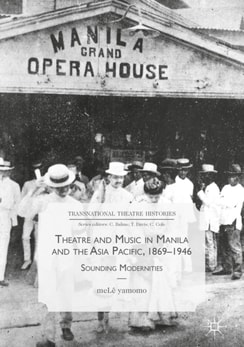
This book examines the intersection between sound and modernity in dramatic and musical performance in Manila and the Asia-Pacific between 1869 and 1948.
This is the first book to view Shakespeare's plays from the prospect of the premodern death arts, not only the ars moriendi tradition but also the plurality of cultural expressions of memento mori, funeral rituals, commemorative activities, and rhetorical techniques and strategies fundamental to the performance of the work of dying, death, and the dead.
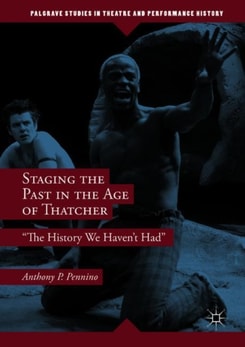
This book investigates how the British theatrical community offered an alternative and oppositional historical narrative to the heritage culture promulgated by the Thatcher and Major Governments in the 1980s and early 1990s.
This book offers a provocative and groundbreaking re-appraisal of the demands of acting ancient tragedy, informed by cutting-edge scholarship in the fields of actor training, theatre history, and classical reception.
This book offers an innovative account of how audiences and actors emotionally interacted in the English theatre during the middle decades of the eighteenth century, a period bookended by two of its stars: David Garrick and Sarah Siddons.
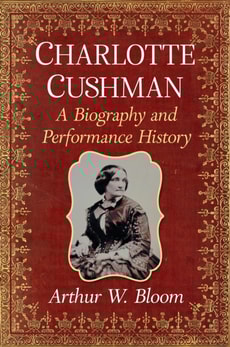
Charlotte Cushman, one of the great actors of 19th century American theatre, was a lesbian who kept her identity hidden by focusing her career on male characters (Romeo, Claude Melnotte, Wolsey), and also on strong and passionate women (Lady Macbeth, Bianca in Fazio, and Queen Katherine in Henry VIII).
Charlotte Cushman, one of the great actors of 19th century American theatre, was a lesbian who kept her identity hidden by focusing her career on male characters (Romeo, Claude Melnotte, Wolsey), and also on strong and passionate women (Lady Macbeth, Bianca in Fazio, and Queen Katherine in Henry VIII).
Glamour, power, champagne breakfasts in satin sheets--welcome to television's most dazzling and overlooked genre: women-centric melodrama miniseries of the 1980s and 1990s.
There are numerous publications about the horror genre in film and television, but none that provide information about horror on a legitimate stage until now.