Life and leadership lessons from the Special Forces, from the stars of Channel 4 series SAS: Who Dares Wins - including Sunday Times bestselling author of FIRST MAN: LEADING FROM THE FRONT, Ant MiddletonAre you up to the challenge of SAS leadership?
The legendary band leader and jazz trumpeter, broadcaster and humorist looks back at his extraordinarily rich and varied life and the many colourful characters he has known and played with - from Duke Ellington to Louis Armstrong.
Providing a comprehensive survey of the empirical research, theory, and history of public speaking, this handbook fills a crucial gap in public speaking pedagogy resources and provides a foundation for future research and pedagogical development.
This book focuses on two commercial radio stations, Radio Luxembourg and Europe n(deg)1, which were popular institutions in Western Europe throughout the Long Sixties, working across media and broadcasting transnationally.
Podcasting in a Platform Age explores the transition underway in podcasting by considering how the influx of legacy and new media interest in the medium is injecting professional and corporate logics into what had been largely an amateur media form.
Focusing on qualitative methods, The Pocketbook of Audience Research uses contemporary, global television and cross-media examples to explain essential approaches to audience research and outline how they can be employed.
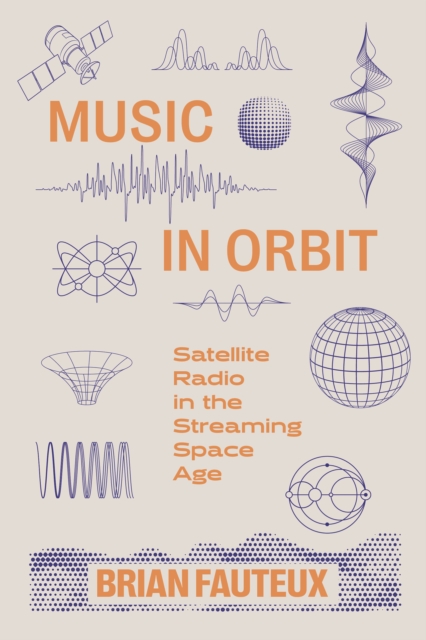
Years before the advent of music streaming, Sirius and XM established satellite radio services that attracted paying subscribers through their ever-expanding lineup of niche music channels and exclusivecelebrity-hosted programming.
Focusing on qualitative methods, The Pocketbook of Audience Research uses contemporary, global television and cross-media examples to explain essential approaches to audience research and outline how they can be employed.
Global Television (1993) looks at how satellites, fibre optics, compressed digital transmission, and interactive and high-definition television have converged with computer technology to revolutionise TV and film production, TV sets and even the smart home in which TV is viewed.
The Production of Political Television (1977) is a study of the organization and methods of production of political television that covers not only news broadcasts and current affairs programmes but all programmes involved with the policy making process in Britain.

Broadcasting in Mexico (1979) traces the birth and growth of Mexico's broadcasting services against the background of its geographical, cultural, demographic, economic and political structure.

A Guide to Commercial Radio Journalism (1999) covers every aspect of the profession, from journalistic practice to media law, and gives detailed instruction on the techniques of editing and using equipment and on the basic skills of writing, reporting and producing.
Communications Systems (1999) examines various communications systems using satellites, and includes much information on coding and modulation systems such as MOBIC, digital SNG systems, mobile phones, MPEG, MPEG4 capabilities and Hypermedia, the Grand Alliance TV systems, MUSE and how it is used in Japan, the European and North American Digital Video Broadcasting Systems, MMDS and Digital Audio Broadcasting.
Media Use in the Information Age (1989) analyses new technologies, their impact on mass communications, and their effects on the users of these new systems.
The Production of Political Television (1977) is a study of the organization and methods of production of political television that covers not only news broadcasts and current affairs programmes but all programmes involved with the policy making process in Britain.
Telecommunications: A Systems Approach (1976) uses two extended case studies, of public telephone and television systems, in order to introduce the basic ideas of telecommunication systems.
Television: A Critical Review (1963) is written by Sir Gerald Beadle, once Director of the BBC, and possessing of a long and wide experience of broadcasting as it expanded and grew.
Broadcasting in Mexico (1979) traces the birth and growth of Mexico's broadcasting services against the background of its geographical, cultural, demographic, economic and political structure.
Telecommunications: A Systems Approach (1976) uses two extended case studies, of public telephone and television systems, in order to introduce the basic ideas of telecommunication systems.
Television: A Critical Review (1963) is written by Sir Gerald Beadle, once Director of the BBC, and possessing of a long and wide experience of broadcasting as it expanded and grew.
Communications Systems (1999) examines various communications systems using satellites, and includes much information on coding and modulation systems such as MOBIC, digital SNG systems, mobile phones, MPEG, MPEG4 capabilities and Hypermedia, the Grand Alliance TV systems, MUSE and how it is used in Japan, the European and North American Digital Video Broadcasting Systems, MMDS and Digital Audio Broadcasting.
Media Use in the Information Age (1989) analyses new technologies, their impact on mass communications, and their effects on the users of these new systems.
Winning the Global TV News Game (1995) examines the worldwide TV news revolution of the 1990s, dealing with live TV news as an industry-consumer relationship.
Behind the Tube (1990) tells the story of the unseen foundation of modern radio, TV and cable - the technology that enables programming to reach an audience.