'Ravenhill has more to say, and says it more refreshingly and wittily, than any other playwright of his generation' Time OutShoot/Get Treasure/Repeat: 'A dramatic cycle that is, in its way, epic, but is splintered into many small shards touches deftly on the impact of war on everyone involved' Financial TimesOver There:'Ravenhill explores postwar Germany's division and unification through the power battles between twin brothers.
The volume reveals an astonishing richness in the theatrical approaches to Ibsen across the world: it considers political theatre, institutional 'high art', theatre for development, queer and transgender theatre, Brechtian techniques, puppetry, post-dramatic theatre, rural village performance and avant-garde touring companies.
Brecht on Performance: Messingkauf and Modelbooks presents a selection of Brecht's principal writings for directors and theatre practitioners, and is suitable for acting schools, directors, actors, students and teachers of Theatre Studies.
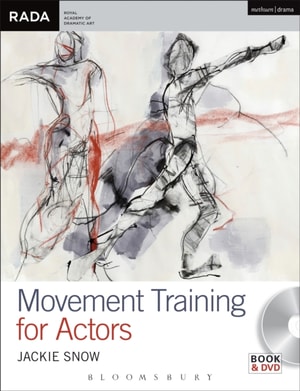
Movement training techniques allow actors to acquire the physical body language and non-verbal skills to clearly express the ideas and emotions of their characters.
Nineteen-year-old science genius Luke finally has some peace to work on the extraordinary box in his living room, holed up in a dingy flat on a near-abandoned Middlesbrough housing estate.
Nineteen-year-old science genius Luke finally has some peace to work on the extraordinary box in his living room, holed up in a dingy flat on a near-abandoned Middlesbrough housing estate.
'Ridley's play, with its surreal fantasies, has an edgy, alarming potency of its own, the writing unfettered by any expectations of how a play should be.
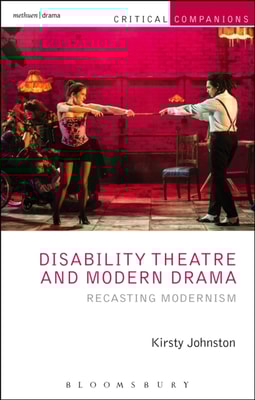
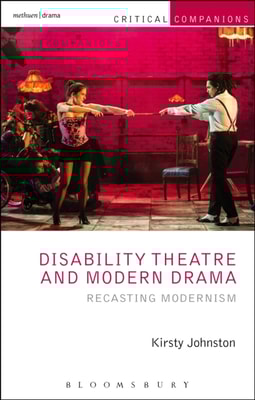
Bertolt Brecht's silent Kattrin in Mother Courage, or the disability performance lessons of his Peachum in TheThreepenny Opera; Tennessee Williams' limping Laura Wingfield in The Glass Menagerie and hard-of-hearing Bodey in A Lovely Sunday for Creve Coeur; Samuel Beckett's blind Hamm and his physically disabled parents Nagg and Nell in Endgame – these and many further examples attest to disability's critical place in modern drama.
Applied Theatre: Research is the first book to consolidate thinking about applied theatre as research through a thorough investigation of ATAR as a research methodology.
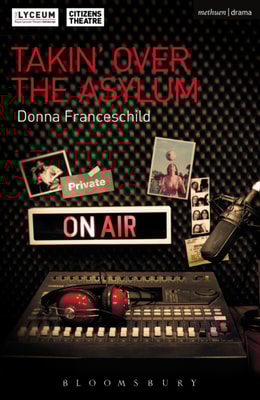
Adapted for the stage by the author, Takin' Over the Asylum is a hilarious, updated and profoundly moving adaptation of Donna Franceschild's Bafta-winning BBC TV-series.
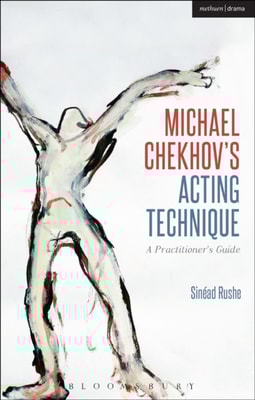
Intended for actors, directors, teachers and researchers, this book offers an exceptionally clear and thorough introduction to the renowned acting technique developed by Michael Chekhov.
Intended for actors, directors, teachers and researchers, this book offers an exceptionally clear and thorough introduction to the renowned acting technique developed by Michael Chekhov.
Through close readings of a wide range of plays and poems, Kiernan Ryan's compelling polemic sets out to reclaim the idea of Shakespeare's timeless universality from reactionary and radical critics alike.
Through close readings of a wide range of plays and poems, Kiernan Ryan's compelling polemic sets out to reclaim the idea of Shakespeare's timeless universality from reactionary and radical critics alike.
'Ravenhill has more to say, and says it more refreshingly and wittily, than any other playwright of his generation' Time OutShoot/Get Treasure/Repeat: 'A dramatic cycle that is, in its way, epic, but is splintered into many small shards touches deftly on the impact of war on everyone involved' Financial TimesOver There:'Ravenhill explores postwar Germany's division and unification through the power battles between twin brothers.
Bertolt Brecht's silent Kattrin in Mother Courage, or the disability performance lessons of his Peachum in TheThreepenny Opera; Tennessee Williams' limping Laura Wingfield in The Glass Menagerie and hard-of-hearing Bodey in A Lovely Sunday for Creve Coeur; Samuel Beckett's blind Hamm and his physically disabled parents Nagg and Nell in Endgame – these and many further examples attest to disability's critical place in modern drama.
The volume reveals an astonishing richness in the theatrical approaches to Ibsen across the world: it considers political theatre, institutional 'high art', theatre for development, queer and transgender theatre, Brechtian techniques, puppetry, post-dramatic theatre, rural village performance and avant-garde touring companies.