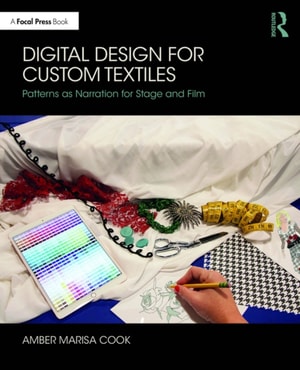
Digital Design for Custom Textiles: Patterns as Narration for Stage and Film is a beginner's guide for creating custom textile patterns for performing arts production, with an emphasis on storytelling through design using hand and digital design techniques.
Digital Design for Custom Textiles: Patterns as Narration for Stage and Film is a beginner's guide for creating custom textile patterns for performing arts production, with an emphasis on storytelling through design using hand and digital design techniques.
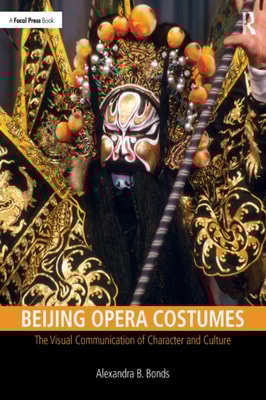
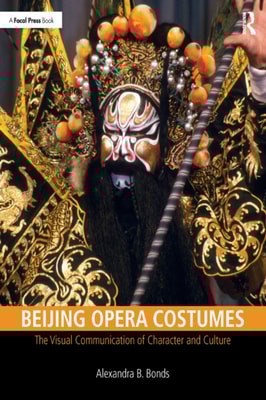
Beijing Opera Costumes: The Visual Communication of Character and Culture illuminates the links between theatrical attire and social customs and aesthetics of China, covering both the theory and practice of stage dress.
Beijing Opera Costumes: The Visual Communication of Character and Culture illuminates the links between theatrical attire and social customs and aesthetics of China, covering both the theory and practice of stage dress.
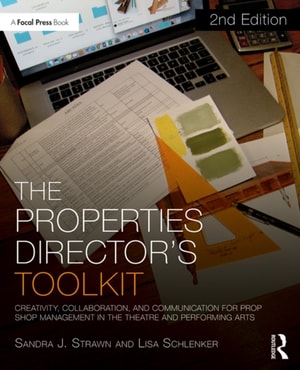
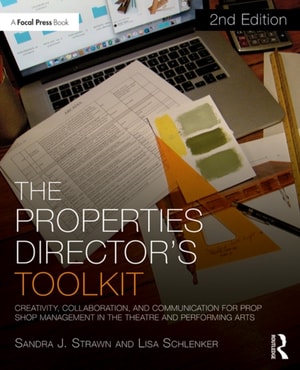
This book explains and provides templates for organizing and managing a prop shop, from pre-production organization to production processes, budgeting, and collaborations with other production areas.
Historical Pattern Archive: Women's Clothing 1837-1969 is the first book of its kind to capture such a wide range of women's period patterns in one book, featuring 83 patterns spanning over a century of clothing.
Historical Pattern Archive: Women's Clothing 1837-1969 is the first book of its kind to capture such a wide range of women's period patterns in one book, featuring 83 patterns spanning over a century of clothing.
A History of Contemporary Stage Combat chronicles the development of stage combat from the origins of the Society of British Fight Directors in 1969 to the modern day.
A History of Contemporary Stage Combat chronicles the development of stage combat from the origins of the Society of British Fight Directors in 1969 to the modern day.
In ACTING: Make It Your Business, Second Edition, award-winning casting director Paul Russell puts the power to land jobs and thrive in any medium-stage, film, television, or the Internet-directly into the hands of the actor.
In ACTING: Make It Your Business, Second Edition, award-winning casting director Paul Russell puts the power to land jobs and thrive in any medium-stage, film, television, or the Internet-directly into the hands of the actor.
Concert Design: The Road, The Craft, The Industry offers an exceptional journey though the world of concert design, exploring not only its unique design attributes but also the industry that has grown around it and how to make a career of 'the road'.
Concert Design: The Road, The Craft, The Industry offers an exceptional journey though the world of concert design, exploring not only its unique design attributes but also the industry that has grown around it and how to make a career of 'the road'.
Advanced Consciousness Training for Actors: Meditation Techniques for the Performing Artist explores theories and techniques for deepening the individual actor's capacity to concentrate and focus attention.
Advanced Consciousness Training for Actors: Meditation Techniques for the Performing Artist explores theories and techniques for deepening the individual actor's capacity to concentrate and focus attention.
A History of Equestrian Drama in the United States documents the history of equestrian drama in the United States and clarifies the multi-faceted significance of the form and of the related stage machinery developed to produce hippodramas.
A History of Equestrian Drama in the United States documents the history of equestrian drama in the United States and clarifies the multi-faceted significance of the form and of the related stage machinery developed to produce hippodramas.
A pioneering examination of a field in its early stages, Zhang delves into a detailed exploration of the evolving role of dramaturgy in contemporary Chinese theatre, bridging the gap between established Western theories and the unique practices emerging in the Chinese theatre scene, and offering valuable insight into the reshaping of theatre production amidst a rapidly changing cultural landscape.
Non-representational Theory explores a range of ideas which have recently engaged geographers and have led to the development of an alternative approach to the conception, practice, and production of geographic knowledge.
Non-representational Theory explores a range of ideas which have recently engaged geographers and have led to the development of an alternative approach to the conception, practice, and production of geographic knowledge.
If today students of social theory read Jurgen Habermas, Michael Foucault and Anthony Giddens, then proper regard to the question of culture means that they should also read Raymond Williams, Julia Kristeva and Slavoj Zizek.
If today students of social theory read Jurgen Habermas, Michael Foucault and Anthony Giddens, then proper regard to the question of culture means that they should also read Raymond Williams, Julia Kristeva and Slavoj Zizek.
This book explains and provides templates for organizing and managing a prop shop, from pre-production organization to production processes, budgeting, and collaborations with other production areas.
In comparison with Literary Studies and Media and Film Studies, the disciplines of Theatre and Performance, with their strong anthropocentric heritage, have been relatively slow in responding to such things as climate change, species extinction, or pollution and toxicity etc.
In comparison with Literary Studies and Media and Film Studies, the disciplines of Theatre and Performance, with their strong anthropocentric heritage, have been relatively slow in responding to such things as climate change, species extinction, or pollution and toxicity etc.
This book examines Jacques Copeau, a leading figure in the development of twentieth-century theatre practice, a pioneer in actor-training, physical theatre and ensemble acting, and a key innovator in the movement to de-centralize theatre and culture to the regions.
This book examines Jacques Copeau, a leading figure in the development of twentieth-century theatre practice, a pioneer in actor-training, physical theatre and ensemble acting, and a key innovator in the movement to de-centralize theatre and culture to the regions.
This book considers dancer, teacher, and choreographer Mary Wigman, a leading innovator in Expressionist dance whose radical explorations of movement and dance theory are credited with expanding the scope of dance as a theatrical art.
This book considers dancer, teacher, and choreographer Mary Wigman, a leading innovator in Expressionist dance whose radical explorations of movement and dance theory are credited with expanding the scope of dance as a theatrical art.