Activists working in post-traumatic societies have tended to resist psychoanalytical terms because they fear that pathologizing individual suffering displaces the collective and political causes of traumatic violence.
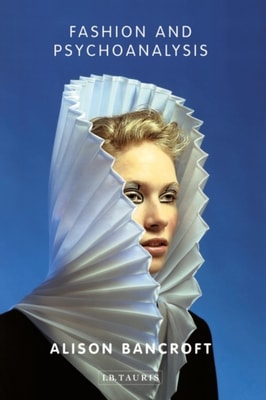
There is an increasing trend within both the study of visual culture and fashion itself to restore fashion to an aesthetic role - one that moves beyond its commercial success as a global industry and places fashion within a nexus of art, the body, and femininity.
In hyperdrawing: beyond the lines of contemporary art, authors and artists come together to explore the potential of what drawing in contemporary art theory and practice might become.
In this beautifully illustrated book in Collins Artist's Studio series well-known artist Hazel Soan reveals 9 key secrets of watercolour painting that will enable painters with some experience to develop greater confidence and a more professional attitude to their work.
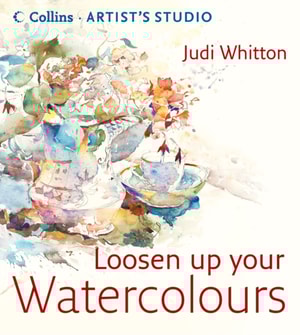
This illustrated ebook, in the Collins Artist's Studio series, is aimed at the intermediate painter and explains how to loosen up your watercolours and develop a more spontaneous style of painting.
Published in association with The Artist magazine, this superbly illustrated book looks at many of the common problems encountered when using the popular painting medium of watercolour.
In recent decades, we have witnessed an explosion in the number of visual images we encounter, as our lives have become increasingly saturated with screens.
Focusing on the art of self-portraiture, this effortlessly engaging exploration of the lives of artists sheds fascinating light on some of the most extraordinary portraits in art history.
Fictions of Art History, the most recent addition to the Clark Studies in the Visual Arts series, addresses art history's complex relationships with fiction, poetry, and creative writing.
One of the most important artists of the twentieth century, Mark Rothko (1903–1970) created a new and impassioned form of abstract painting over the course of his career.
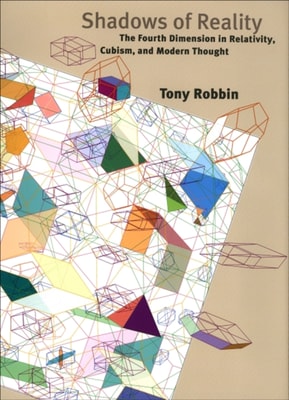
In this insightful book, which is a revisionist math history as well as a revisionist art history, Tony Robbin, well known for his innovative computer visualizations of hyperspace, investigates different models of the fourth dimension and how these are applied in art and physics.
To Ellen Dissanayake, the arts are biologically evolved propensities of human nature: their fundamental features helped early humans adapt to their environment and reproduce themselves successfully over generations.
'Julia Cameron invented the way people renovate the creative soul' - New York TimesONE OF THE WATKINS TOP 100 MOST SPIRITUALLY INFLUENTIAL PEOPLE OF 2023The Artist's Way has uncovered the potential of millions of people.
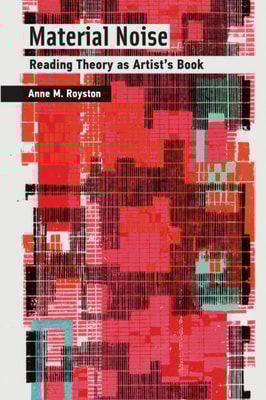
An argument that theoretical works can signify through their materiality—their “noise,” or such nonsemantic elements as typography—as well as their semantic content.
How the approaches and methods of think tanks—including systems theory, operational research, and cybernetics—paved the way for a peculiar genre of midcentury modernism.
Tracing the thread of “decreation” in Chinese thought, from constantly changing classical masterpieces to fake cell phones that are better than the original.
An examination of the disoriented subject of modernity: a dissolute figure who makes an makes an object of its absence; from Baudelaire to Broodthaers.
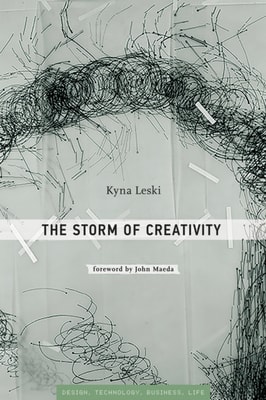
The stages of the creative process—from “unlearning” to beginning again—seen through examples from the practice of artists, architects, poets, and others.
A critic takes issue with the art world''s romanticizing of networks and participatory projects, linking them to the values of a globalized, neoliberal economy.
One of the most important artists of the twentieth century, Mark Rothko (1903–1970) created a new and impassioned form of abstract painting over the course of his career.
Flexible in approach and full of colorful examples, this textbook provides a basic introduction to what art is and can be in the lives of people who do not necessarily think of themselves as "e;artists.