Half a century into the digital era, the profound impact of information technology on intellectual and cultural life is universally acknowledged but still poorly understood.
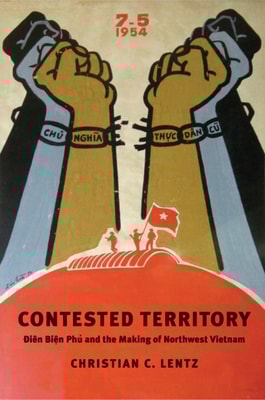
This study examines the waves of graffiti that occur before, during, and after a conflict-important tools of political resistance that make protest visible and material.
The Invisible Dragon made a lot of noise for a little book When it was originally published in 1993 it was championed by artists for its forceful call for a reconsideration of beauty-and savaged by more theoretically oriented critics who dismissed the very concept of beauty as naive, igniting a debate that has shown no sign of flagging.
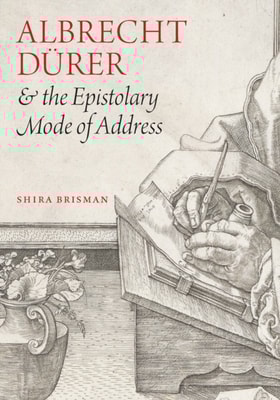
Art historians have long looked to letters to secure biographical details; clarify relationships between artists and patrons; and present artists as modern, self-aware individuals.
In Pragmatism's Evolution, Trevor Pearce demonstrates that the philosophical tradition of pragmatism owes an enormous debt to specific biological debates in the late 1800s, especially those concerning the role of the environment in development and evolution.
During the 1960s and 1970s, the Russian conceptual artist Ilya Kabakov was a galvanizing figure in Moscow's underground art community, ultimately gaining international prominence as the "e;leader"e; of a band of artists known as the Moscow Conceptual Circle.
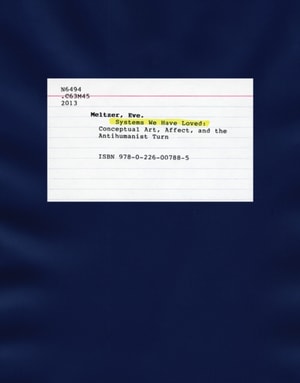
By the early 1960s, theorists like Levi-Strauss, Lacan, Foucault, and Barthes had created a world ruled by signifying structures and pictured through the grids of language, information, and systems.
Flexible in approach and full of colorful examples, this textbook provides a basic introduction to what art is and can be in the lives of people who do not necessarily think of themselves as "e;artists.
Puer tea has been grown for centuries in the Six Great Tea Mountains of Yunnan Province, and in imperial China it was a prized commodity, traded to Tibet by horse or mule caravan via the so-called Tea Horse Road and presented as tribute to the emperor in Beijing.
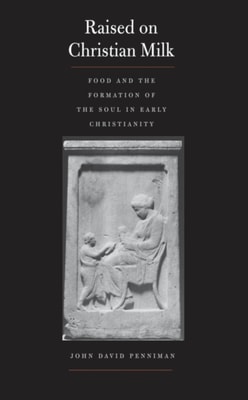
A fascinating new study of the symbolic power of food and its role in forming kinship bonds and religious identity in early Christianity Scholar of religion John Penniman considers the symbolic importance of food in the early Roman world in an engaging and original new study that demonstrates how “eating well” was a pervasive idea that served diverse theories of growth, education, and religious identity.
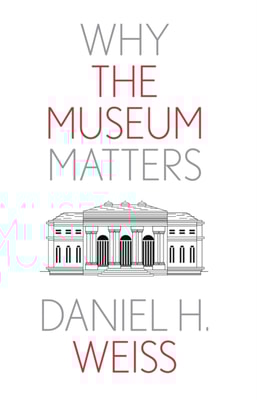
A powerful reflection on the universal art museum, considering the values critical to its history and anticipating its evolving place in our cultural future Art museums have played a vital role in our culture, drawing on Enlightenment ideals in shaping ideas, advancing learning, fostering community, and providing spaces of beauty and permanence.
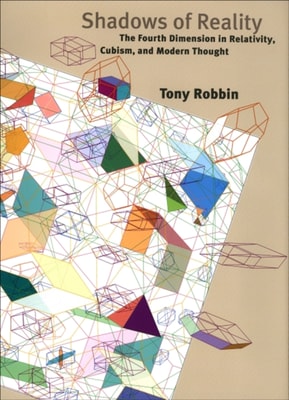
In this insightful book, which is a revisionist math history as well as a revisionist art history, Tony Robbin, well known for his innovative computer visualizations of hyperspace, investigates different models of the fourth dimension and how these are applied in art and physics.
The industrialization of print technologies in early nineteenth-century America transformed print culture in ways that parallel the transformation wrought by the digital revolution.
Cultural Democracy explores the crisis of our national cultural vitality, as access to the arts becomes increasingly mediated by a handful of corporations and the narrow tastes of wealthy elites.
Fictions of Art History, the most recent addition to the Clark Studies in the Visual Arts series, addresses art history's complex relationships with fiction, poetry, and creative writing.
An exploration of what it means to be fabulous-and why eccentric style, fashion, and creativity are more political than everPrince once told us not to hate him 'cause he's fabulous.
How hunger shaped both colonialism and Native resistance in Early America "e;In this bold and original study, Cevasco punctures the myth of colonial America as a land of plenty.
A uniquely collaborative analysis of human adaptation to the Polynesian islands, told through oral histories, biophysical evidence, and historical records Humans began to settle the area we know as Polynesia between 3,000 and 800 years ago, bringing with them material culture, including plants and animals, and ideas about societal organization, and then adapting to the specific biophysical features of the islands they discovered.
From a world-renowned painter, an exploration of creativity's quintessential-and often overlooked-role in the spiritual life Written over thirty years of painting and creating in his studio, this book is Makoto Fujimura's broad and deep exploration of creativity and the spiritual aspects of "e;making.