During the 1960s and 1970s, the Russian conceptual artist Ilya Kabakov was a galvanizing figure in Moscow's underground art community, ultimately gaining international prominence as the "e;leader"e; of a band of artists known as the Moscow Conceptual Circle.
By the early 1960s, theorists like Levi-Strauss, Lacan, Foucault, and Barthes had created a world ruled by signifying structures and pictured through the grids of language, information, and systems.
Flexible in approach and full of colorful examples, this textbook provides a basic introduction to what art is and can be in the lives of people who do not necessarily think of themselves as "e;artists.
Puer tea has been grown for centuries in the Six Great Tea Mountains of Yunnan Province, and in imperial China it was a prized commodity, traded to Tibet by horse or mule caravan via the so-called Tea Horse Road and presented as tribute to the emperor in Beijing.
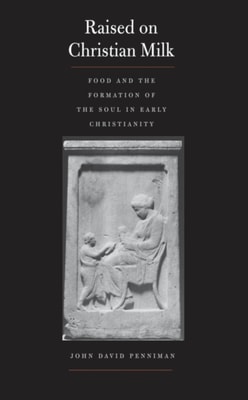
A fascinating new study of the symbolic power of food and its role in forming kinship bonds and religious identity in early Christianity Scholar of religion John Penniman considers the symbolic importance of food in the early Roman world in an engaging and original new study that demonstrates how “eating well” was a pervasive idea that served diverse theories of growth, education, and religious identity.
A powerful reflection on the universal art museum, considering the values critical to its history and anticipating its evolving place in our cultural future Art museums have played a vital role in our culture, drawing on Enlightenment ideals in shaping ideas, advancing learning, fostering community, and providing spaces of beauty and permanence.
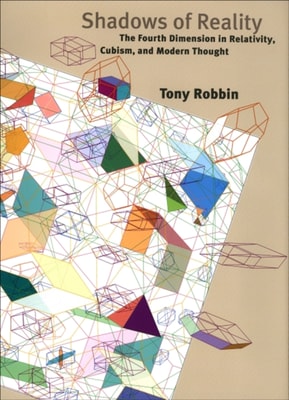
In this insightful book, which is a revisionist math history as well as a revisionist art history, Tony Robbin, well known for his innovative computer visualizations of hyperspace, investigates different models of the fourth dimension and how these are applied in art and physics.
The industrialization of print technologies in early nineteenth-century America transformed print culture in ways that parallel the transformation wrought by the digital revolution.
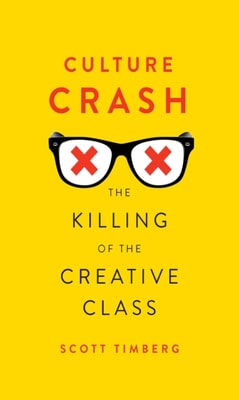
Cultural Democracy explores the crisis of our national cultural vitality, as access to the arts becomes increasingly mediated by a handful of corporations and the narrow tastes of wealthy elites.
Fictions of Art History, the most recent addition to the Clark Studies in the Visual Arts series, addresses art history's complex relationships with fiction, poetry, and creative writing.
An exploration of what it means to be fabulous-and why eccentric style, fashion, and creativity are more political than everPrince once told us not to hate him 'cause he's fabulous.
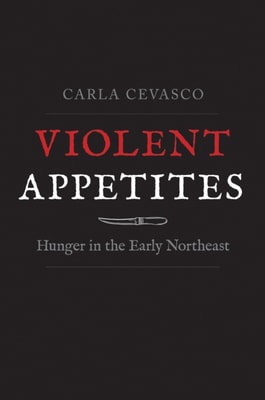
How hunger shaped both colonialism and Native resistance in Early America "e;In this bold and original study, Cevasco punctures the myth of colonial America as a land of plenty.
A uniquely collaborative analysis of human adaptation to the Polynesian islands, told through oral histories, biophysical evidence, and historical records Humans began to settle the area we know as Polynesia between 3,000 and 800 years ago, bringing with them material culture, including plants and animals, and ideas about societal organization, and then adapting to the specific biophysical features of the islands they discovered.
From a world-renowned painter, an exploration of creativity's quintessential-and often overlooked-role in the spiritual life Written over thirty years of painting and creating in his studio, this book is Makoto Fujimura's broad and deep exploration of creativity and the spiritual aspects of "e;making.
This book takes you on a very different journey to wine country, inviting you to enjoy the remarkable stories of twenty dynamic women in the world of wine.
In Folklore, Bill Ivey, former chairman of the National Endowment for the Arts, argues that the world today is being reshaped by the end of the Enlightenment.
Winner: Dorothy Schwieder Excellence in Research AwardTucked into the files of Iowa State Universitys Cooperative Extension Service is a small, innocuous looking pamphlet with the title Lenders: Working through the Farmer-Lender Crisis.
Early in the 1980s AIDS epidemic, six gay activists created one of the most iconic and lasting images that would come to symbolize a movement: a protest poster of a pink triangle with the words ';Silence = Death.
Following independence, most countries in Africa sought to develop, but their governments pursued policies that actually undermined their rural economies.
A compelling collection of the life-changing writings of William JamesWilliam James-psychologist, philosopher, and spiritual seeker-is one of those rare writers who can speak directly and powerfully to anyone about life's meaning and worth, and whose ideas change not only how people think but how they live.
An authoritative history of art history from its medieval origins to its modern predicamentsIn this wide-ranging and authoritative book, the first of its kind in English, Christopher Wood tracks the evolution of the historical study of art from the late middle ages through the rise of the modern scholarly discipline of art history.
Focusing on one landmark catastrophic event in the history of an emerging modern nation-the Great Kanto Earthquake that devastated Tokyo and surrounding areas in 1923-this fascinating volume examines the history of the visual production of the disaster.
In this impassioned and persuasive book, Bill Ivey, the former chairman of the National Endowment for the Arts, assesses the current state of the arts in America and finds cause for alarm.
This is the first book of its kind to examine the development of the confessional subject in video art and demonstrate how it can provide a vital platform for navigating the politics of self, subjectivity, and resistance in society.
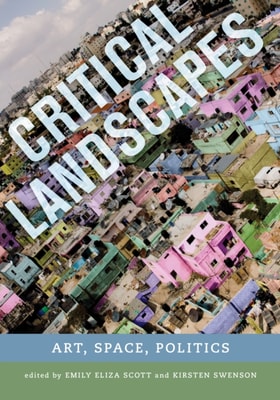
From Francis Alys and Ursula Biemann to Vivan Sundaram, Allora & Calzadilla, and the Center for Urban Pedagogy, some of the most compelling artists today are engaging with the politics of land use, including the growth of the global economy, climate change, sustainability, Occupy movements, and the privatization of public space.
Sobre esta obra el escritor Edmundo Valadés escribió: "Novela de sátira delirante, desenfrenada y poética, Los placeres perdidos se propone bajarle los calzones a una sociedad conservadora e hipócrita y a la ciudad que la cobija, Cali, una de las ciudades más eróticas y gozonas del mundo.