The 'Enchiridion' is a compact treatise on Christian piety, written in response to a request by an otherwise unknown person, named Laurentius, shortly after the death of Saint Jerome in 420.
''Autobiography of a Yogi'' introduces the reader to the life of Paramahansa Yogananda and his encounters with spiritual figures of both the East and West.
Included in this collection are two different translations of ''The Practice and Presence of God'', ''The Spiritual Maxims of Brother Lawrence'', and a short biography of Brother Lawrence.
The Cloud of Unknowing draws on the mystical tradition of Pseudo-Dionysius the Areopagite and Christian Neoplatonism, which focuses on the via negativa road to discovering God as a pure entity, beyond any capacity of mental conception and so without any definitive image or form.
In 1643 when the Long Parliament of England called the Westminster Assembly to produce the Westminster Confession, it also asked for a directory of "catechising".
This Treatise which I now present you, may be in some way serviceable to you, and that in it you will meet with many wholesome considerations which you would not elsewhere so easily find.
The Father in heaven asks, and requires, and actually expects, that every child of His yield Him whole-hearted and entire obedience, day by day, and all the day.
Many children of God are so deeply exercised on the matter of guidance that it may be helpful to give a few suggestions as to knowing the way in which our Father would have us walk, and the work He would have us do.
Volume 1 of the ''Conflict of the Ages'' book series, ‘Patriarchs and Prophets’ covers the Biblical history of the world from the rebellion of Satan in heaven to King David.
Volume 2 of the ''Conflict of the Ages'' book series, ''The Story of Prophets and Kings,'' covers the Biblical history of the world from King Solomon to Malachi.
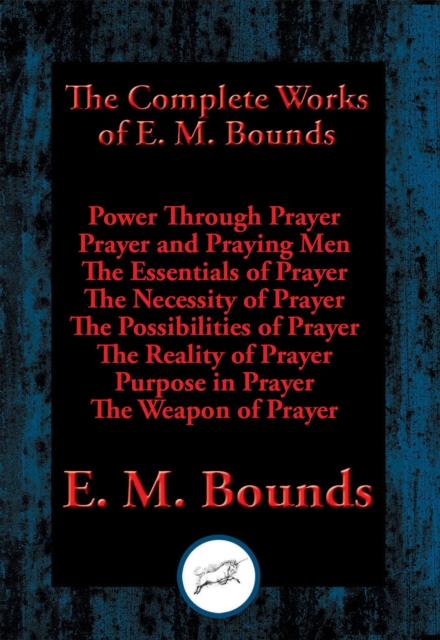
There is the holy and most glorious God who invites us to come to him, to hold converse with him, to ask from him such things as we need, and to experience what a blessing there is in fellowship with him.
IT WAS through Saint Germain''s assistance that I was privileged to have the experiences recorded in this series of books, and that permission has been granted for them to be put in a form which can be given to the public.
There is, and always has been, a widespread belief in Fate, or Destiny, that is, in an eternal and inscrutable Power which apportions definite ends to both individuals and nations.
The purpose of this book is to bring together in one convenient volume some of the best devotional verse the English language affords, and thus to make available to present day Christians a rich spiritual heritage which the greater number of them for various reasons do not now enjoy.
True religion is a union of the soul with God, a real participation of the divine nature, the very image of God drawn upon the soul, or, in the Apostle''s phrase, "It is Christ formed within us.