Žižek and Heidegger offers a radical new interpretation of the work of Slavoj Žižek, one of the world's leading contemporary thinkers, through a study of his relationship with the work of Martin Heidegger.
Jacques Rancière: An Introduction offers the first comprehensive introduction to the thought of one of today's most important and influential theorists.
Technology has extended its reach to the human body, not just in a literal sense, through implants, transplants and technological substitutes for biological organs, but in a more figurative sense too.
Ricoeur, Hermeneutics and Globalization explores the philosophical resources provided by Paul Ricoeur's hermeneutics in dealing with the challenges of a world framed by globalization.
Over the past 40 years, Jacques Rancière's work has defined itself through a remarkable set of philosophical differences in relation to other key figures working in the fields of politics, philosophy and aesthetics.
Wittgenstein's Tractatus - the only book he actually published within his lifetime - was an immensely important work which changed the direction of philosophy in the first half of the twentieth century.
Gilles Deleuze and Felix Guattari have arguably gone further than anyone in contemporary philosophy in affirming a philosophy of creation, one that both establishes and encourages a clear ethical imperative: to create the new.
Søren Kierkegaard was one of the most important European philosophers of the nineteenth-century and is widely regarded as the founder of existentialism.
Gilles Deleuze: The Intensive Reduction brings together eighteen essays written by an internationally acclaimed team of scholars to provide a comprehensive overview of the work of Gilles Deleuze, one of the most important and influential European thinkers of the twentieth century.
Relativism, the view that knowledge is relative to time, culture, group and/or individual, remains a pervasive and influential intellectual position in philosophy and throughout the humanities.
In the wake of much previous work on Gilles Deleuze's relations to other thinkers (including Bergson, Spinoza and Leibniz), his relation to Kant is now of great and active interest and a thriving area of research.
Due to his theory of 'immaterialism' and Schopenhauer's regard of him as the 'father of idealism', George Berkeley (1685-1753) is one of the most important thinkers of the Early Modern period.
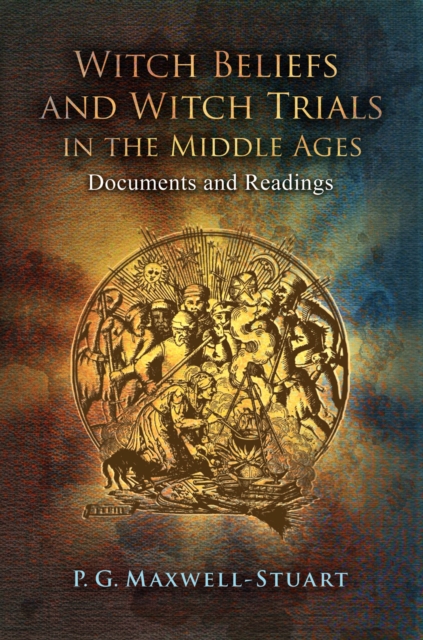
In 1901 a rich collection of extracts from documents relating to witch beliefs and witch trials in the Middle Ages - Hexenwahns und der Hexenverfolgung in Mittelalter - was published in Bonn.
The fifteenth to eighteenth centuries was a period of witchcraft prosecutions throughout Europe and modern scholars have now devoted a huge amount of research to these episodes.
Derrida, Literature and War argues for the importance of the relation between absence and chance in Derrida's work in thinking today about war and literature.
For much of the twentieth century, many Anglo-American philosophers supported three theses - one about reality, one about truth, and one about human knowledge - that, taken together, underwrote debates in epistemology.
In this rigorous historical analysis, Lauer challenges traditional readings that have reduced two of German idealism's most important thinkers to opposing caricatures: Hegel the uncompromising systematist blind to the novelty and contingency of human life and Schelling the protean thinker drawn to all manner of pseudoscientific charlatanry.
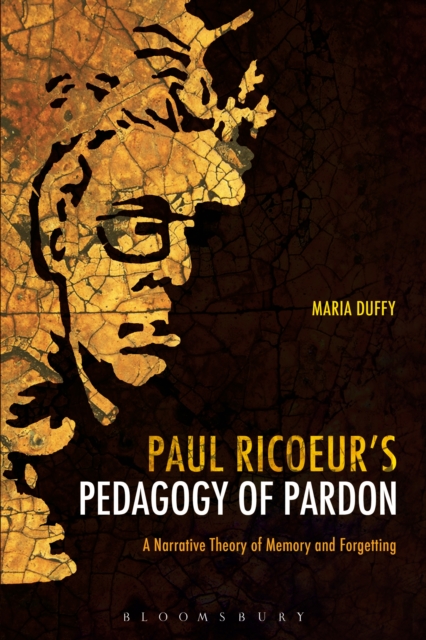
Maria Duffy describes Paul Ricoeur's narrative theory of memory and addresses central conceptual and methodological issues in his theory of forgiveness and reconciliation.
In Heidegger's Early Philosophy, James Luchte sets forth a comprehensive examination of Heidegger's phenomenology between 1924 and 1929, during which time Heidegger was largely concerned with a radical temporalization of thought.
The Derrida Dictionary is a comprehensive and accessible guide to the world of Jacques Derrida, the founder of deconstruction and one of the most important and influential European thinkers of the twentieth century.
It is a commonplace that while Asia is nondualistic, the West, because of its uncritical reliance on Greek-derived intellectual standards, is dualistic.
Continuum's Guides for the Perplexed are clear, concise and accessible introductions to thinkers, writers and subjects that students and readers can find especially challenging.
Continuum's Guides for the Perplexed are clear, concise and accessible introductions to thinkers, writers and subjects that students and readers can find especially challenging.
This book presents a new introduction to Hume, guiding the student through the key concepts of Hume's work by examining the overall development of his ideas.
Continuum's Guides for the Perplexed are clear, concise and accessible introductions to thinkers, writers and subjects that students and readers can find especially challenging.
Ludwig Wittgenstein's Philosophical Investigations is a hugely important piece of philosophical writing, one frequently encountered by students of philosophy.
Key Concepts in Philosophy is a series of concise, accessible and engaging introductions to the core ideas and subjects encountered in the study of philosophy.