Late Capitalist Freud in Literary, Cultural, and Political Theory proposes that late Freudian theory has had an historical influence on the configuration of contemporary life and is central to the construction of twenty-first-century capitalism.
This book examines the racial and socio-linguistic dynamics of Jamaica, a majority black nation where the dominant ideology continues to look to white countries as models, yet which continues to defy the odds.
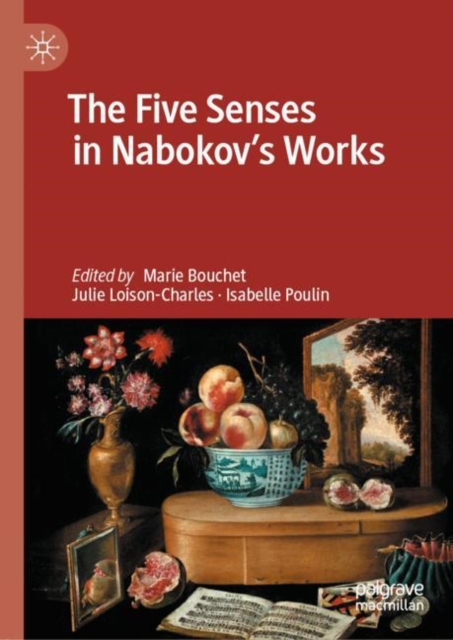
This collection of essays focuses on a subject largely neglected in Nabokovian criticism-the importance and significance of the five senses in Vladimir Nabokov's work, poetics, politics and aesthetics.
This book understands digital cultural production of electronic literatures and digital art by looking at electronic and digital works that produce subjective positionality, clouded knowledges of quantum theories, and metaphysical patterns grounded in a cultural ideology.
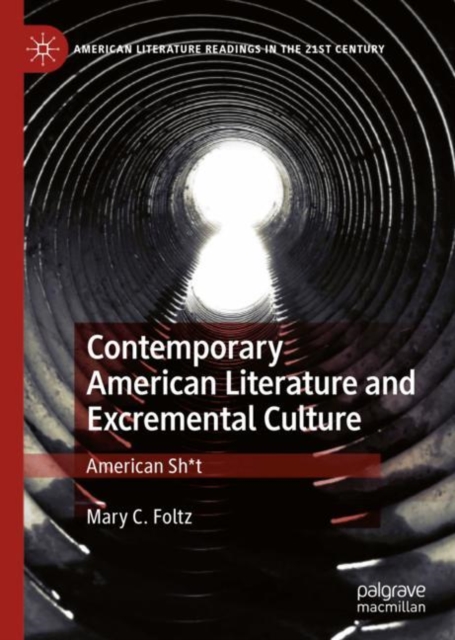
Contemporary American Literature and Excremental Culture: American Sh*t analyzes post-1960 scatological novels that utilize representations of human waste to address pressing issues, including pollution of waterways, environmental racism, and militarism.
This book examines the representation of empathy in contemporary poetry after crisis, specifically poetry after the Holocaust, the September 11, 2001 terrorist attacks, and Hurricane Katrina.
Anticipatory Materialisms explores nineteenth and early twentieth-century literature thatanticipates and pre-empts the recent philosophical 'turn' to materiality and affect.
Neo-Victorian Madness: Rediagnosing Nineteenth-Century Mental Illness in Literature and Other Media investigates contemporary fiction, cinema and television shows set in the Victorian period that depict mad murderers, lunatic doctors, social dis/ease and madhouses as if many Victorians were "e;mad.
Human Contradictions in Octavia Butler's Work continues the critical discussions of Butler's work by offering a variety of theoretical perspectives and approaches to Butler's text.
This book not only discloses and examines different functions and concepts of authorship in fiction and theory from the 1950s and 1960s to the present but it also reveals, at least implicitly, a trajectory of some of the modes and functions of the novel as a genre in the last few decades.
This book offers a theoretical framework and numerous cases studies - from early comic books to contemporary graphic novels - to understand the uses of genres in comics.
Borges and Black Mirror convenes a dialogue between one of the most influential writers of the twentieth century, the philosophical fabulist Jorge Luis Borges, and one of the most important writers and producers of the twenty-first century, Charlie Brooker, whose Black Mirror series has become a milestone in an age of "e;post-television"e; programming.
On Literary Plasticity: Readings with Kafka in Ecology, Voice, and Object-Life calls to Franz Kafka, and in particular 'Die Sorge des Hausvaters', for aid in charting the long reach of plastic on the human mind and world.
This book proposes that Spanish author Luis Martin-Santos' work focuses on the effects of patriarchy and hegemonic masculinity on men, to actively contribute to freeing both men and women from the yoke of patriarchy.
This book explores the Catholic aesthetic and mystical dimensions in KateChopin's fiction within the context of an evolving American Catholicism in thelate nineteenth and early twentieth centuries.
Since the 1970s, truth and reconciliation commissions have become increasingly popularised as options for addressing historical injustices, especially within the context of dictatorial regimes.
The Worlding of the South African Novel develops from something of a paradox: that despite momentous political transition from apartheid to democracy, little in South Africa's socio-economic reality has actually changed.
Drawing on a Marxist concept of world literature, this book is a study of the manipulations of time in contemporary anglophone fiction from Africa and South Asia.
This book examines how the transcultural and transnational migration of people, texts, and ideas has transformed the paradigm of national literature, with Britain and Ireland as case studies.
As humans re-negotiate their boundaries with the nonhuman world of animals,inanimate entities and technological artefacts, new identities are formed and anew epistemological and ethical approach to reality is needed.
This book examines how contemporary global novels by Salman Rushdie, David Mitchell, Rana Dasgupta and Rachel Kushner have evolved new aesthetics to represent global economic and ecological crises.
Postmodern Time and Space in Fiction and Theory seeks to place the contemporary transformation of notions of space and time, often attributed to the technologies we use, in the context of the ongoing transformations of modernity.
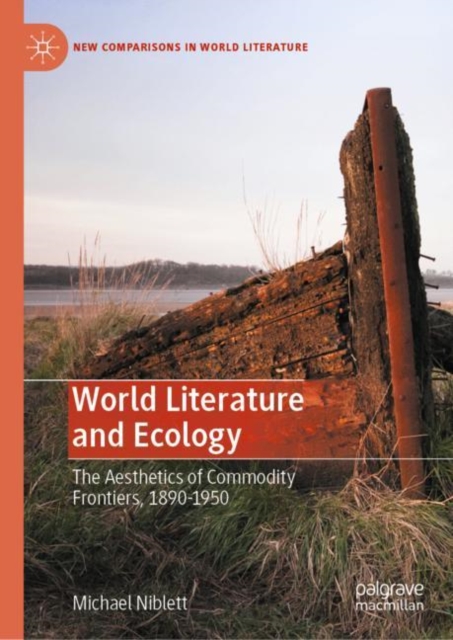
Located at the intersection of world-literary studies and the environmental humanities, this book analyses how fiction and poetry respond to the ecological transformations entailed by commodity frontiers.
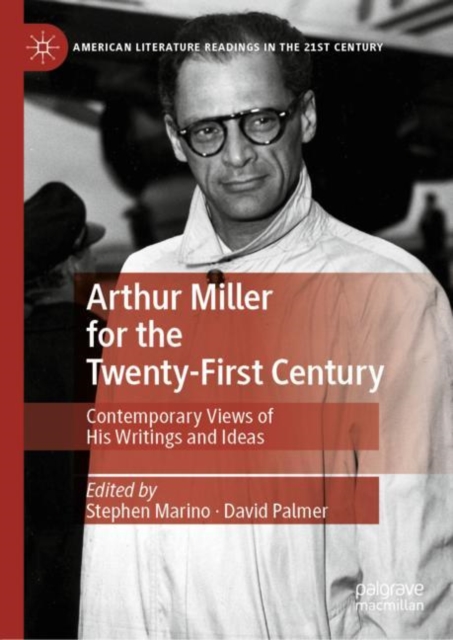
Arthur Miller for the Twenty-First Century: Contemporary Views of His Writings and Ideas brings together both established Miller experts and emerging commentators to investigate the sources of his ongoing resonance with audiences and his place in world theatre.
This book is about Enlightenment culture in Spanish America before Independence-in short, there where, according to Hegel, one would least expect to find it.
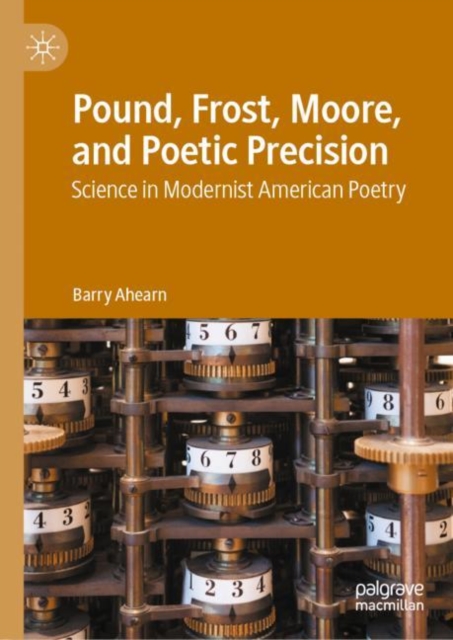
Pound, Frost, Moore and Poetic Precision: Science in American Modernist Poetry examines three major poets in light of the demand that poetry aspire to scientific precision.
What if our notions of the nation as a site of belonging, the home as a safe place, or the mother tongue as a means to fluent comprehension did not apply?