William D Howarth sets Le Mariage de Figaro and Beaumarchais's other dramatic works in the broad historical context of pre-revolutionary France, providing a unique and authoritative study of the dramatist and his plays.
William D Howarth sets Le Mariage de Figaro and Beaumarchais's other dramatic works in the broad historical context of pre-revolutionary France, providing a unique and authoritative study of the dramatist and his plays.
Martin Garrett's comprehensive collection presents and explains the history of the critical reception to Massinger's work from the early seventeenth to the late nineteenth century.
Martin Garrett's comprehensive collection presents and explains the history of the critical reception to Massinger's work from the early seventeenth to the late nineteenth century.
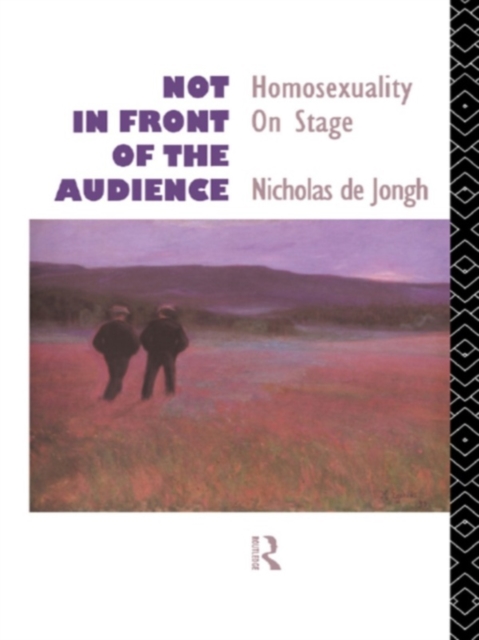
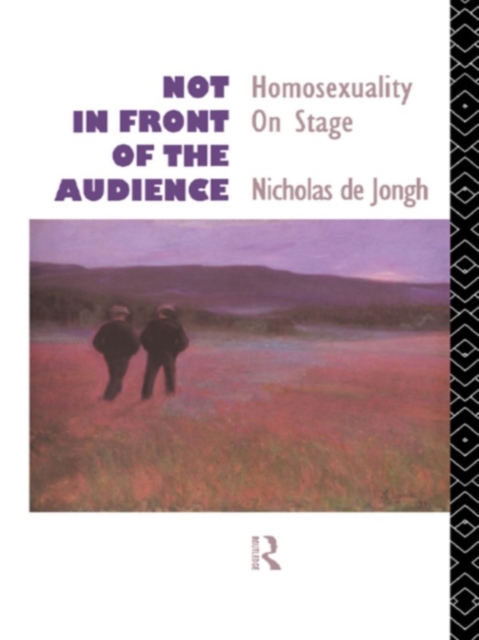
Not in Front of the Audience is a pioneering and important study of a neglected terrain, examining the way in which the theatres of London and New York have reflected contemporary social and cultural attitudes to 'gay men' and homosexuality.
Not in Front of the Audience is a pioneering and important study of a neglected terrain, examining the way in which the theatres of London and New York have reflected contemporary social and cultural attitudes to 'gay men' and homosexuality.
This volume reflects changing critical perceptions of Shakespeare's works from Renaissance to modern times and celebrates the power of Shakespearean tragedy.
This volume reflects changing critical perceptions of Shakespeare's works from Renaissance to modern times and celebrates the power of Shakespearean tragedy.
The theoretical ferment which has affected literary studies over the last decade has called into question traditional ways of thinking about, classifying and interpreting texts.
The theoretical ferment which has affected literary studies over the last decade has called into question traditional ways of thinking about, classifying and interpreting texts.
`Professor Mahood's book has established itself as a classic in the field, not so much because of the ingenuity with which she reads Shakespeare's quibbles, but because her elucidation of pun and wordplay is intelligently related both to textual readings and dramatic significance.
`Professor Mahood's book has established itself as a classic in the field, not so much because of the ingenuity with which she reads Shakespeare's quibbles, but because her elucidation of pun and wordplay is intelligently related both to textual readings and dramatic significance.
Engendering a Nation adopts a sophisticated feminist analysis to examine the place of gender in contesting representations of nationhood in early modern England.
Engendering a Nation adopts a sophisticated feminist analysis to examine the place of gender in contesting representations of nationhood in early modern England.
The last decade has seen a revival of interest in John Ford and especially 'Tis Pity She's a Whore, his tragedy of religious scepticism, incestuous love, and revenge.
The last decade has seen a revival of interest in John Ford and especially 'Tis Pity She's a Whore, his tragedy of religious scepticism, incestuous love, and revenge.
In the first full-length study of Shakespeare's Roman plays, Coppelia Kahn brings to these texts a startling, critical perspective which interrogates the gender ideologies lurking behind 'Roman virtue'.
In the first full-length study of Shakespeare's Roman plays, Coppelia Kahn brings to these texts a startling, critical perspective which interrogates the gender ideologies lurking behind 'Roman virtue'.
In their introduction to this collection of essays, the editors argue that constraints can be seen as a source of literary creativity, and given that translation is even more constrained than 'original' literary production, it thus has the potential to be even more creative too.
In their introduction to this collection of essays, the editors argue that constraints can be seen as a source of literary creativity, and given that translation is even more constrained than 'original' literary production, it thus has the potential to be even more creative too.
Should we assume that people who lived some time ago were quite similar to us or should we assume that they need to be thought of as alien beings with whom we have little in common?
Should we assume that people who lived some time ago were quite similar to us or should we assume that they need to be thought of as alien beings with whom we have little in common?
Philippa Berry draws on feminist theory, postmodern thought and queer theory, to challenge existing critical notions of what is fundamental to Shakespearean tragedy.
Philippa Berry draws on feminist theory, postmodern thought and queer theory, to challenge existing critical notions of what is fundamental to Shakespearean tragedy.