Erasmus Darwin (1731-1802) had the highest reputation among living English poets during much of the 1790s, through the great success of his long poem in rhyming couplets, The Botanic Garden, published complete in 1792.
'At last, we have a study that tackles these questions, and does so with a wealth of learning, a poet's sensibility and a thorough theological literacy.
Opening with Thomas's life, the book offers vignettes of Swansea in the 1920s and 1930s, pre- and post-war Laugharne and rural West Wales, wartime London and New York City in the early 1950s, seen through the poet's eyes.
Theatre has never been afraid to adapt, rewrite and contemporize Shakespeare's drama since theatre by definition is a living medium involving a corporate creativity.
This volume provides accurate texts of all the poems by Yeats published in his lifetime or scheduled for publication as of his death on January 28, 1939, including those omitted from earlier collections.
This volume of essays and other materials offers an assessment of the short prose, verse and drama of Daniil Kharms, Leningrad absurdist of the 1920s and 1930s, who was one of the last representatives of the Russian literary avante-garde.
Taking into account recent developments in historical and ecological criticism, and incorporating fresh research into poetry and politics in the 1790s, the second edition of The Politics of Nature enlarges and updates Nicholas Roe's acclaimed study of Romanticism.
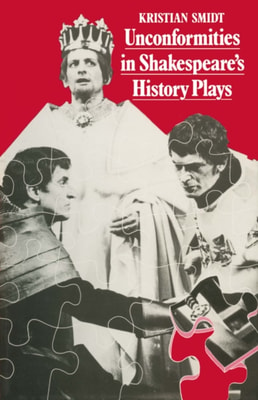
This work attempts to analyze Shakespeare's tragedies, concentrating on the accidental irregularities and the inspired "e;unconformities"e; to the found there.
This volume, with contributions in the form of narrations, or of work sheets, by leading British and American translators, shows what happens: how problems present themselves and how they are resolved.
The presentation of Tennyson's personal and poetic development is supplemented by an introduction, brief biographical sketches of more than 30 of his friends, and maps of relevant areas in Lincolnshire and the Isle of Wight.
This chronology, like others in the series, presents the story of Dr Johnson's life in a readily accessible format to provide scholar and general reader alike with a quick guide to dates, people and places together with supplementary indexes.
This text uses machine data of poetry readings to discover features of rhythm and intonation and to clear away methodological problems that hamper the teaching of poetic melody.
A study of the popular modern dramatists and the continuity of the farce tradition from Pinero to Travers, the Whitehall team and Orton which examines and questions some of the common assumptions about its nature.
This collection of Coleridge's political and social writings includes the second "e;Lay Sermon"e; of 1817 and "e;In the Constitution of Church and State"e;, printed with only slight abridgements.
In this book colour words as used in the poetry of Keats, Browning and Hopkins become crucial indicators of a way of looking at the nineteenth-century world.