The first collection of essays dedicated to experimental practice in contemporary British poetry, Modernist Legacies provides an overview of the most notable trends in the past 50 years.
In this volume, scholars from a wide range of fields within the humanities explore the links between space and place and their relation to cultural expression.
Northern Irish Poetry and Domestic Space explores why houses, in some ways the most private of spaces, have taken up such visibly public positions in the work of a range of prominent poets from Northern Ireland, examining the work of Seamus Heaney, Michael Longley, Derek Mahon and Medbh McGuckian.
Ted Hughes's South Yorkshire tells the untold story of Hughes's Mexborough period (1938-1951) and demonstrates conclusively that Hughes's experiences in South Yorkshire in town and country, educationally, in literature and love were decisive in forming him as the poet of his subsequent fame.
This collection traces the intersection between writing and intoxication, from the literary to the theoretical, exploring a diversity of experiences of excess.
This collection of essays reassesses the importance of verse as a medium in the long eighteenth century, and as an invitation for readers to explore many of the less familiar figures dealt with, alongside the received names of the standard criticism of the period.
In the nineteenth century the beauty of the night sky is the source of both imaginative wonder in poetry and political and commercial power through navigation.
Literary Networks and Dissenting Irish Print Culture examines the origins of Irish labouring-class poetry produced in the liminal space of revolutionary Ulster (1790-1815), where religious dissent fostered a unique and distinctive cultural identity.
Drawing from a broad range of contemporary British poets, including Thomas Kinsella, Kathleen Jamie, and Alice Oswald, this study examines the inherently spatial and affective nature of our engagement with poetry.
Geo-spatial identity and early Modern European drama come together in this study of how cultural or political attachments are actively mediated through space.
Shakespeare and the Embodied Heroine is a bold new investigation of Shakespeare's female characters using the late plays and the early adaptations written and staged during the seventeenth and eighteenth century.
A bold work of synthetic scholarship, Writing Australian Unsettlement argues that the history of Australian literature contains the rough beginnings of a new literacy.
Examining poetry by Robert Pinsky, Adrienne Rich, and Amiri Baraka, among others, this book shows that leading US poets since 1979 have performed the role of public intellectual through their poetic rhetoric.
Confronted with apartheid, dictatorship or the sheer scale of global economics, realism can no longer function with the certainties of the nineteenth century.
Gabriel Vahanian's final work, Theopoetics of the Word weaves together Christian theology, continental philosophy and cultural studies to present a new theology of language and technology for the 21st century.
Through the narratives and movements of survivors of the war in Lanka these interconnected essays develop the concept of 'survival media' as embodied and expressive forms of mobility across borders.
The Renaissance Extended Mind explores the parallels and contrasts between current philosophical notions of the mind as extended across brain, body and world, and analogous notions in literary, philosophical, and scientific texts circulating between the fifteenth century and early-seventeenth century.
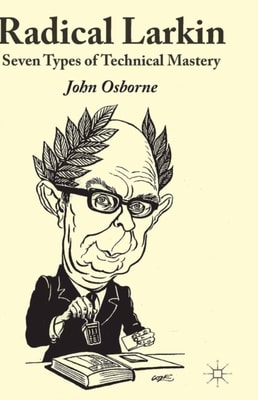
The first critical monograph to benefit from the textual rigour of Archie Burnett's landmark edition of The Complete Poems (2012), Radical Larkin celebrates Larkin's technical genius by offering seven in-depth analyses of the stylistic strategies he used to create eleven of his most famous poems.
Hart Crane's Queer Modernist Aesthetic argues that the aspects of experience which modernists sought to interrogate - time, space, and material things - were challenged further by Crane's queer poetics.
This engaging study offers fresh readings of canonical Shakespeare plays, illuminating ways stagecraft and language of movement create meaning for playgoers.
Food and the Literary Imagination explores ways in which the food chain and anxieties about its corruption and disruption are represented in poetry, theatre and the novel.
In a fresh reading of Gulliver's Travels and A Portrait of the Artist as a Young Man, Atkins draws parallels between the protagonists: both Lemuel Gulliver and Stephen Dedalus flee from the burdens of life, seeking a transcendent existence.
This book analyzes the iconographic traditions of Jeremiah and of melancholy to show how Donne, Herbert, and Milton each fashions himself after the icons presented in Rembrandt's Jeremiah Lamenting the Destruction of Jerusalem , Sluter's sculpture of Jeremiah in the Well of Moses, and Michelangelo's fresco of Jeremiah in the Sistine Chapel.
Tracing material and metaphoric waste through the Western canon, ranging from Beowulf to Samuel Beckett, Susan Signe Morrison disrupts traditional perceptions of waste to better understand how we theorize, manage, and are implicated in what is discarded and seen as garbage.
Taking as its starting point Delmore Schwartz's self-appointment as both a 'poet of the Hudson River' and 'laureate of the Atlantic,' this book comprehensively reassesses the poetic achievement of a critically neglected writer.