In Fictions of Land and Flesh Mark Rifkin explores the impasses that arise in seeking to connect Black and Indigenous movements, turning to speculative fiction to understand those difficulties and envision productive ways of addressing them.
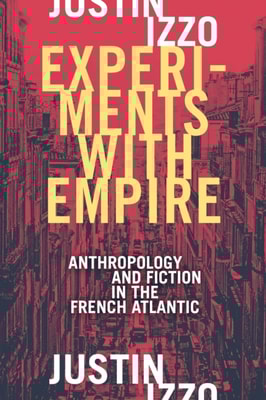
In Experiments with Empire Justin Izzo examines how twentieth-century writers, artists, and anthropologists from France, West Africa, and the Caribbean experimented with ethnography and fiction in order to explore new ways of knowing the colonial and postcolonial world.
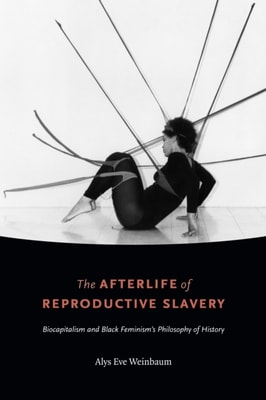
In The Afterlife of Reproductive Slavery Alys Eve Weinbaum investigates the continuing resonances of Atlantic slavery in the cultures and politics of human reproduction that characterize contemporary biocapitalism.
In Postcolonial Grief Jinah Kim explores the relationship of mourning to transpacific subjectivities, aesthetics, and decolonial politics since World War II.
From his arrival in Britain in the 1950s and involvement in the New Left, to founding the field of cultural studies and examining race and identity in the 1990s and early 2000s, Stuart Hall has been central to shaping many of the cultural and political debates of our time.
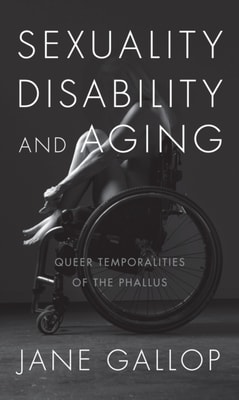
Drawing on her own experiences with late-onset disability and its impact on her sex life, along with her expertise as a cultural critic, Jane Gallop explores how disability and aging work to undermine one's sense of self.
From his arrival in Britain in the 1950s and involvement in the New Left, to founding the field of cultural studies and examining race and identity in the 1990s and early 2000s, Stuart Hall has been central to shaping many of the cultural and political debates of our time.
In The Difference Aesthetics Makes cultural critic Kandice Chuh asks what the humanities might be and do if organized around what she calls "e;illiberal humanism"e; instead of around the Western European tradition of liberal humanism that undergirds the humanities in their received form.
This work describes the crucial role celebrities played in the emergence of two competing narratives about Covid-19, one a pro-science narrative that advocated for preventive measures and the other a skeptical counter narrative that denied the disease's existence or downplayed its severity.
Many of Bob Dylan's most well-known works date from the 1960s, and can be seen as critical indicators of the changes in American society then and since.
When Kenneth Johnson's science fiction miniseries V premiered in 1983, it netted more than 40 percent of the television viewing audience and went on to spawn a sequel, a weekly series, novelizations, comic books and a remake.
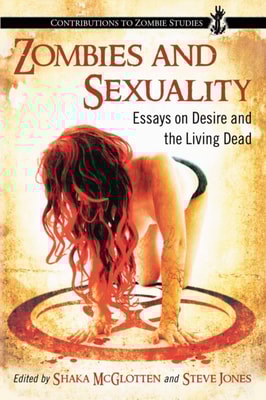
Since the early 2000s, zombies have increasingly swarmed the landscape of popular culture, with ever more diverse representations of the undead being imagined.
This detailed chronological analysis of British World War II movies from 1939 until the present explores how films projected recognizable stereotypes of British national character and how the times in which a film was made shaped its perspectives.
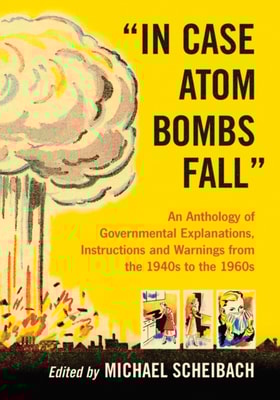
With the very real possibility of nuclear war looming on the horizon from 1945 to the early 1960s, both federal and local governments took on the responsibility of educating Americans on how to survive the expected blasts, residual fallout, and radiation poisoning.
Howard Phillips Lovecraft was born late in the 19th century, but it was not until after his death in 1937 that he became a worldwide icon of horror and supernatural fiction.
Welche Funktionen haben etwa der Schauspieler James Dean, die Zeitschrift Reader’s Digest oder eine Werbeanzeige für Persil in Gottfried Benns später Lyrik, in Heinrich Bölls Kriegsprosa sowie in Alfred Anderschs Rundfunkarbeiten?
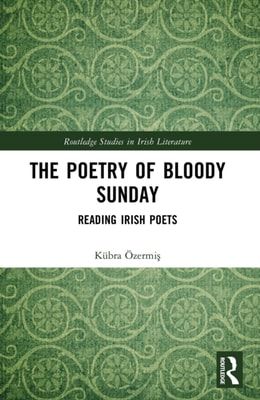
As a turning point that changed the course of the 'Troubles', the Bloody Sunday massacre continues to define ongoing debates about the legacy of the 'Troubles' and the impact of state violence.
Roland Barthes – the author of such enduringly influential works as Mythologies and Camera Lucida - was one of the most important cultural critics of the post-war era.
Roland Barthes – the author of such enduringly influential works as Mythologies and Camera Lucida - was one of the most important cultural critics of the post-war era.
Queer Shakespeare: Desire and Sexuality draws together 13 essays, which offer a major reassessment of the criticism of desire, body and sexuality in Shakespeare's drama and poetry.
Queer Shakespeare: Desire and Sexuality draws together 13 essays, which offer a major reassessment of the criticism of desire, body and sexuality in Shakespeare's drama and poetry.
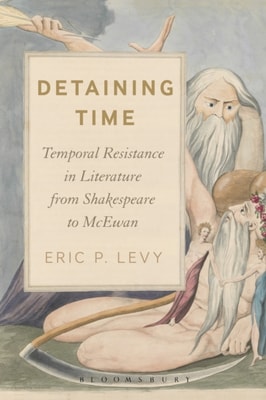
Detaining Time is the first book to investigate the representation of time in literature in terms of the project to reconceptualize time, so that its movement no longer threatens security.
Detaining Time is the first book to investigate the representation of time in literature in terms of the project to reconceptualize time, so that its movement no longer threatens security.
British Fiction and the Struggle Against Work offers an account of British literary responses to work from the 1950s to the onset of the financial crisis of 2008/9.
British Fiction and the Struggle Against Work offers an account of British literary responses to work from the 1950s to the onset of the financial crisis of 2008/9.
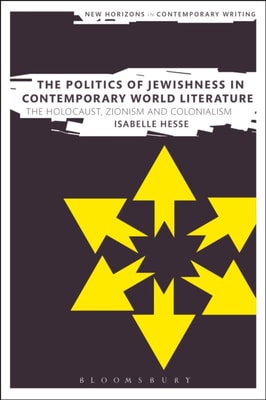
Reading a wide range of novels from post-war Germany to Israeli, Palestinian and postcolonial writers, The Politics of Jewishness in Contemporary World Literature is a comprehensive exploration of changing cultural perceptions of Jewishness in contemporary writing.
Reading a wide range of novels from post-war Germany to Israeli, Palestinian and postcolonial writers, The Politics of Jewishness in Contemporary World Literature is a comprehensive exploration of changing cultural perceptions of Jewishness in contemporary writing.