From Plato to Freud to ecocriticism, the book illustrates dozens of stimulating-and sometimes notoriously complex-perspectives for approaching literature and film.
Contextualising the emergence of literary and aesthetic modernism and cultural nationalism within the popularity of the Renaissance, this volume offers new insights into high and low culture, as well as historical periodization.
The Double Binds of Ethics after the Holocaust advances the idea that the Holocaust undermined confidence in basic beliefs about human rights and shows steps of salvage and retrieval that need to be taken if ethics is to be a significant presence in a world still besieged by genocide and atrocity.
Usinga method that combines analysis, memoir, and polemic, McGee writes experimentally about a series of thinkers who ruptured linguistic and social hierarchies, fromMarx, to Gramsci, to Badiou.
Cohen utilizes the interdisciplinary nature of contemporary literary and cultural studies to shed new light on the relationships between technologies and the people who used them during the early modern period.
Ousselin sets out to show that Europe is essentially a literary fiction and that the ongoing movement towards European unity cannot be understood without reference to the literary works that helped bring it about.
By considering the disruptive potential of age disparate marriages in nineteenth-century British literature, Godfrey offers provocative new readings of canonical texts including Don Juan, Jane Eyre, and Bleak House.
The Culture of the Gift in Eighteenth-Century England analyzes the long overlooked role of gift exchange in literary texts and cultural documents and provides innovative readings of how gift transactions shaped the institutions and practices that gave this era its distinctive identity.
Tracing the Aesthetic Principle in Conrad s Novels sets out to revolutionize our reading of Joseph Conrad s works and challenge the critical heritage that accompanies them.
The book advances the idea that American, Southern, white, planter class authors have appropriated models and modes of masculinity from William Shakespeare.
This collection attends to western women's struggles within Roman Catholicism by examining how women throughout the centuries have attempted to reconcile their unruliness with their Catholic backgrounds or conversions.
Uses recent thought in continental philosophy and postmodern theology to interpret hidden and contradictory 'god-ideas' in texts of modernism such as Henry James's The Golden Bowl , Marcel Proust's In Search of Lost Time , James Joyce's Portrait of the Artist As a Young Man , and Arnold Schoenberg's opera Moses und Aron .
Traber reexamines the practice of self-marginalization in Euro-American literature and popular culture that depict whites adopting varied markers of otherness to disengage from the dominant culture.
In a series of paradigmatic readings of Rene Girard, Peter Sloterdijk, Michael Haneke, Anselm Kiefer, Michel Houellebecq, Elfriede Jelinek, Giorgio Agamben, Naqvi examines the current fascination with victimhood and the desire for victim status.
This study discovers how contemporary writers have imagined possible relationships between African American and white women that overcome the stereotypical patterns of racism, using novels and autobiographies and focusing on works by William Faulkner, Lillian Hellman, Audre Lorde, Kaye Gibbons, Elizabeth Cox, Sherley Anne Wiliams, and Toni Morrison
Using postmodern theory, The Practice of Quixotism explores eighteenth-century women's texts that use quixote narratives, which typically demand that individuals purge their minds of internalized fictions to insist instead that the reality we encounter is inevitably mediated by the texts we have read.
This comprehensive and discriminating account of Tolkien's work has been revised and expanded, to take account both of recent developments in scholarship, and of the recent films directed by Peter Jackson.
Sentimentalism, Ethics and the Culture of Feeling defends feeling against customary distrust or condescension by showing that the affective turn of the eighteenth-century cult of sentiment, despite its sometimes surreal manifestations, has led to a positive culture of feeling.
Transformative learning is a process in which we question all the assumptions about the world and ourselves that make up our worldview, visualize alternative assumptions, and then test them in practice.
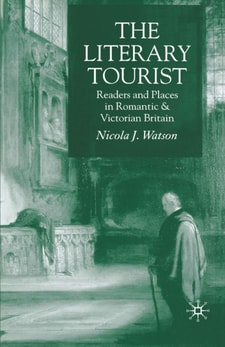
This original, witty, illustrated study offers the first analytical history of the rise and development of literary tourism in nineteenth-century Britain, associated with authors from Shakespeare, Gray, Keats, Burns and Scott, the Bronte sisters, and Thomas Hardy.
This book explores the sense in which the uncanny may be a distinctively modern experience, the way these unnerving feelings and unsettling encounters disturb the rational presumptions of the modern world view and the security of modern self-identity, just as the latter may themselves be implicated in the production of these experiences as uncanny.
From Hollywood classics like Jane Eyre or Wuthering Heights to the 1990s wave of Jane Austen films, adaptations of the British Nineteenth-century novel have been sensationally popular.
The Interpersonal Idiom offers a timely reformulation of identity in the age of Shakespeare, recovering a rich and now obsolete language that casts selfhood not as subjective experience but as the experience of others.
Following on from Julian Wolfrey's successful Writing London (1998), this second volume extends Wolfrey's original argument that a new urban sensibility in the nineteenth century had been developed which established new ways of writing about and responding to the city.
In Sex, Gender and Science , Myra Hird outlines the social study of science and nature, specifically in relation to 'sex', sex 'differences' and sexuality.
Transformations of Domesticity in Modern Women's Writing makes new connections between feminist criticism of domestic ideology in the nineteenth century, modernist women's experiments with literary form, contemporary feminist debates about the politics of location, and postmodern theories of social space.
Offering new and theatrically informed readings of plays by a broad range of Renaissance dramatists - including Marlowe, Jonson, Marston, Webster, Middleton and Ford - this new book addresses the question of pleasure: both erotic pleasure as represented on stage and aesthetic pleasure as experienced by readers and spectators.
In der kulturphilosophischen Verschränkung von Pragmatismus, Hermeneutik und Rezeptionsästhetik will diese Studie zeigen, dass gerade der ästhetische Erfahrungsgegenstand durch die Aufkündigung starrer Gegenstands- und Verweisdichotomien die Rezipierenden wesentlich dazwischen sein lässt.
Hamlin's study provides the first full-scale account of the reception and literary appropriation of ancient scepticism in Elizabethan and Jacobean England (c.
Drawing on the theoretical work of Deleuze and Guattari and that of Jean Laplanche - particularly his major and as yet still relatively unfamiliar notion of the phantasme - Social Formation in Hardy's Major Novels is an original and groundbreaking rereading of Hardy's four major tragic novels.
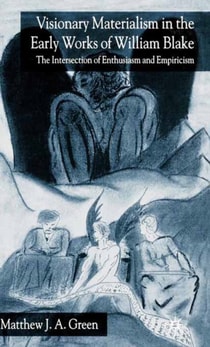
Incorporating the most recent discoveries concerning Blake's heritage and cultural context, Visionary Materialism in the Early Works of William Blake: The Intersection of Enthusiasm and Empiricism proposes a radical new reading of his early works, that sees them taking enlightenment ideas to heights never dreamed of by Locke and Priestley.
The idea of "e;Utopia"e; has made a comeback in the age of globalization, and the bewildering technological shifts and economic uncertainties of the present era call for novel forms of utopia.