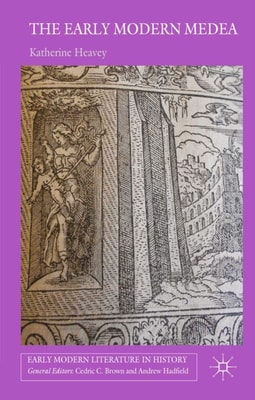
This is the first book-length study of early modern English approaches to Medea, the classical witch and infanticide who exercised a powerful sway over literary and cultural imagination in the period 1558-1688.
This volume studies the manifestations of female trauma through the exploration of multiple wounds, inflicted on both body and mind (Caruth 1996, 3) and the soul of Irish women from Northern Ireland and the Republic within a contemporary context, and in literary works written at the turn of the twenty-first century and beyond.
This book uses an interdisciplinary inter-mediational approach to reflect on the relational complexity of unsettlement as a predominant sensibility of the present epoque.
This volume studies the manifestations of female trauma through the exploration of multiple wounds, inflicted on both body and mind (Caruth 1996, 3) and the soul of Irish women from Northern Ireland and the Republic within a contemporary context, and in literary works written at the turn of the twenty-first century and beyond.
This book uses an interdisciplinary inter-mediational approach to reflect on the relational complexity of unsettlement as a predominant sensibility of the present epoque.
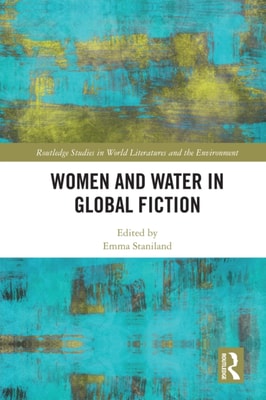
Symbols and tropes of liquidity have long been connected to notions of the feminine and, therefore, with orthodox constructions of femininity and womanhood.
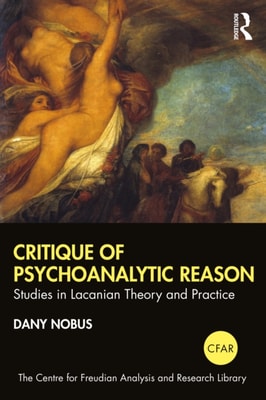
The highly arcane "e;wisdom"e; produced by the French psychoanalyst Jacques Lacan is either endlessly regurgitated and recited as holy writ by his numerous acolytes, or radically dismissed as unpalatable nonsense by his equally countless detractors.
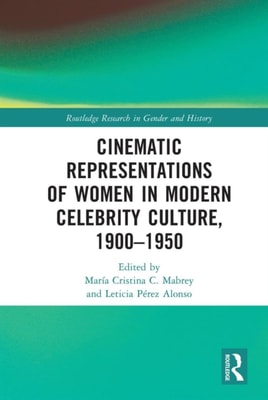
The purpose of this edited volume is to explore the contributions of women to European, Mexican, American and Indian film industries during the years 1900 to 1950, an important period that signified the rise and consolidation of media technologies.
The highly arcane "e;wisdom"e; produced by the French psychoanalyst Jacques Lacan is either endlessly regurgitated and recited as holy writ by his numerous acolytes, or radically dismissed as unpalatable nonsense by his equally countless detractors.
This book uncovers a logical fallacy underlying Afro-Pessimism and provides a formal theory of Articulation, teasing out new reflections on race and Blackness.
This Handbook brings together essays from an impressive group of well-established and emerging scholars from all around the world, to show the many different types of violence that have plagued Latin America since the pre-Colombian era, and how each has been seen and characterized in literature and other cultural mediums ever since.
The purpose of this edited volume is to explore the contributions of women to European, Mexican, American and Indian film industries during the years 1900 to 1950, an important period that signified the rise and consolidation of media technologies.
This Handbook brings together essays from an impressive group of well-established and emerging scholars from all around the world, to show the many different types of violence that have plagued Latin America since the pre-Colombian era, and how each has been seen and characterized in literature and other cultural mediums ever since.
This book uncovers a logical fallacy underlying Afro-Pessimism and provides a formal theory of Articulation, teasing out new reflections on race and Blackness.
Symbols and tropes of liquidity have long been connected to notions of the feminine and, therefore, with orthodox constructions of femininity and womanhood.
This book lays bare the dialogue between Shakespeare and critics of the stage and positions it as part of an ongoing cultural, ethical, and psychological debate about the effects of performance on actors and on spectators.
This collection of essays explores the hotel as a site of modernity, a space of mobility and transience that shaped the transnational and transcultural modernist activity of the first half of the twentieth century.
This collection of essays explores the hotel as a site of modernity, a space of mobility and transience that shaped the transnational and transcultural modernist activity of the first half of the twentieth century.
Working-Class Women in Irish Literature and Theatre critically engages with works of theatre both by and about working-class women, historically and presently.
Catholic or Protestant, recusant or godly rebel, early modern women reinvented their spiritual and gendered spaces during the reformations in religion in England during the sixteenth century and beyond.
Die bedeutende deutsch-amerikanische Denkerin Hannah Arendt, bekannt für ihre Analysen totalitärer Herrschaft, erfreut sich in den letzten Jahren wieder großen Interesses.
The World Today (1974) examines the world of the late twentieth century and its roots - the disintegration of the old world is analysed in the expansion and subsequent decline of nineteenth-century imperialism, and the attempts by the League of Nations and United Nations to bring about a new order on international cooperation.
Race, Power and Social Segmentation in Colonial Society (1987) studies Guyanese society after slavery and specifically examines the area of social classes and ethnic groups.
The Ruins of Time (1975) examines the conquest of the Maya by the Spanish, the discoveries and adventures of the first travellers among them, the dramatic journeys of Victorian archaeologists and explorers and also contemporary attempts to unravel Maya hieroglyphs.
Where the Waves Fall (1984) centres the stories of the Pacific Islanders and how they were affected by European explorers and colonisers in this unique account of human settlement and cultural interchange in the Pacific islands.
Vasco da Gama and His Successors (1970) looks at a range of Portuguese explorers of the fifteenth and sixteenth centuries, the most important being Vasco da Gama, whose first voyage to India ushered in a period of European conquest and empire, and established direct and permanent contact between Europe and the Far East.
Where the Waves Fall (1984) centres the stories of the Pacific Islanders and how they were affected by European explorers and colonisers in this unique account of human settlement and cultural interchange in the Pacific islands.
The Twilight of European Colonialism (1961) is a comprehensive appraisal of modern colonialism, as well as providing historical background, of the governments of British, French, Belgian and Portuguese colonies.
Vasco da Gama and His Successors (1970) looks at a range of Portuguese explorers of the fifteenth and sixteenth centuries, the most important being Vasco da Gama, whose first voyage to India ushered in a period of European conquest and empire, and established direct and permanent contact between Europe and the Far East.
The Turning Point in Africa (1982) is a significant study of British colonial policy towards tropical Africa during a critical decade, from the complacent trusteeship of the inter-war years to the strategy of decolonization inaugurated after the Second World War.
Race, Power and Social Segmentation in Colonial Society (1987) studies Guyanese society after slavery and specifically examines the area of social classes and ethnic groups.
The Yoruba-Speaking Peoples of the Slave Coast of West Africa (1894) is an important work of in-depth research into one of the principal indigenous communities of West Africa.
The Ruins of Time (1975) examines the conquest of the Maya by the Spanish, the discoveries and adventures of the first travellers among them, the dramatic journeys of Victorian archaeologists and explorers and also contemporary attempts to unravel Maya hieroglyphs.
The Twilight of European Colonialism (1961) is a comprehensive appraisal of modern colonialism, as well as providing historical background, of the governments of British, French, Belgian and Portuguese colonies.
Silent Film Adaptations of Novels by British and American Women Writers, 1903-1929 focuses on fifty-three silent film adaptations of the novels of acclaimed authors George Eliot, Charlotte Bronte, Emily Bronte, Mary Shelley, Louisa May Alcott, Harriet Beecher Stowe, Willa Cather, and Edith Wharton.