Vision, Technology and Subjectivity in Mexican Cyberpunk Literature interrogates an array of cyberpunk and post-cyberpunk science fiction novels and short stories from Mexico whose themes engage directly with visual technologies and the subjectivities they help produce - all published during and influenced by the country's neoliberal era.
Lost Plays in Shakespeare's England examines assumptions about what a lost play is and how it can be talked about; how lost plays can be reconstructed, particularly when they use narratives already familiar to playgoers; and how lost plays can force us to reassess extant plays, particularly through ideas of repertory studies.
This volume takes a deep dive into the philosophical hermeneutics of Shakespearean tradition, providing insight into the foundations, theories, and methodologies of hermeneutics in Shakespeare.
This volume takes a deep dive into the philosophical hermeneutics of Shakespearean tradition, providing insight into the foundations, theories, and methodologies of hermeneutics in Shakespeare.
This thoroughly updated fourth edition of Critical Theory Today offers an accessible introduction to contemporary critical theory, providing in-depth coverage of the most common approaches to literary analysis today, including: feminism; psychoanalysis; Marxism; reader-response theory; New Criticism; structuralism and semiotics; deconstruction; new historicism and cultural criticism; lesbian, gay, and queer theory; African American criticism; and postcolonial criticism and ecocriticism.
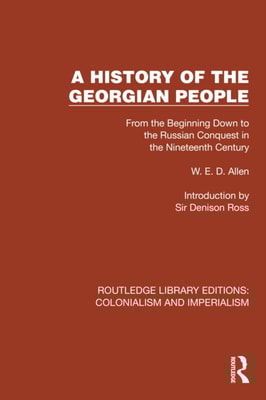
A History of the Georgian People (1971) begins with an account of the early history and ethnographic background of Georgia, and goes on to cover the country's political history from 1000 to 1800 and Russian conquest.
This thoroughly updated fourth edition of Critical Theory Today offers an accessible introduction to contemporary critical theory, providing in-depth coverage of the most common approaches to literary analysis today, including: feminism; psychoanalysis; Marxism; reader-response theory; New Criticism; structuralism and semiotics; deconstruction; new historicism and cultural criticism; lesbian, gay, and queer theory; African American criticism; and postcolonial criticism and ecocriticism.
A History of the Georgian People (1971) begins with an account of the early history and ethnographic background of Georgia, and goes on to cover the country's political history from 1000 to 1800 and Russian conquest.
Se amplia el campo de la argumentacion con una precisa, autorizada e informada descripcion de las diversas posiciones o estilos en el tratamiento del tema, de enorme trascendencia por mostrar la posibilidad del uso de estas herramientas intelectuales y emotivas en la vida cotidiana de un pueblo.
Mid-twentieth-century developments in science and technology produced new understandings and images of the planet that circulated the globe, giving rise to a modern ecological consciousness; but they also contributed to accelerating crises in the global environment, including climate change, pollution, and waste.
Dylan Thomas: A Literary Life offers an account of the poet's life, along with a critical reading of his work, that is designed to close what has been called 'the yawning gap' between Dylan Thomas's popular and critical reputations.
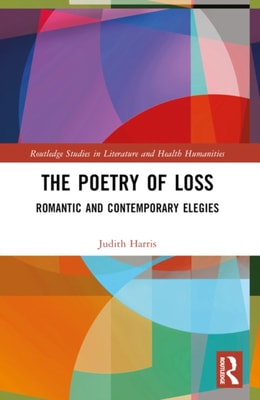
The Poetry of Loss: Romantic and Contemporary Elegies presents a renewed look at elegy as a long-standing tradition in the literature of loss, exploring recent shifts in the continuum of these memorial poems.
The Poetry of Loss: Romantic and Contemporary Elegies presents a renewed look at elegy as a long-standing tradition in the literature of loss, exploring recent shifts in the continuum of these memorial poems.
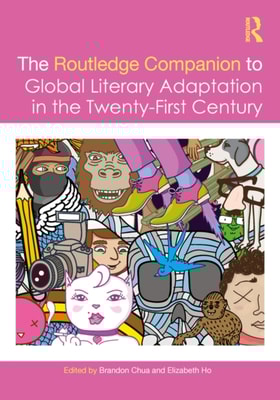
The Routledge Companion to Global Literary Adaptation in the Twenty-First Century offers new perspectives on contemporary literary adaptation as a dynamically global field.
The Routledge Companion to Global Literary Adaptation in the Twenty-First Century offers new perspectives on contemporary literary adaptation as a dynamically global field.
An Introduction to the Blue Humanities is the first textbook to explore the many ways humans engage with water, utilizing literary, cultural, historical, and theoretical connections and ecologies to introduce students to the history and theory of water-centric thinking.
Moving through the elegiac ruins of the Berlin Wall and the Yugoslav disintegration, Writing Postcommunism explores literary evocations of the pervasive disappointment and mourning that have marked the postcommunist twilight.
This book uses the contradictions, fractures and coincidences of a twentieth-century rural landscape to explore new methods of writing place beyond 'new nature writing'.
The Narrative Turn in Fiction and Theory explores the philosophical and historical underpinnings of the postwar crisis and return of storytelling and shows their relevance for the ongoing debate on the significance of narrative for human existence.
The collection brings together experts in the field of twentieth-century writing to provide a volume that is both comprehensive and innovative in its discussion of a set of newly canonical texts.
By situating a range of contemporary literary texts against the backdrop of the legacies of a vast rural network of empire, this book collectively critiques not only the rural heritage industry of the 1980s in Britain but also the effect of neocolonial globalisation on postcolonial rural spaces.
In contrast to most studies of literature from the Great Depression which focus on representations of poverty, labor, and radicalism, this project analyzes popular representations of middle class life.
While trauma theory has been adopted by contemporary literary and cultural studies as an ethical way to study depictions of suffering, there is a risk that its present use could cause more harm than good.
While trauma theory has been adopted by contemporary literary and cultural studies as an ethical way to study depictions of suffering, there is a risk that its present use could cause more harm than good.
Clive, Proconsul of India (1976) examines the life of the man held by many to be one of the main originators of European imperialism in Asia in the eighteenth century.