In this book, Stone effects a return to gender, after many years of neglect by Twenty-First-Century critics, via a methodology of close reading that foregrounds moments of sexual decentering and disequilibrium within the text and in the interstices of the dialogue between Shakespeare and his critics.
In this book, Stone effects a return to gender, after many years of neglect by Twenty-First-Century critics, via a methodology of close reading that foregrounds moments of sexual decentering and disequilibrium within the text and in the interstices of the dialogue between Shakespeare and his critics.
This collection offers readers a timely encounter with the historical experience of people adapting to a pandemic emergency and the corresponding narrative representation of that crisis, as early modern writers transformed the plague into literature.
This collection offers readers a timely encounter with the historical experience of people adapting to a pandemic emergency and the corresponding narrative representation of that crisis, as early modern writers transformed the plague into literature.
This book restores the rich tradition of the Sibyls to the position of prominence they once held in the culture and society of the English Renaissance.
This book restores the rich tradition of the Sibyls to the position of prominence they once held in the culture and society of the English Renaissance.
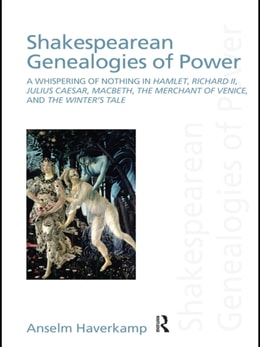
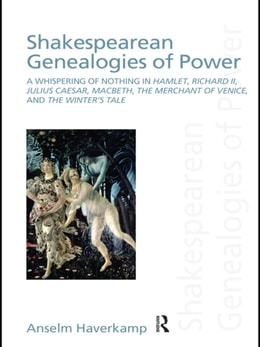
Shakespearean Genealogies of Power proposes a new view on Shakespeare's involvement with the legal sphere: as a visible space between the spheres of politics and law and well able to negotiate legal and political, even constitutional concerns, Shakespeare's theatre opened up a new perspective on normativity.
Shakespearean Genealogies of Power proposes a new view on Shakespeare's involvement with the legal sphere: as a visible space between the spheres of politics and law and well able to negotiate legal and political, even constitutional concerns, Shakespeare's theatre opened up a new perspective on normativity.
Demystifying and contextualising Shakespeare for the twenty-first century, this book offers both an introduction to the subject for beginners as well as an invaluable resource for more experienced Shakespeareans.
Demystifying and contextualising Shakespeare for the twenty-first century, this book offers both an introduction to the subject for beginners as well as an invaluable resource for more experienced Shakespeareans.
First published in English in 1961, this reissue relates the problems of form and style to the development of dramatic speech in pre-Shakespearean tragedy.
First published in English in 1961, this reissue relates the problems of form and style to the development of dramatic speech in pre-Shakespearean tragedy.
This is the first collection of critical essays devoted exclusively to Shakespeare's first published work, his long narrative poem Venus and Adonis which established his reputation as the literary darling of London and the heir of Ovid.
In this timely new study, Borlik reveals the surprisingly rich potential for the emergent "e;green"e; criticism to yield fresh insights into early modern English literature.
In this timely new study, Borlik reveals the surprisingly rich potential for the emergent "e;green"e; criticism to yield fresh insights into early modern English literature.
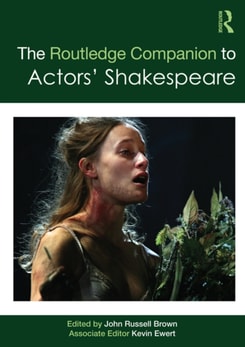
The Routledge Companion to Actors' Shakespeare is a window onto how today's actors contribute to the continuing life and relevance of Shakespeare's plays.
The Routledge Companion to Actors' Shakespeare is a window onto how today's actors contribute to the continuing life and relevance of Shakespeare's plays.
That Shakespeare thematized time thoroughly, almost obsessively, in his plays is well established: time is, among other things, a 'devourer' (Love's Labour's Lost), one who can untie knots (Twelfth Night), or, perhaps most famously, simply 'out of joint' (Hamlet).
That Shakespeare thematized time thoroughly, almost obsessively, in his plays is well established: time is, among other things, a 'devourer' (Love's Labour's Lost), one who can untie knots (Twelfth Night), or, perhaps most famously, simply 'out of joint' (Hamlet).
Entries provide the likely sources for a name; describe historical and mythological backgrounds; examine Shakespeare's presentation of a character or place; and suggest various interpretations of a name.
Entries provide the likely sources for a name; describe historical and mythological backgrounds; examine Shakespeare's presentation of a character or place; and suggest various interpretations of a name.
An original reading of Shakespeare's plays illuminating his negotiations with mothers, present and absent, and tracing the genesis of Shakespearean tragedy and romance to a psychologized version of the Fall.
An original reading of Shakespeare's plays illuminating his negotiations with mothers, present and absent, and tracing the genesis of Shakespearean tragedy and romance to a psychologized version of the Fall.
The Tempest: Critical Essays traces the history of Shakespeare's controversial late romance from its early reception (and adaptation) in the seventeenth and eighteenth centuries to the present.
The Tempest: Critical Essays traces the history of Shakespeare's controversial late romance from its early reception (and adaptation) in the seventeenth and eighteenth centuries to the present.
This book argues that Shakespeare was permanently preoccupied with the brutality, corruption, and ultimate groundlessness of the political order of his state, and that the impact of original Tudor censorship, supplemented by the relatively depoliticizing aesthetic traditions of later centuries, have together obscured the consistent subversiveness of his work.
This book argues that Shakespeare was permanently preoccupied with the brutality, corruption, and ultimate groundlessness of the political order of his state, and that the impact of original Tudor censorship, supplemented by the relatively depoliticizing aesthetic traditions of later centuries, have together obscured the consistent subversiveness of his work.
This volume is a comprehensive collection of critical essays on The Taming of the Shrew, and includes extensive discussions of the play's various printed versions and its theatrical productions.