Following on from the phenomenally successful Shakespeare, The Movie, this volume brings together an invaluable new collection of essays on cinematic Shakespeares in the 1990s and beyond.
Breaking new ground by considering productions of popular culture from above, rather than from below, this book draws on theorists of cultural studies, such as Pierre Bourdieu, Roger Chartier and John Fiske to synthesize work from disparate fields and present new readings of well-known literary works.
Breaking new ground by considering productions of popular culture from above, rather than from below, this book draws on theorists of cultural studies, such as Pierre Bourdieu, Roger Chartier and John Fiske to synthesize work from disparate fields and present new readings of well-known literary works.
When critical theory met literary studies in the 1970s and '80s, some of the most radical and exciting theoretical work centred on the quasi-sacred figure of Shakespeare.
When critical theory met literary studies in the 1970s and '80s, some of the most radical and exciting theoretical work centred on the quasi-sacred figure of Shakespeare.
This collection considers issues that have emerged in Early Modern Studies in the past fifteen years relating to understandings of mind and body in Shakespeare's world.
This collection considers issues that have emerged in Early Modern Studies in the past fifteen years relating to understandings of mind and body in Shakespeare's world.
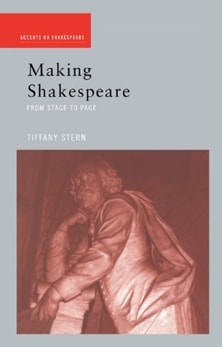
Making Shakespeare is a lively introduction to the major issues of the stage and print history, whilst also raising questions about what a Shakespeare play actually is.
Making Shakespeare is a lively introduction to the major issues of the stage and print history, whilst also raising questions about what a Shakespeare play actually is.
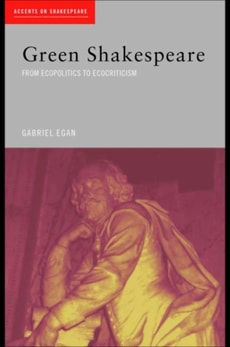
Ecocriticism, a theoretical movement examining cultural constructions of Nature in their social and political contexts, is making an increasingly important contribution to our understanding of Shakespeare's plays.
Ecocriticism, a theoretical movement examining cultural constructions of Nature in their social and political contexts, is making an increasingly important contribution to our understanding of Shakespeare's plays.
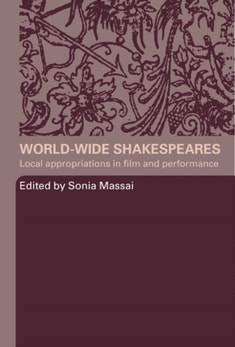
Drawing on debates around the global/local dimensions of cultural production, an international team of contributors explore the appropriation of Shakespeare's plays in film and performance around the world.
Drawing on debates around the global/local dimensions of cultural production, an international team of contributors explore the appropriation of Shakespeare's plays in film and performance around the world.
This unique study investigates the ways in which the staging convention of direct address - talking to the audience - can construct selfhood, for Shakespeare's characters.
This unique study investigates the ways in which the staging convention of direct address - talking to the audience - can construct selfhood, for Shakespeare's characters.
This remarkable volume challenges scholars and students to look beyond a dominant European and North American 'metropolitan bank' of Shakespeare knowledge.
This remarkable volume challenges scholars and students to look beyond a dominant European and North American 'metropolitan bank' of Shakespeare knowledge.
Presentist Shakespeares is the first extended study of the principles and practice of 'presentism', a critical movement that takes account of the never-ending dialogue between past and present.
Presentist Shakespeares is the first extended study of the principles and practice of 'presentism', a critical movement that takes account of the never-ending dialogue between past and present.
Shakespeare, Authority, Sexuality is a powerful reassessment of cultural materialism as a way of understanding textuality, history and culture, by one of the founding figures of this critical movement.
Shakespeare, Authority, Sexuality is a powerful reassessment of cultural materialism as a way of understanding textuality, history and culture, by one of the founding figures of this critical movement.
Bringing together some of the best current practitioners of historical and formal criticism, Reading Renaissance Ethics assesses the ethical performance of renaissance texts as historical agents in their time and in ours.
Bringing together some of the best current practitioners of historical and formal criticism, Reading Renaissance Ethics assesses the ethical performance of renaissance texts as historical agents in their time and in ours.
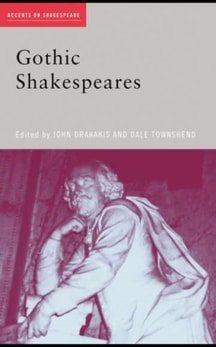
Readings of Shakespeare were both influenced by and influential in the rise of Gothic forms in literature and culture from the late eighteenth century onwards.
Readings of Shakespeare were both influenced by and influential in the rise of Gothic forms in literature and culture from the late eighteenth century onwards.