Over the recent years, identity has become one of the most central theoretical concept and topics of scholarship in a number of disciplines, including science education.
The Finnish students'success in the first PISA 2000 evaluation was a surprise to most of the Finns, and even people working in teacher education and educational administration had difficulties to believe that this situation would continue.
The author takes readers on a journey of a large number of issues in designing actual studies of knowing and learning in the classroom, exploring actual data, and putting readers face to face with problems that he actually or possibly encountered, and what he has done or possibly could have done.
The success of Problem Based Learning and Project Organised learning (PBL) as an educational method in the field of Higher Engineering Education is clear and beyond any doubt.
This first volume in the International Technology Education Series offers a unique, worldwide collection of national surveys into the developments of Technology Education in the past two decades.
Problem-Based Learning (PBL) and Project-Based Learning are teaching methods based on principles of student-centred learning, which target an interdisciplinary engineering curriculum.
A Contemporary Autobiography of a Science Educator reminds readers that they teach who they are, and understanding who they are is fundamental for meaningful communication and effective classroom instruction.
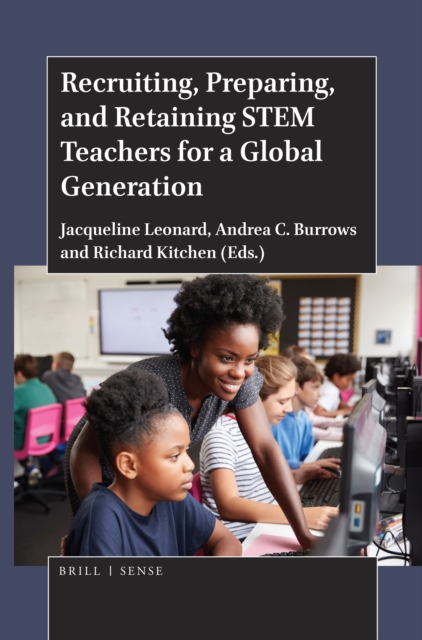
There is a critical need to prepare diverse teachers with expertise in science, technology, engineering, and mathematics (STEM) with the skills necessary to work effectively with underrepresented K-12 students.
Findings generated by recent research in science education, international debate on the guiding purposes of science education and the nature of scientific and technological literacy, official and semi-official reports on science education (including recommendations from prestigious organizations such as AAAS and UNESCO), and concerns expressed by scientists, environmentalists and engineers about current science education provision and the continuing low levels of scientific attainment among the general population, have led to some radical re-thinking of the nature of the science curriculum.
The Culture of Science Education: Its History in Person features the auto/biographies of the professional lives of 22 science educators from 11 countries situated in different places along the career ladder within an ongoing narrative of the cultural history of the field.
From a rationale of multiculturalism and a based on systemic approach grounded in the Arab-Islamic tradition, this book integrates history, education, science, and feminism to understand the implications of culture in social change, cultural identity, and cultural exchange.
Elementary preservice teachers'school experiences of mathematics and science have shaped their images of knowing, including what counts as knowledge and what it means to know (in) mathematics and science.
Key Works on Radical Constructivism brings together a number of essays by Ernst von Glasersfeld that illustrate the application of a radical constructivist way of thinking in the areas of education, language, theory of knowledge, and the analysis of a few concepts that are indispensable in almost everything we think and do.
In this era of mandated high stakes and standardized testing, teachers and schools officials find themselves struggling to meet the demands for improved student achievement.
We know little about diverse youths' engagement in science outside of school, the form such engagement takes and its impact on science literacy development and identity as a potential insider to science.
As more attention is devoted to the increasing and complex socio-ecological issues facing the planet, new insights and new ways of thinking are being sought about the learning and agency of children and adults in relation to these environmental concerns.
This book presents an international perspective on environmental educational and specifically the influence that context has on this aspect of curriculum.
The Meaning of Learning and Knowing, co-authored by Erik Jan van Rossum and Rebecca Hamer, brings together empirical studies on epistemology, student thinking, teacher thinking, educational policy and staff development forging a solid and practical foundation for educational innovation.
In Environmental Education: Identity, Politics and Citizenship the editors endeavor to present views of environmental educators that focus on issues of identity and subjectivity, and how 'narrated lives' relate to questions of learning, education, politics, justice, and citizenship.
This is a fully rewritten and extended version of the successful first edition of a textbook which focuses on consumer-driven food product innovation using a systems-oriented approach.
This book focuses on the talk of science classrooms and in particular on the ways in which the different kinds of interactions between teachers and students contribute to meaning making and learning.
The dominance of computer labs in our schools is the result of a long struggle among teachers and technicians for control of precious computer resources.
Research in environmental education (EE) is a growing field of inquiry and should be seen as respondent to a variety of program developments around the world.
The mission of the Knowles Science Teaching Foundation (KSTF), to increase the quantity of high quality high school science and mathematics teachers in United States High Schools, calls for a deeper understanding of what it takes to prepare and support successful teachers.
In the past twenty years, the development of technology education in France was complemented by a development of educational research in technological education.
Since its appearance in 1995, Authentic School Science has been a resource for many teachers and schools to rethink and change what they are doing in and with their science classrooms.