We know little about diverse youths' engagement in science outside of school, the form such engagement takes and its impact on science literacy development and identity as a potential insider to science.
As more attention is devoted to the increasing and complex socio-ecological issues facing the planet, new insights and new ways of thinking are being sought about the learning and agency of children and adults in relation to these environmental concerns.
This book will address the discussion on online distance education, teacher education, and how the mathematics is transformed with the Internet, based on examples that illustrate the possibilities of different course models and on the theoretical construct humans-with-media.
This book presents an international perspective on environmental educational and specifically the influence that context has on this aspect of curriculum.
The Meaning of Learning and Knowing, co-authored by Erik Jan van Rossum and Rebecca Hamer, brings together empirical studies on epistemology, student thinking, teacher thinking, educational policy and staff development forging a solid and practical foundation for educational innovation.
Learning and teaching complex cultural knowledge calls for meaningful participation in different kinds of symbolic practices, which in turn are supported by a wide range of external representations, as gestures, oral language, graphic representations, writing and many other systems designed to account for properties and relations on some 2- or 3-dimensional objects.
In Environmental Education: Identity, Politics and Citizenship the editors endeavor to present views of environmental educators that focus on issues of identity and subjectivity, and how 'narrated lives' relate to questions of learning, education, politics, justice, and citizenship.
This is a fully rewritten and extended version of the successful first edition of a textbook which focuses on consumer-driven food product innovation using a systems-oriented approach.
Permanent external representations in the form of drawings, maps, musical scores, figures, graphs, writing, numerals, hallmarks and signatures are part of our daily landscape and permeate most social activities almost from the moment we are born.
During the last decade, a revaluation of proof and proving within mathematics curricula was recommended; great emphasis was put on the need of developing proof-related skills since the beginning of primary school.
This book focuses on the talk of science classrooms and in particular on the ways in which the different kinds of interactions between teachers and students contribute to meaning making and learning.
The dominance of computer labs in our schools is the result of a long struggle among teachers and technicians for control of precious computer resources.
Research in environmental education (EE) is a growing field of inquiry and should be seen as respondent to a variety of program developments around the world.
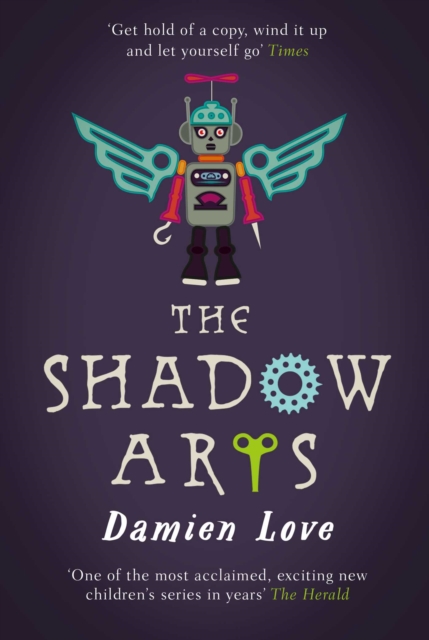
';A dark, mysterious, adrenaline-pumping rollercoaster of a story' Kieran Larwood, author of The Five Realms ';Clever, funny, exciting and occasionally downright nasty terrific stuff!
The mission of the Knowles Science Teaching Foundation (KSTF), to increase the quantity of high quality high school science and mathematics teachers in United States High Schools, calls for a deeper understanding of what it takes to prepare and support successful teachers.
In the past twenty years, the development of technology education in France was complemented by a development of educational research in technological education.
Since its appearance in 1995, Authentic School Science has been a resource for many teachers and schools to rethink and change what they are doing in and with their science classrooms.
The Handbook of Mathematics Teacher Education, the first of its kind, addresses the learning of mathematics teachers at all levels of schooling to teach mathematics, and the provision of activity and programmes in which this learning can take place.
Science in secondary schools has tended to be viewed mainly as a 'practical subject', and language and literacy in science education have been neglected.
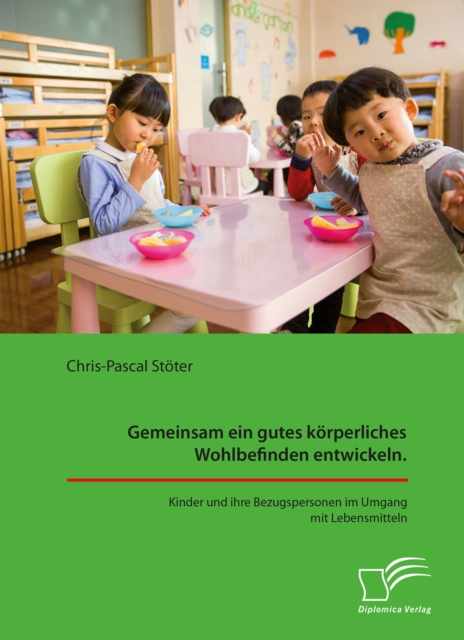
In diesem Fachbuch wird für Eltern und pädagogische Fachkräfte in Kindergärten ein Fachwissen über förderliche Entwicklungsbausteine bei der Ernährung für Kinder im Alter von drei bis sechs Jahren vermittelt.