This book describes a complete revolution in software engineering based on complexity science through the establishment of NSE - Nonlinear Software Engineering paradigm which complies with the essential principles of complexity science, including the Nonlinearity principle, the Holism principle, the Complexity Arises From Simple Rules principle, the Initial Condition Sensitivity principle, the Sensitivity to Change principle, the Dynamics principle, the Openness principle, the Self-organization principle, and the Self-adaptation principle.
Cryptographic access control (CAC) is an approach to securing data by encrypting it with a key, so that only the users in possession of the correct key are able to decrypt the data and/or perform further encryptions.
Privacy and security risks arising from the application of different data mining techniques to large institutional data repositories have been solely investigated by a new research domain, the so-called privacy preserving data mining.
The new computing environment enabled by advances in service oriented arc- tectures, mashups, and cloud computing will consist of service spaces comprising data, applications, infrastructure resources distributed over the Web.
Genetic Programming Theory and Practice VII presents the results of the annual Genetic Programming Theory and Practice Workshop, contributed by the foremost international researchers and practitioners in the GP arena.
Practical Programming in the Cell Broadband Engine offers a unique programming guide for the Cell Broadband Engine, demonstrating a large number of real-life programs to identify and solve problems in engineering, logic design, VLSI CAD, number-theory, graph-theory, computational geometry, image processing, and other subjects.
DATA ENGINEERING: Mining, Information, and Intelligence describes applied research aimed at the task of collecting data and distilling useful information from that data.
Motivation for the Book This book seeks to establish the state of the art in the cyber situational awareness area and to set the course for future research.
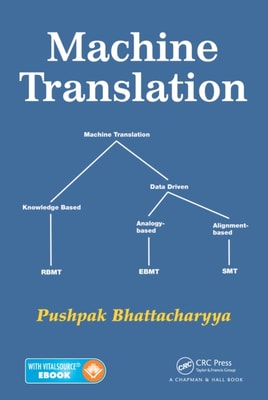
This book compares and contrasts the principles and practices of rule-based machine translation (RBMT), statistical machine translation (SMT), and example-based machine translation (EBMT).
This book compares and contrasts the principles and practices of rule-based machine translation (RBMT), statistical machine translation (SMT), and example-based machine translation (EBMT).
Based on the author's introductory course at the University of Oregon, Explorations in Computing: An Introduction to Computer Science focuses on the fundamental idea of computation and offers insight into how computation is used to solve a variety of interesting and important real-world problems.
Presenting a complementary perspective to standard books on algorithms, A Guide to Algorithm Design: Paradigms, Methods, and Complexity Analysis provides a roadmap for readers to determine the difficulty of an algorithmic problem by finding an optimal solution or proving complexity results.
To understand the principles and practice of software development, there is no better motivator than participating in a software project with real-world value and a life beyond the academic arena.
Collecting scattered knowledge into one coherent account, this book provides a compendium of both classical and recently developed results on reversible computing.
Shadow Algorithms Data Miner provides a high-level understanding of the complete set of shadow concepts and algorithms, addressing their usefulness from a larger graphics system perspective.
Visualization and analysis tools, techniques, and algorithms have undergone a rapid evolution in recent decades to accommodate explosive growth in data size and complexity and to exploit emerging multi- and many-core computational platforms.
Algorithms that control the computational processes relating sensors and actuators are indispensable for robot navigation and the perception of the world in which they move.
This book presents common techniques used in numerous models, algorithms, and tools developed during the last decade to implement desktop grid computing.
Applicable to any problem that requires a finite number of solutions, finite state-based models (also called finite state machines or finite state automata) have found wide use in various areas of computer science and engineering.
Starting with the most basic notions, Universal Algebra: Fundamentals and Selected Topics introduces all the key elements needed to read and understand current research in this field.
A Fruitful Field for Researching Data Mining Methodology and for Solving Real-Life ProblemsContrast Data Mining: Concepts, Algorithms, and Applications collects recent results from this specialized area of data mining that have previously been scattered in the literature, making them more accessible to researchers and developers in data mining and
Winner of a 2015 Alpha Sigma Nu Book Award, Software Essentials: Design and Construction explicitly defines and illustrates the basic elements of software design and construction, providing a solid understanding of control flow, abstract data types (ADTs), memory, type relationships, and dynamic behavior.
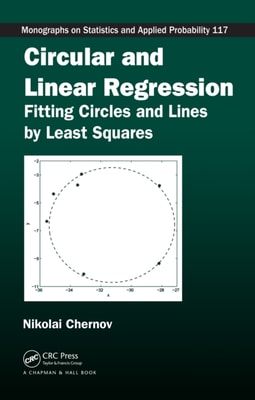
Find the right algorithm for your image processing applicationExploring the recent achievements that have occurred since the mid-1990s, Circular and Linear Regression: Fitting Circles and Lines by Least Squares explains how to use modern algorithms to fit geometric contours (circles and circular arcs) to observed data in image processing and comput
Although the particle swarm optimisation (PSO) algorithm requires relatively few parameters and is computationally simple and easy to implement, it is not a globally convergent algorithm.
Computer arithmetic has become so fundamentally embedded into digital design that many engineers are unaware of the many research advances in the area.
Combinatorial Scientific Computing explores the latest research on creating algorithms and software tools to solve key combinatorial problems on large-scale high-performance computing architectures.
The hybrid/heterogeneous nature of future microprocessors and large high-performance computing systems will result in a reliance on two major types of components: multicore/manycore central processing units and special purpose hardware/massively parallel accelerators.
Offering a wide range of programming examples implemented in MATLAB, Computational Intelligence Paradigms: Theory and Applications Using MATLAB presents theoretical concepts and a general framework for computational intelligence (CI) approaches, including artificial neural networks, fuzzy systems, evolutionary computation, genetic algorithms and pr
Energy-Aware Memory Management for Embedded Multimedia Systems: A Computer-Aided Design Approach presents recent computer-aided design (CAD) ideas that address memory management tasks, particularly the optimization of energy consumption in the memory subsystem.