Artificial Intelligence and Edge Computing for Sustainable Ocean Health explores the transformative role of AI and edge computing in preserving and enhancing ocean health.
This interdisciplinary book incorporates various aspects of environment, ecology, and natural disaster management including cognitive informatics and computing.
This book systematically elaborates on the intelligent information processing technology for a bioinspired polarization compass and inertial integrated navigation system.
The PC era is giving way to a new form of popular computing in which smart, globally-connected objects and environments are the new computational ground.
This book explores how visualization provides an effective way of improving not only the interpretability but also the generalization capabilities of machine learning models.
Making obscure knowledge about matrix decompositions widely available, Understanding Complex Datasets: Data Mining with Matrix Decompositions discusses the most common matrix decompositions and shows how they can be used to analyze large datasets in a broad range of application areas.
Due to increasing demands for dimensionality reduction, research on feature selection has deeply and widely expanded into many fields, including computational statistics, pattern recognition, machine learning, data mining, and knowledge discovery.
Collecting the latest developments in the field, Multimedia Data Mining: A Systematic Introduction to Concepts and Theory defines multimedia data mining, its theory, and its applications.
This volume encompasses many new types of constraints and clustering methods as well as delivers thorough coverage of the capabilities and limitations of constrained clustering.
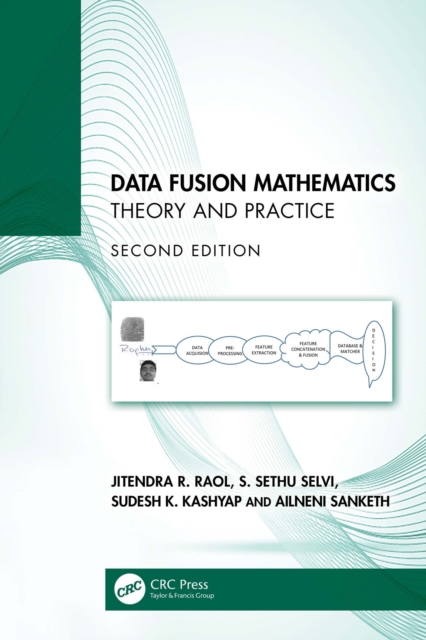
Data Fusion Mathematics: Theory and Practice offers a comprehensive overview of data fusion (DF) and provides a proper and adequate understanding of the basic mathematics directly related to DF.
Anomaly detection in video surveillance stands at the core of numerous real-world applications that have broad impact and generate significant academic and industrial value.
The Fourth Industrial Revolution is being accelerated by the digital twin technological revolution, which converges intelligent technologies and defines the connectivity between physical and digital items.
While Robotic Process Automation (RPA) has been around for about 20 years, it has hit an inflection point because of the convergence of cloud computing, big data and AI.
Comprehensively covers protein subcellular localization from single-label prediction to multi-label prediction, and includes prediction strategies for virus, plant, and eukaryote species.
Comprehensively covers protein subcellular localization from single-label prediction to multi-label prediction, and includes prediction strategies for virus, plant, and eukaryote species.
Automatic biometrics recognition techniques are increasingly important in corporate and public security systems and have increased in methods due to rapid field development.
In the last few years the scientific community has realized that obtaining a better understanding of interactions between natural systems and the man-made environment across different scales demands more research efforts in remote sensing.
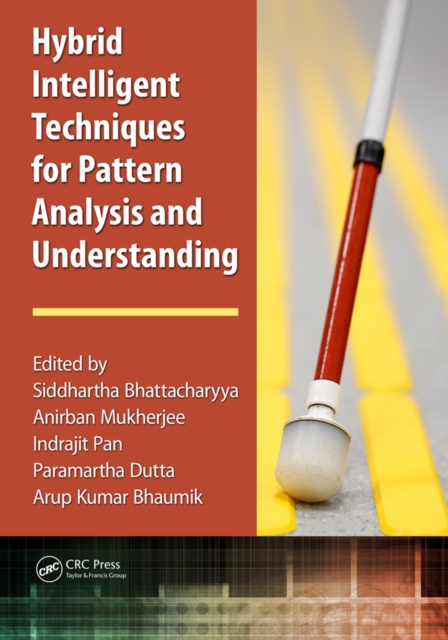
Hybrid Intelligent Techniques for Pattern Analysis and Understanding outlines the latest research on the development and application of synergistic approaches to pattern analysis in real-world scenarios.
Data Mining: A Tutorial-Based Primer, Second Edition provides a comprehensive introduction to data mining with a focus on model building and testing, as well as on interpreting and validating results.
Comprehensive Coverage of the Entire Area of ClassificationResearch on the problem of classification tends to be fragmented across such areas as pattern recognition, database, data mining, and machine learning.
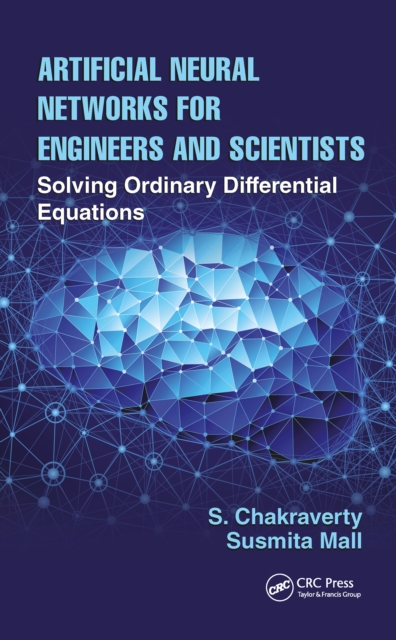
The utility of artificial neural network models lies in the fact that they can be used to infer functions from observations making them especially useful in applications where the complexity of data or tasks makes the design of such functions by hand impractical.
Artificial Intelligence Tools: Decision Support Systems in Condition Monitoring and Diagnosis discusses various white- and black-box approaches to fault diagnosis in condition monitoring (CM).