Safety and Wearable Technology tackles the profound issue of workplace safety, as each day unacceptable numbers of workers lose their lives in accidents, with even more succumbing to work-related illnesses across the globe.
This guide covers the fundamental technical principles and various business applications of Generative AI for planning, developing, and evaluating AI-driven products.
Insightful projects to master deep learning and neural network architectures using Python and KerasKey FeaturesExplore deep learning across computer vision, natural language processing (NLP), and image processingDiscover best practices for the training of deep neural networks and their deploymentAccess popular deep learning models as well as widely used neural network architecturesBook DescriptionDeep learning has been gradually revolutionizing every field of artificial intelligence, making application development easier.
The subject of Artificial Intelligence (AI) is continuing on its journey of affecting each and every individual and will keep on this path in the times to come.
Exploring the application and formulation of the EM algorithm, The EM Algorithm and Related Statistical Models offers a valuable method for constructing statistical models when only incomplete information is available, and proposes specific estimation algorithms for solutions to incomplete data problems.
Iterative algorithms often rely on approximate evaluation techniques, which may include statistical estimation, computer simulation or functional approximation.
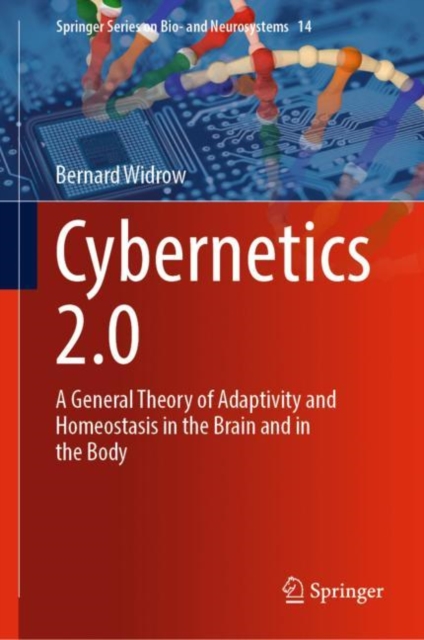
This book is a collection of essays exploring adaptive systems from many perspectives, ranging from computational applications to models of adaptation in living and social systems.
Currently, computational intelligence approaches are utilised in various science and engineering applications to analyse information, make decisions, and achieve optimisation goals.
Nowadays bioinformaticians and geneticists are faced with myriad high-throughput data usually presenting the characteristics of uncertainty, high dimensionality and large complexity.
Nowadays bioinformaticians and geneticists are faced with myriad high-throughput data usually presenting the characteristics of uncertainty, high dimensionality and large complexity.
Data Mining: Concepts and Techniques provides the concepts and techniques in processing gathered data or information, which will be used in various applications.
Fog and edge computing are two paradigms that have emerged to address the challenges associated with processing and managing data in the era of the Internet of Things (IoT).
Advanced AI and Data Science Applications explores how the latest developments in artificial intelligence (AI) and data science are transforming diverse domains.
This textbook provides an in-depth exploration of statistical learning with reproducing kernels, an active area of research that can shed light on trends associated with deep neural networks.
Federated Learning: A Comprehensive Overview of Methods and Applications presents an in-depth discussion of the most important issues and approaches to federated learning for researchers and practitioners.
This book presents the state-of-the-art applications of machine learning in the finance domain with a focus on financial product modeling, which aims to advance the model performance and minimize risk and uncertainty.
This book explores machine learning (ML) defenses against the many cyberattacks that make our workplaces, schools, private residences, and critical infrastructures vulnerable as a consequence of the dramatic increase in botnets, data ransom, system and network denials of service, sabotage, and data theft attacks.
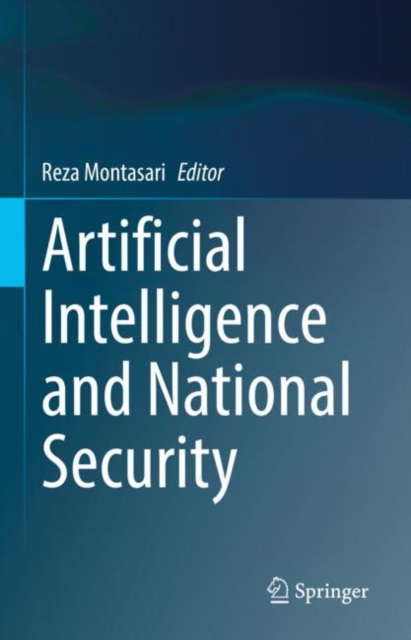
This book analyses the implications of the technical, legal, ethical and privacy challenges as well as challenges for human rights and civil liberties regarding Artificial Intelligence (AI) and National Security.
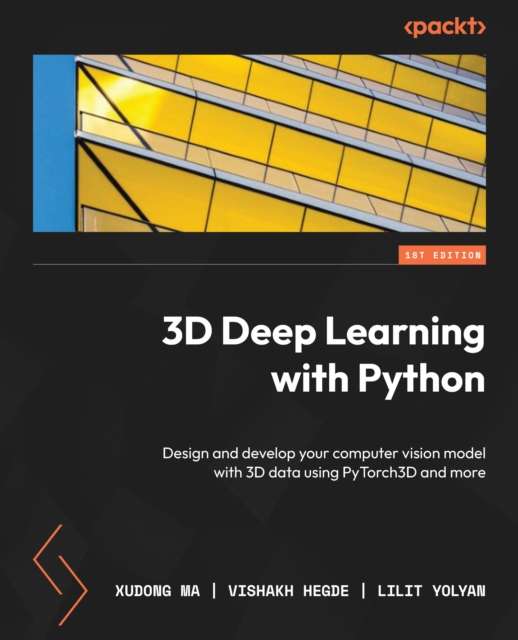
Visualize and build deep learning models with 3D data using PyTorch3D and other Python frameworks to conquer real-world application challenges with easeKey FeaturesUnderstand 3D data processing with rendering, PyTorch optimization, and heterogeneous batchingImplement differentiable rendering concepts with practical examplesDiscover how you can ease your work with the latest 3D deep learning techniques using PyTorch3DBook DescriptionWith this hands-on guide to 3D deep learning, developers working with 3D computer vision will be able to put their knowledge to work and get up and running in no time.
Incorporate deep learning into your development projects through hands-on coding and the latest versions of deep learning software, such as TensorFlow 2 and Keras.