Communication Skills for Generative AI: A Practical Guide for Humans is the first comprehensive book to treat communication with generative AI as a distinct human competence-analogous to digital literacy, media literacy, or academic writing skills.
This book explores the emerging paradigm of Agentic AI, where Large Language Models (LLMs) and Reinforcement Learning (RL) converge to create intelligent, autonomous, and adaptive systems.
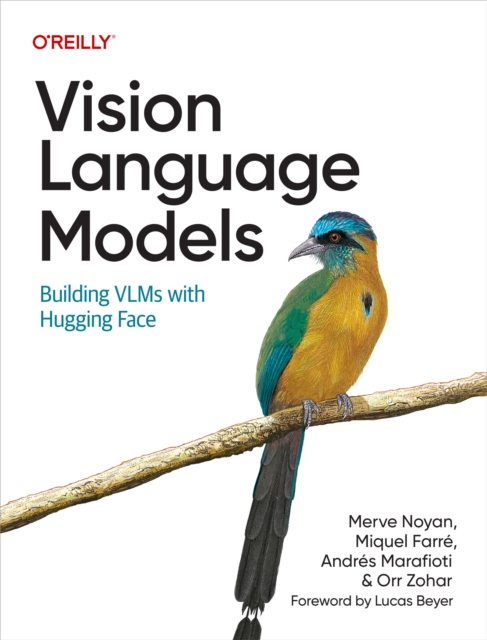
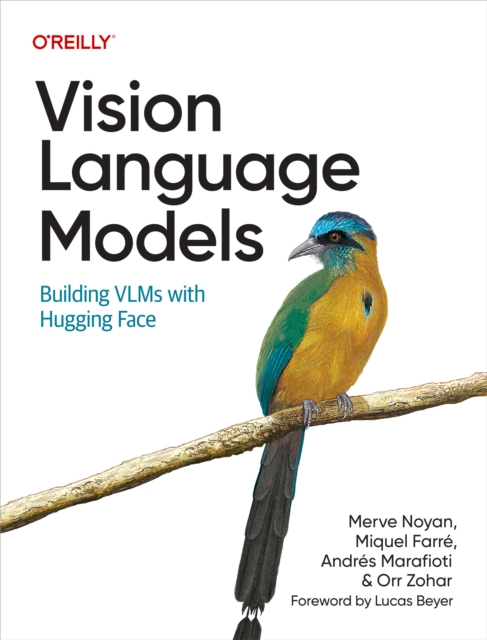
Vision language models (VLMs) combine computer vision and natural language processing to create powerful systems that can interpret, generate, and respond in multimodal contexts.
Vision language models (VLMs) combine computer vision and natural language processing to create powerful systems that can interpret, generate, and respond in multimodal contexts.
This book explores the emerging paradigm of Agentic AI, where Large Language Models (LLMs) and Reinforcement Learning (RL) converge to create intelligent, autonomous, and adaptive systems.
Communication Skills for Generative AI: A Practical Guide for Humans is the first comprehensive book to treat communication with generative AI as a distinct human competence-analogous to digital literacy, media literacy, or academic writing skills.
This book constitutes the refereed post-conference proceedings of the 14th International Conference on Nature of Computing and Pattern Recognition, ICCPR 2025, held in Beijing, China, during October 24–26, 2025The 81 full papers presented in this volume were carefully reviewed and selected from 205 submissions.
This book constitutes the refereed post-conference proceedings of the 14th International Conference on Nature of Computing and Pattern Recognition, ICCPR 2025, held in Beijing, China, during October 24–26, 2025The 81 full papers presented in this volume were carefully reviewed and selected from 205 submissions.
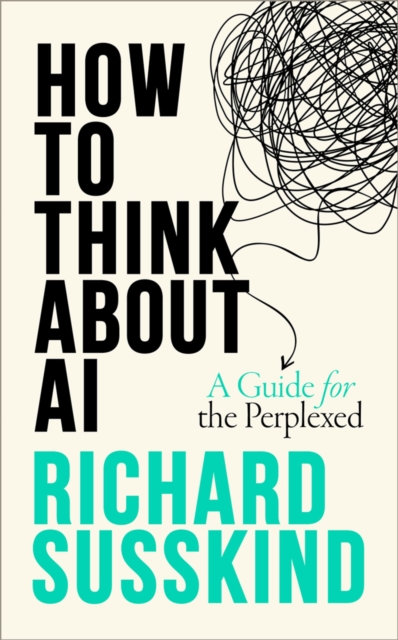
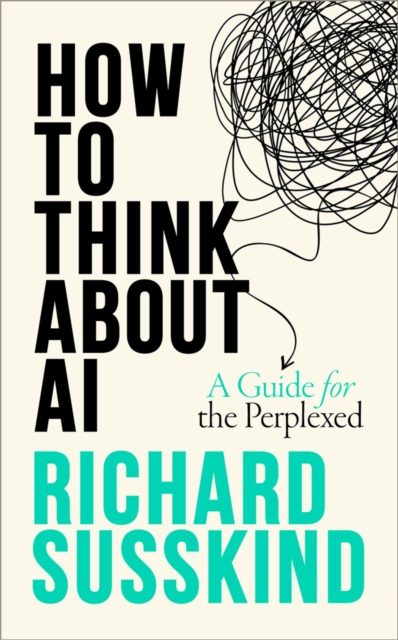
Revealing the unfolding story of Artificial Intelligence, Richard Susskind presents a short non-technical guide that challenges us to think differently about AI.
Revealing the unfolding story of Artificial Intelligence, Richard Susskind presents a short non-technical guide that challenges us to think differently about AI.
This book constitutes the refereed proceedings of the 14th International Joint Conference on Knowledge Graphs, IJCKG 2025, held in Heraklion, Crete, Greece, during October 15–17, 2025.
This book constitutes the refereed proceedings of the 14th International Joint Conference on Knowledge Graphs, IJCKG 2025, held in Heraklion, Crete, Greece, during October 15–17, 2025.
This book constitutes the refereed proceedings of the 7th International Workshop on Formal Methods Teaching, FMTea 2026, held in Tokyo, Japan, on May 19, 2026.
This book constitutes the refereed proceedings of the 7th International Workshop on Formal Methods Teaching, FMTea 2026, held in Tokyo, Japan, on May 19, 2026.
This book constitutes the proceedings of the Third CSIG Conference on Emotional Intelligence, CEI 2025, held in Shenzhen, China during December 5-7, 2025.
This book constitutes the proceedings of the Third CSIG Conference on Emotional Intelligence, CEI 2025, held in Shenzhen, China during December 5-7, 2025.
Online search engines are an essential tool for seeking information, but results returned from these search engines can contain undesirable forms of bias with respect to protected attributes such as gender or race.
Online search engines are an essential tool for seeking information, but results returned from these search engines can contain undesirable forms of bias with respect to protected attributes such as gender or race.
This book addresses critical ethical, social, and technological challenges that arise from the rapid integration of Generative AI systems into diverse aspects of human life.
This book offers a timely and comprehensive exploration of how generative AI technologies are reshaping the landscape of online disinformation, dramatically lowering the barriers to creating realistic synthetic text, imagery, and audio at scale.
This book addresses critical ethical, social, and technological challenges that arise from the rapid integration of Generative AI systems into diverse aspects of human life.
This book offers a timely and comprehensive exploration of how generative AI technologies are reshaping the landscape of online disinformation, dramatically lowering the barriers to creating realistic synthetic text, imagery, and audio at scale.
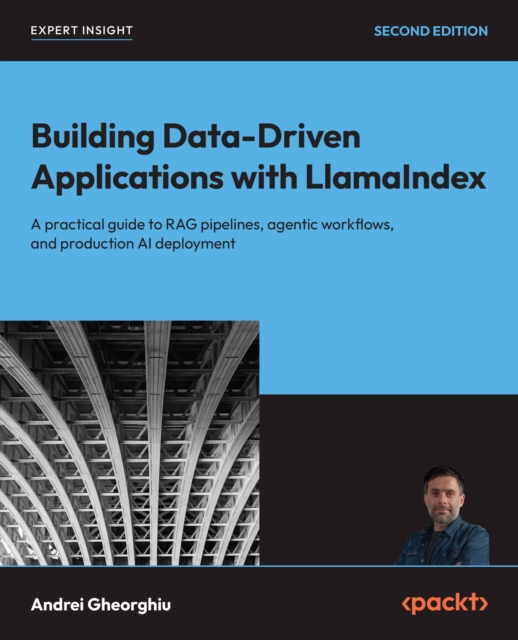
Build data-grounded AI applications with LlamaIndex through hands-on examples covering RAG pipelines, agentic workflows, multi-agent systems, prompt engineering, evaluation, and deployment with Python and Streamlit.
Build data-grounded AI applications with LlamaIndex through hands-on examples covering RAG pipelines, agentic workflows, multi-agent systems, prompt engineering, evaluation, and deployment with Python and Streamlit.
This book offers a comprehensive and application-oriented exploration of Artificial Intelligence (AI) and Natural Language Processing (NLP), addressing both foundational principles and modern, data-driven methodologies.
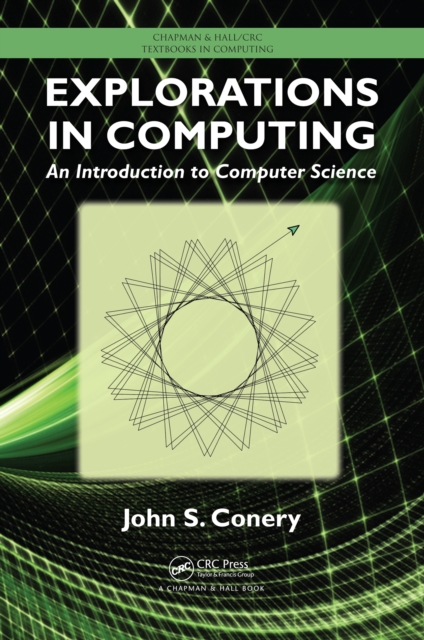
Based on the author's introductory course at the University of Oregon, Explorations in Computing: An Introduction to Computer Science focuses on the fundamental idea of computation and offers insight into how computation is used to solve a variety of interesting and important real-world problems.
Exploiting the rich information found in electronic health records (EHRs) can facilitate better medical research and improve the quality of medical practice.
Natural Language Processing (NLP) is a sub-field of Artificial Intelligence, linguistics, and computer science and is concerned with the generation, recognition, and understanding of human languages, both written and spoken.
This handbook introduces some of the most relevant techniques used to develop intelligent robotic systems and provides several examples of applications where robots equipped with AI are deployed to solve a task.
The rapid advancement of semantic web technologies, along with the fact that they are at various levels of maturity, has left many practitioners confused about the current state of these technologies.
Artificial Intelligence for Natural Language Processing offers a comprehensive exploration of how advanced computational methods are transforming the way machines understand human language.
This book offers a comprehensive and application-oriented exploration of Artificial Intelligence (AI) and Natural Language Processing (NLP), addressing both foundational principles and modern, data-driven methodologies.
Artificial Intelligence for Natural Language Processing offers a comprehensive exploration of how advanced computational methods are transforming the way machines understand human language.
This handbook introduces some of the most relevant techniques used to develop intelligent robotic systems and provides several examples of applications where robots equipped with AI are deployed to solve a task.
Natural Language Processing (NLP) is a sub-field of Artificial Intelligence, linguistics, and computer science and is concerned with the generation, recognition, and understanding of human languages, both written and spoken.
Most of the research aimed at counterterrorism, fraud detection, or other forensic applications assumes that this is a specialized application domain for mainstream knowledge discovery.