This book constitutes the refereed proceedings of the 24th International Conference on Information and Software Technologies, ICIST 2018, held in Vilnius, Lithuania, in October 2018.
This book constitutes revised selected papers from the 9th International Conference on Analysis of Images, Social Networks and Texts, AIST 2020, held during October 15-16, 2020.
This book constitutes the thoroughly refereed post-workshop proceedings of the 21st Chinese Lexical Semantics Workshop, CLSW 2020, held in Hong Kong, China in May 2020.
This book constitutes the post-conference proceedings of the 22nd International Conference on Data Analytics and Management in Data Intensive Domains, DAMDID/RCDL 2020, held in Voronezh, Russia, in October 2020*.
This book constitutes the proceedings of the 21st International Conference on Developments in Language Theory, DLT 2017, held in Liege, Belgium, in August 2017.
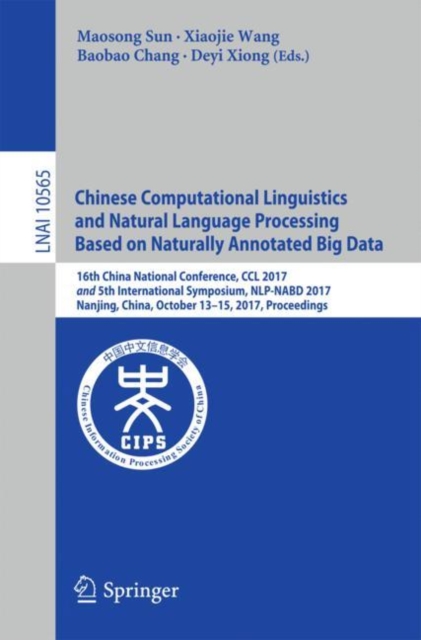
This book constitutes the proceedings of the 16th China National Conference on Computational Linguistics, CCL 2017, and the 5th International Symposium on Natural Language Processing Based on Naturally Annotated Big Data, NLP-NABD 2017, held in Nanjing, China, in October 2017.
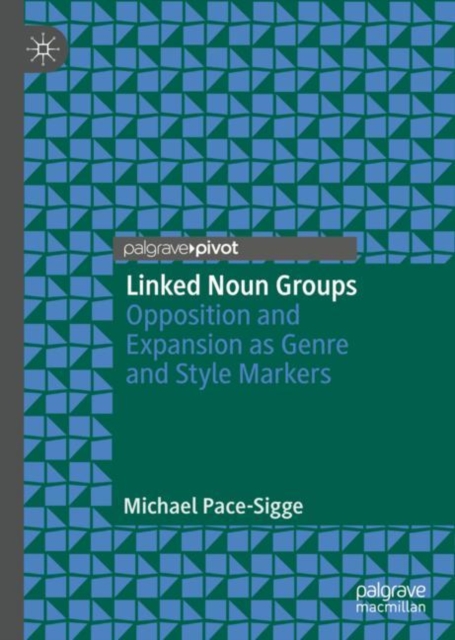
This book provides a corpus-led analysis of multi-word units (MWUs) in English, specifically fixed pairs of nouns which are linked by a conjunction, such as 'mum and dad', 'bride and groom' and 'law and order'.
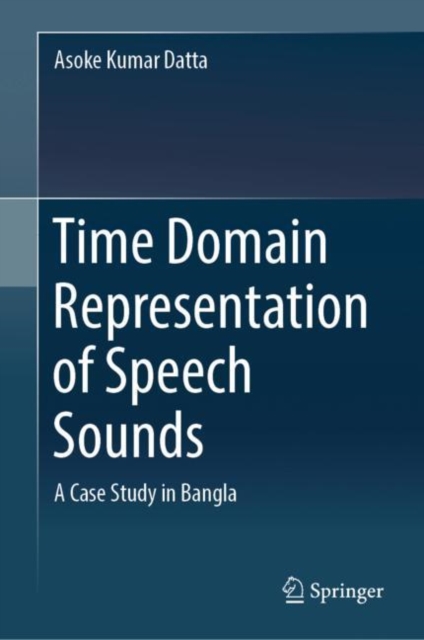
The book presents the history of time-domain representation and the extent of its development along with that of spectral domain representation in the cognitive and technology domains.
This book constitutes the refereed proceedings of the 13th International Conference on Advanced Data Mining and Applications, ADMA 2017, held in Singapore in November 2017.
This book constitutes revised selected papers from the thoroughly refereed proceedings of the 10th International Conference on Analysis of Images, Social Networks and Texts, AIST 2021, held in Tbilisi, Georgia, during December 16-18, 2021.
This book constitutes the refereed proceedings of the 13th International Conference of the CLEF Association, CLEF 2022, held in Bologna, Italy in September 2022.
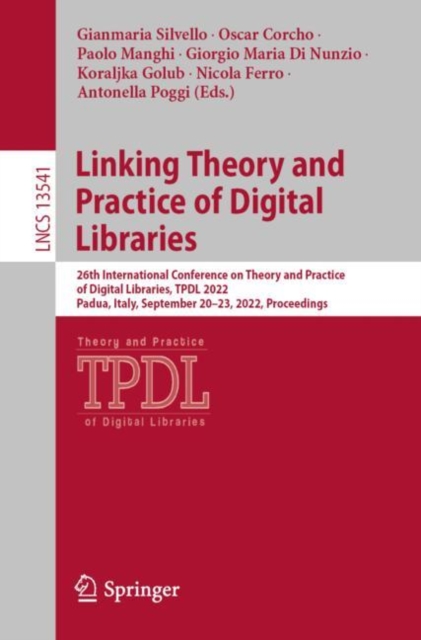
This book constitutes the proceedings of the 26th International Conference on Theory and Practice of Digital Libraries, TPDL 2022, which took place in Padua, Italy, in September 2022.
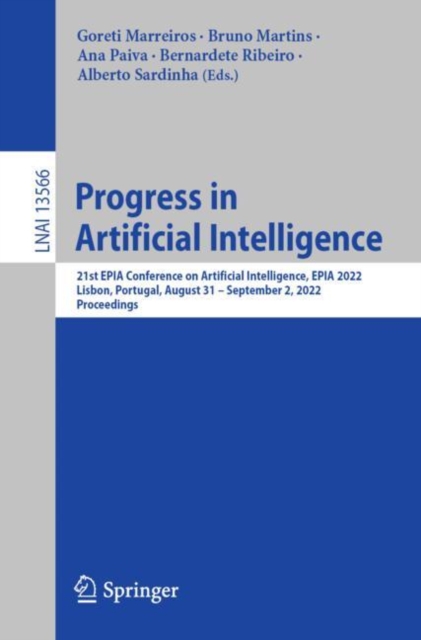
This book constitutes the proceedings of the 21st EPIA Conference on Artificial Intelligence, EPIA 2022, which took place in Lisbon, Portugal, in August/September 2022.
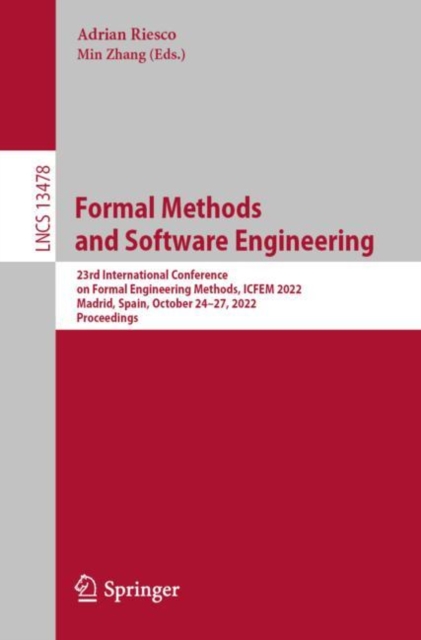
This book constitutes the proceedings of the 23rd International Conference on Formal Engineering Methods, ICFEM 2022, held in Madrid, Spain, in October 2022.
This book constitutes the thoroughly refereed post-workshop proceedings of the 22nd Chinese Lexical Semantics Workshop, CLSW 2021, held in Nanjing, China in May 2021.
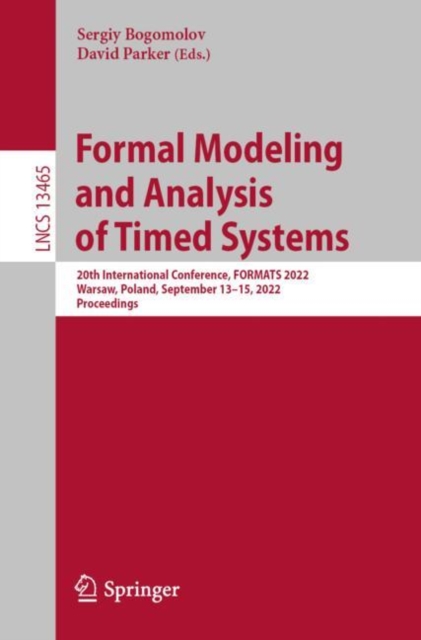
This book constitutes the refereed proceedings of the 20th International Conference on Formal Modeling and Analysis of Timed Systems, FORMATS 2022, held in Warsaw, Poland, in September 2022.
This book constitutes the proceedings of the 26th International Conference on Developments in Language Theory, DLT 2022, which was held in Tampa, FL, USA, during May, 2022.
This book constitutes the proceedings of the International Joint Conference on Rules and Reasoning, RuleML+RR 2022, held in Berlin, Germany, during September 26-28, 2022.
This book constitutes the refereed proceedings of the 25th International Symposium on Formal Methods, FM 2023, which took place in Lubeck, Germany, in March 2023.
This book constitutes the refereed proceedings of the 13th International Tbilisi Symposium on Logic, Language and Computation, TbiLLC 2019, held in Batumi, Georgia, in September 2019.
This book presents recent advances in NLP and speech technology, a topic attracting increasing interest in a variety of fields through its myriad applications, such as the demand for speech guided touchless technology during the Covid-19 pandemic.
Edited in collaboration with FoLLI, the Association of Logic, Language and Information, this book constitutes the refereed proceedings of the Third Tsinghua Interdisciplinary Workshop on Logic, Language, and Meaning, TLLM 2022, which was held virtually in April 2022.
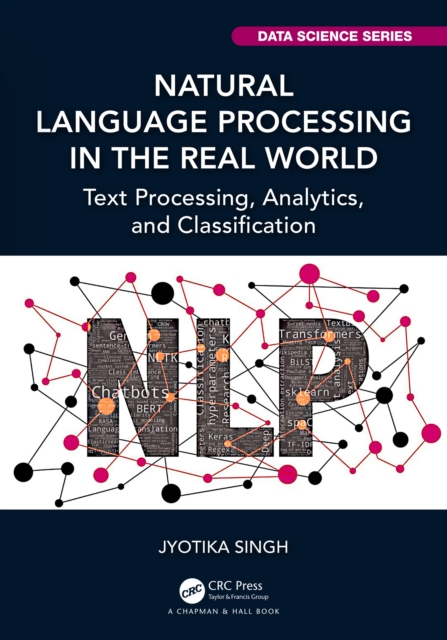
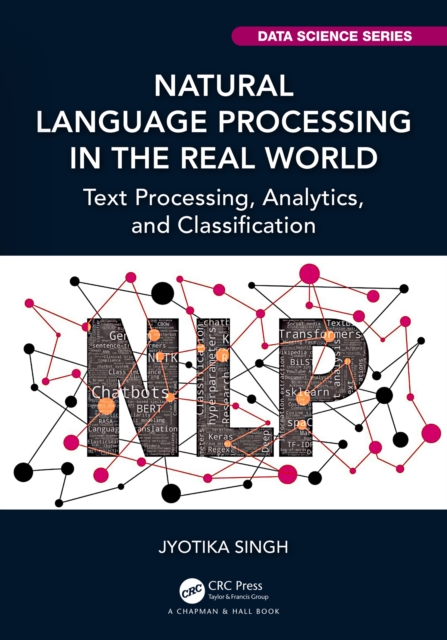
Natural Language Processing in the Real World is a practical guide for applying data science and machine learning to build Natural Language Processing (NLP) solutions.
Natural Language Processing in the Real World is a practical guide for applying data science and machine learning to build Natural Language Processing (NLP) solutions.
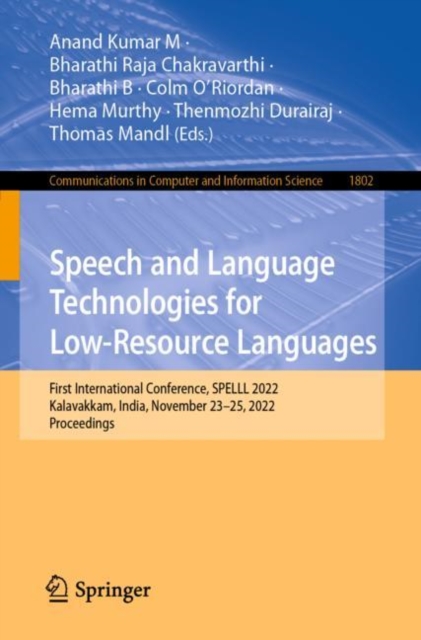
This book constitutes refereed proceedings from the First International Conference on Speech and Language Technologies for Low-resource Languages, SPELLL 2022, held in Kalavakkam, India, in November 2022.
This book constitutes refereed proceedings from the First International Conference on Speech and Language Technologies for Low-resource Languages, SPELLL 2022, held in Kalavakkam, India, in November 2022.
From using machine learning to shave seconds off translations, to using natural language processing for accurate real-time translation services, this book covers all the aspects.
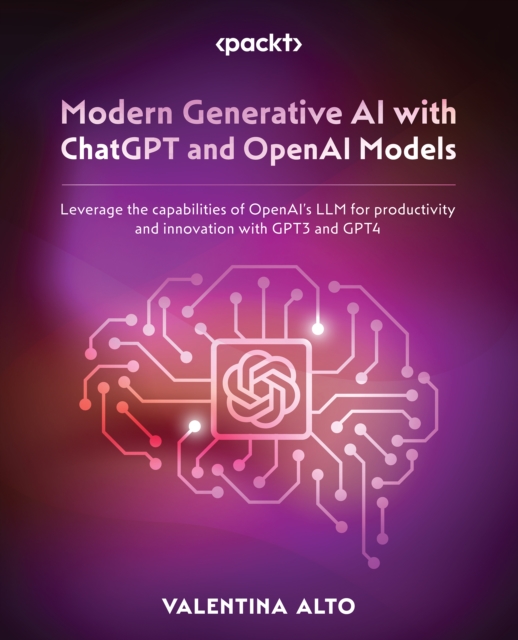
Harness the power of AI with innovative, real-world applications, and unprecedented productivity boosts, powered by the latest advancements in AI technology like ChatGPT and OpenAIPurchase of the print or Kindle book includes a free PDF eBookKey FeaturesExplore the theory behind generative AI models and the road to GPT3 and GPT4Become familiar with ChatGPT s applications to boost everyday productivityLearn to embed OpenAI models into applications using lightweight frameworks like LangChainBook DescriptionGenerative AI models and AI language models are becoming increasingly popular due to their unparalleled capabilities.
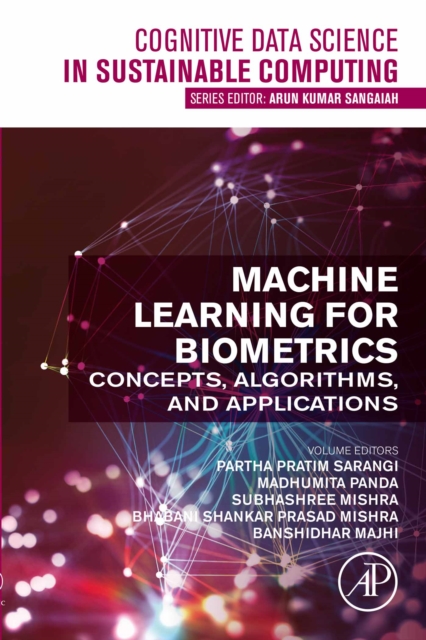
Machine Learning for Biometrics: Concepts, Algorithms and Applications highlights the fundamental concepts of machine learning, processing and analyzing data from biometrics and provides a review of intelligent and cognitive learning tools which can be adopted in this direction.
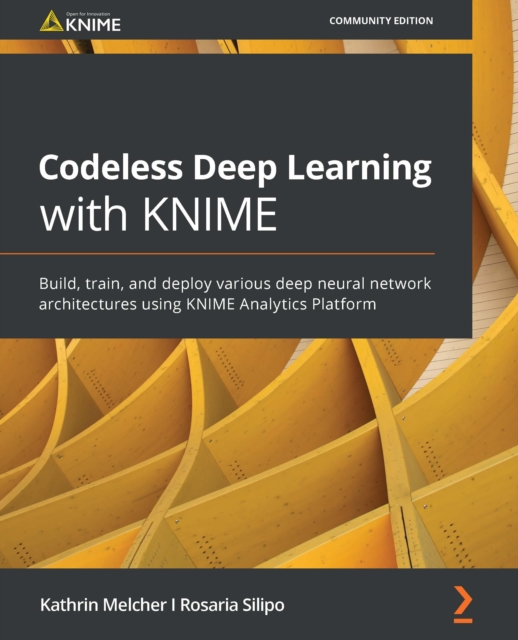
Discover how to integrate KNIME Analytics Platform with deep learning libraries to implement artificial intelligence solutionsKey FeaturesBecome well-versed with KNIME Analytics Platform to perform codeless deep learningDesign and build deep learning workflows quickly and more easily using the KNIME GUIDiscover different deployment options without using a single line of code with KNIME Analytics PlatformBook DescriptionKNIME Analytics Platform is an open source software used to create and design data science workflows.
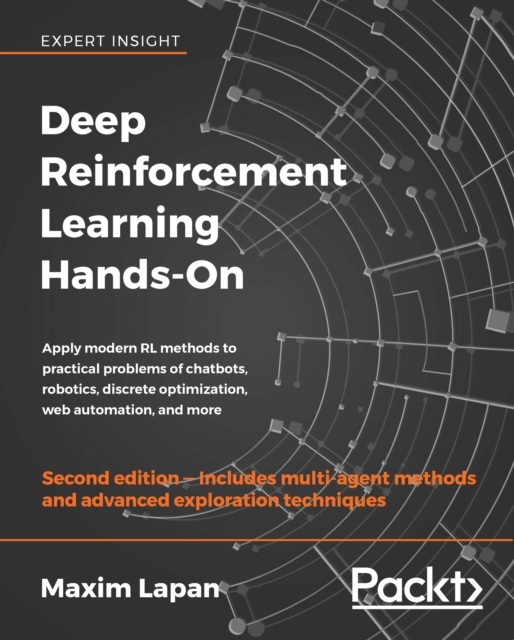
Revised and expanded to include multi-agent methods, discrete optimization, RL in robotics, advanced exploration techniques, and moreKey FeaturesSecond edition of the bestselling introduction to deep reinforcement learning, expanded with six new chaptersLearn advanced exploration techniques including noisy networks, pseudo-count, and network distillation methodsApply RL methods to cheap hardware robotics platformsBook DescriptionDeep Reinforcement Learning Hands-On, Second Edition is an updated and expanded version of the bestselling guide to the very latest reinforcement learning (RL) tools and techniques.
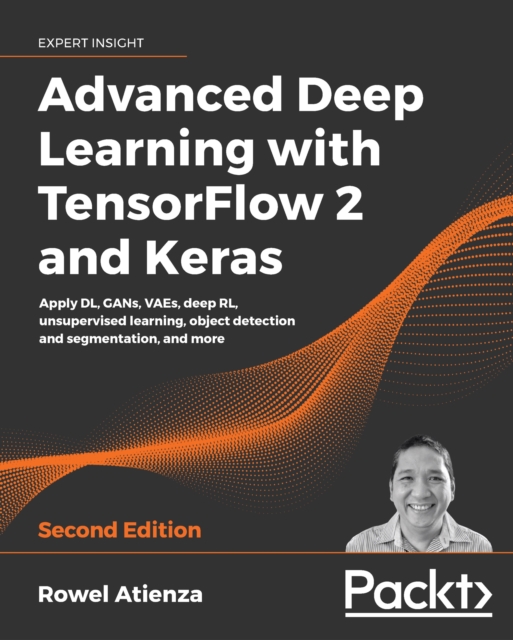
Updated and revised second edition of the bestselling guide to advanced deep learning with TensorFlow 2 and KerasKey FeaturesExplore the most advanced deep learning techniques that drive modern AI resultsNew coverage of unsupervised deep learning using mutual information, object detection, and semantic segmentationCompletely updated for TensorFlow 2.
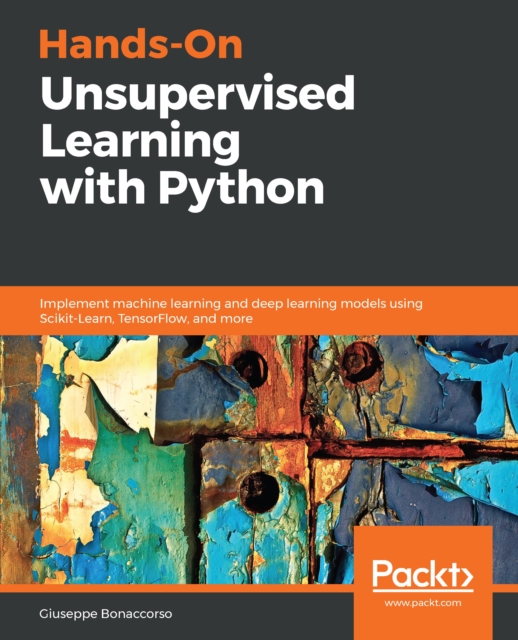
Discover the skill-sets required to implement various approaches to Machine Learning with PythonKey FeaturesExplore unsupervised learning with clustering, autoencoders, restricted Boltzmann machines, and moreBuild your own neural network models using modern Python librariesPractical examples show you how to implement different machine learning and deep learning techniquesBook DescriptionUnsupervised learning is about making use of raw, untagged data and applying learning algorithms to it to help a machine predict its outcome.
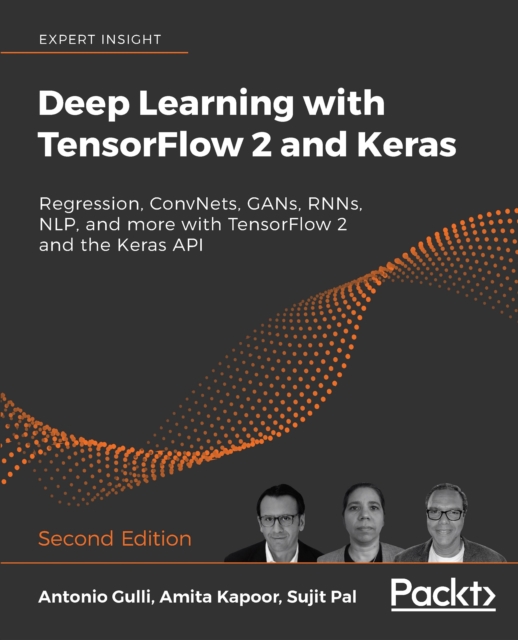
Build machine and deep learning systems with the newly released TensorFlow 2 and Keras for the lab, production, and mobile devicesKey FeaturesIntroduces and then uses TensorFlow 2 and Keras right from the startTeaches key machine and deep learning techniquesUnderstand the fundamentals of deep learning and machine learning through clear explanations and extensive code samplesBook DescriptionDeep Learning with TensorFlow 2 and Keras, Second Edition teaches neural networks and deep learning techniques alongside TensorFlow (TF) and Keras.