This book provides a complete comprehensive investigation of Responsible AI in Smart Cities, ethical, social welfare and AI-based environmental aspects of functioning in urban environments.
This book constitutes the refereed proceedings of the Third International Joint Conference on Conceptual Knowledge Structures, CONCEPTS 2026, held in Montpellier, France, during August 31– September 4, 2026.
Agriculture remains one of the most climate-sensitive sectors globally, particularly in regions with fragile ecosystems, rainfed farming, and high population pressures.
This book provides a complete comprehensive investigation of Responsible AI in Smart Cities, ethical, social welfare and AI-based environmental aspects of functioning in urban environments.
This book constitutes the contributions presented at the RCIS 2026 Forum and Doctoral Consortium, held in conjunction with the 20th International Conference on Research Challenges in Information Science, RCIS 2026, which took place in Toulouse, France, during May 2026.
Designed for decision-makers facing uncertainty, this book shows how infrastructures can absorb shocks, adapt, and generate long-term value rather than merely enduring disruption.
Designed for decision-makers facing uncertainty, this book shows how infrastructures can absorb shocks, adapt, and generate long-term value rather than merely enduring disruption.
The book explores the ways artificial intelligence (AI) theory is being applied to an extremely diverse range of industries, illustrating just how robust and adaptable this technology has become.
The five-volume set LNICST 658-662 constitutes the proceedings of the 4th EAI International Conference on Application of Big Data, Blockchain, and Internet of Things for Education Informatization, BigIoT-EDU 2024, held in Beihai, China, during August 18–20, 2024.
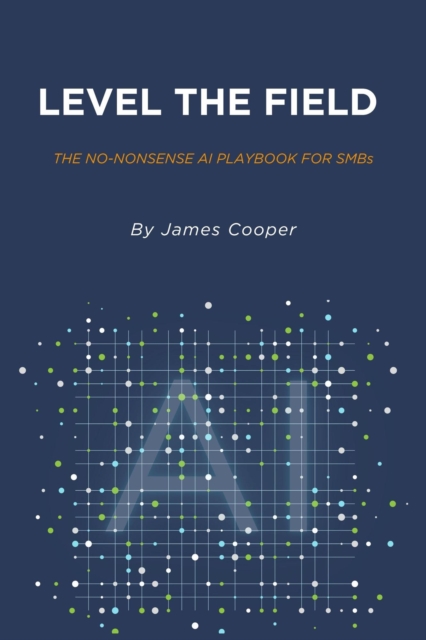
The AI hype machine has a clear target: small business owners who don't have the time, budget, or technical background to separate useful tools from expensive distractions.
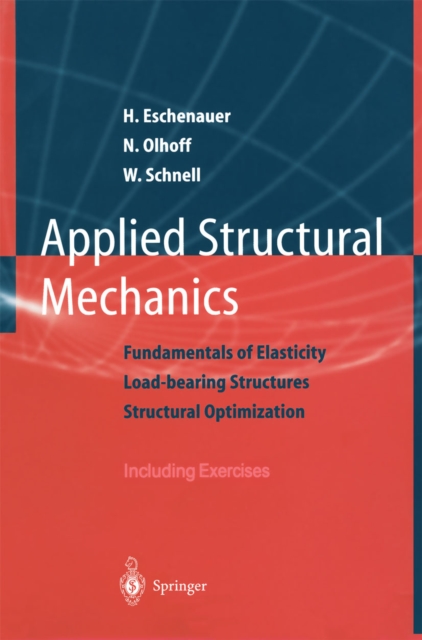
In view of the growing importance of product liability and the demand for fulfillment of extreme specifications for new products, this book provides the basic tools for establishing model equations in structural mechanics.
This book explores how emerging digital technologies can enhance educational quality in primary and secondary settings across Asia, including South Korea, Indonesia, Mainland China, and Hong Kong SAR.
The two-volume set CCIS 2910 + 2911 constitutes the refereed proceedings of the 20th CCF Conference on Computer Supported Cooperative Work and Social Computing, ChineseCSCW 2025, held in Guangzhou, China, in November 2025.
The two-volume set CCIS 2910 + 2911 constitutes the refereed proceedings of the 20th CCF Conference on Computer Supported Cooperative Work and Social Computing, ChineseCSCW 2025, held in Guangzhou, China, in November 2025.
The five-volume set LNICST 658-662 constitutes the proceedings of the 4th EAI International Conference on Application of Big Data, Blockchain, and Internet of Things for Education Informatization, BigIoT-EDU 2024, held in Beihai, China, during August 18–20, 2024.
Following the release of ChatGPT, public fascination with the field of artificial intelligence (AI) has drastically intensified, stimulating an unprecedented rise in the financing, development and deployment of AI technologies across society.
This book constitutes the revised selected papers of the workshops of the 13th International Conference of Web-based Learning, ICWL 2014, held in Tallinn, Estonia, in August 2014.
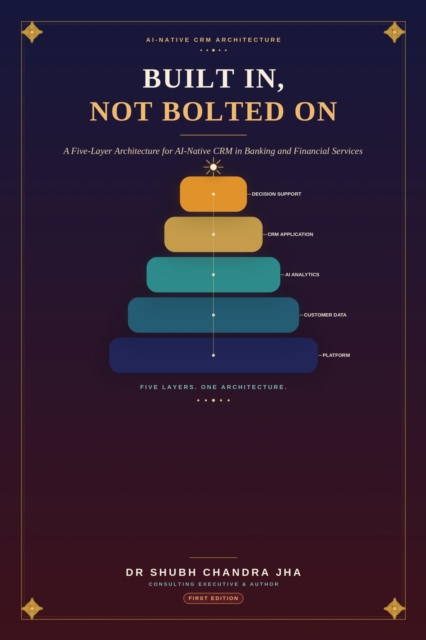
What if the AI your bank already owns never reaches the customer not because it isn't good enough, but because no one ever architected it into the CRM system where relationships and decisions actually happen?
Agentic Medicine brings a transformative approach to healthcare delivery through multimodal AI agents capable of autonomous clinical reasoning, real-time patient monitoring, and adaptive decision-making.
The five-volume set LNICST 658-662 constitutes the proceedings of the 4th EAI International Conference on Application of Big Data, Blockchain, and Internet of Things for Education Informatization, BigIoT-EDU 2024, held in Beihai, China, during August 18–20, 2024.
This book offers a comprehensive and up-to-date analysis of the Chinese animation industry, tracing its evolution from the magic lanterns of the 19th century to the cutting-edge AI-powered productions of today.
This book offers a comprehensive and up-to-date analysis of the Chinese animation industry, tracing its evolution from the magic lanterns of the 19th century to the cutting-edge AI-powered productions of today.
The five-volume set LNICST 658-662 constitutes the proceedings of the 4th EAI International Conference on Application of Big Data, Blockchain, and Internet of Things for Education Informatization, BigIoT-EDU 2024, held in Beihai, China, during August 18–20, 2024.