The five-volume set LNICST 658-662 constitutes the proceedings of the 4th EAI International Conference on Application of Big Data, Blockchain, and Internet of Things for Education Informatization, BigIoT-EDU 2024, held in Beihai, China, during August 18–20, 2024.
The five-volume set LNICST 658-662 constitutes the proceedings of the 4th EAI International Conference on Application of Big Data, Blockchain, and Internet of Things for Education Informatization, BigIoT-EDU 2024, held in Beihai, China, during August 18–20, 2024.
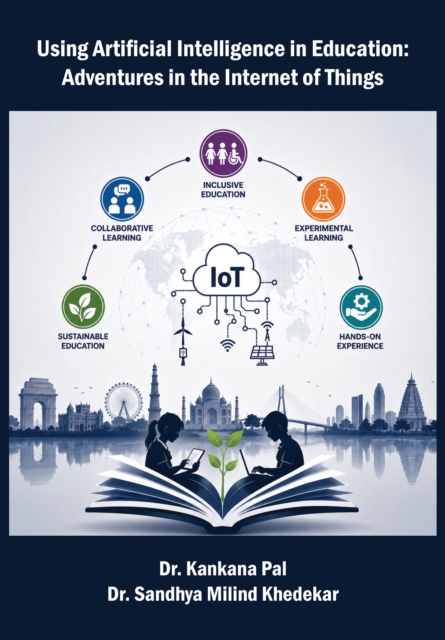
Using Artificial Intelligence in Education examines the integration of Internet of Things (IoT) and Artificial Intelligence (AI) technologies in the teaching of social science at the middle school level.
This book explores how emerging digital technologies can enhance educational quality in primary and secondary settings across Asia, including South Korea, Indonesia, Mainland China, and Hong Kong SAR.
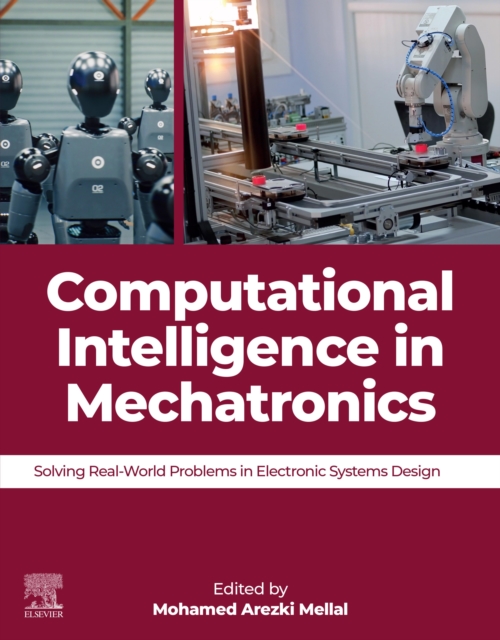
Computational Intelligence in Mechatronics: Solving Real-World Problems in Electronic Systems Design provides a comprehensive exploration of the diverse applications of computational intelligence in the realm of applied electronics.
Elgar Advanced Introductions are stimulating and thoughtful introductions to major fields in the social sciences and law, expertly written by the world's leading scholars.
This book aims to foster meaningful dialogue to strategically enhance human capabilities through targeted collaboration with AI to secure sustainable competitive advantage in rapidly evolving marketplaces.
Elgar Advanced Introductions are stimulating and thoughtful introductions to major fields in the social sciences and law, expertly written by the world's leading scholars.
Discover how artificial intelligence thinks and reasons, and how we can make the most of their super-human abilities, in the must read book from the prize-winning technology writer and author of The Dark Net and The People vs Tech.
The book presents a forward-thinking and interdisciplinary collection of research contributions that seamlessly integrate technological innovation with the principles of sustainability.
Dieser Band, der erste Teil einer dreiteiligen Reihe, untersucht die Ursprünge und die erste Welle der digitalen Transformation in der Musikindustrie, beginnend mit der CD und den technologischen Voraussetzungen, die den Übergang von physischen Formaten zum vollständig digitalen Konsum ermöglichten.
Dieser Band, der erste Teil einer dreiteiligen Reihe, untersucht die Ursprünge und die erste Welle der digitalen Transformation in der Musikindustrie, beginnend mit der CD und den technologischen Voraussetzungen, die den Übergang von physischen Formaten zum vollständig digitalen Konsum ermöglichten.
A structured, honestly-numbered guide to using AI for real income — thirteen strategies in depth, a full tool directory, and a 90-day roadmap to turn reading into action.
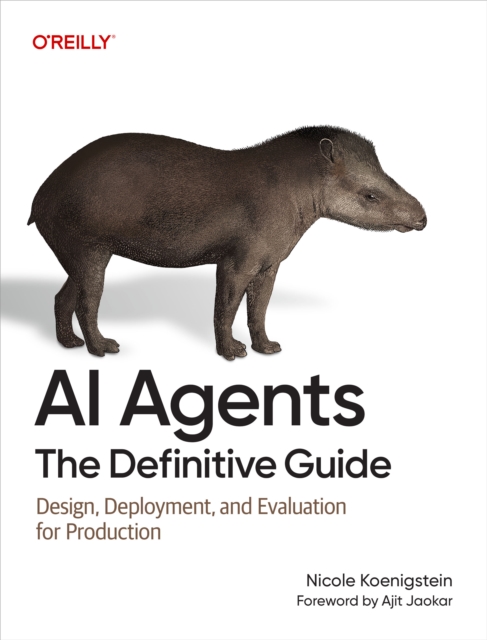
As AI agents move from research labs into production, engineering teams face mounting challengesfragile tools, rising inference costs, erratic behavior, and unmet expectations.
Generative Artificial Intelligence, an Artificial Intelligence concept which is used to create own data which includes creating text, audio, video, images, programming codes and also advanced data structures such as protein structures.
What happens when humanity succeeds in building a mind that knows more, remembers more, calculates faster, and makes fewer mistakes than any individual human being?
As AI agents move from research labs into production, engineering teams face mounting challengesfragile tools, rising inference costs, erratic behavior, and unmet expectations.
This book explores the synergy between artificial intelligence and medtech, offering a roadmap toward achieving the United Nations' Sustainable Development Goals.
This book explores the synergy between artificial intelligence and medtech, offering a roadmap toward achieving the United Nations' Sustainable Development Goals.
This book constitutes the refereed proceedings from the 14th Mediterranean Conference on Information and Communication Technologies in Education, TICEMED 2024, held in Cairo, Egypt, in October 15-17, 2024.
This book approaches the use of Generative AI in primary and secondary education from both educator and student perspectives, showing how classroom strategies, professional development, and equitable design can create more personalized and empowering learning experiences.
This book approaches the use of Generative AI in primary and secondary education from both educator and student perspectives, showing how classroom strategies, professional development, and equitable design can create more personalized and empowering learning experiences.
This comprehensive textbook offers a unique approach to learning machine learning and deep learning by seamlessly integrating theoretical foundations with hands-on laboratory exercises.
This comprehensive textbook offers a unique approach to learning machine learning and deep learning by seamlessly integrating theoretical foundations with hands-on laboratory exercises.
Artificial intelligence (AI) is rapidly transforming communication and media sectors around the world, but much of the global academic literature on this remains Western-centric.
The book highlights emerging developments in intelligent computing, communication technologies, robotics, embedded systems, and data-driven innovations that are shaping the future of smart and autonomous systems.
This book explores utilization of digital twin technology and geospatial science for the digital transformation of urban planning, environmental monitoring, infrastructure, and disaster response using a series of present tools of data collection and applications.
This book addresses all aspects of artificial perception in forest environments, including localization, mapping, traversability analysis, semantic segmentation, metric-semantic mapping, scene understanding, and multi-robot architectures.
This book approaches the use of Generative AI in primary and secondary education from both educator and student perspectives, showing how classroom strategies, professional development, and equitable design can create more personalized and empowering learning experiences.
This book approaches the use of Generative AI in primary and secondary education from both educator and student perspectives, showing how classroom strategies, professional development, and equitable design can create more personalized and empowering learning experiences.