Developing educational software requires thinking, problematizing, representing, modeling, implementing and analyzing pedagogical objectives and issues, as well as conceptual models and software architectures.
Wikipedia, Flickr, You Tube, Facebook, LinkedIn are all examples of large community-built databases, although with quite diverse purposes and collaboration patterns.
This book offers an alternative to faith-dependent analytical approaches, explaining how original data can be transformed into cogent and compelling interpretations with analytical techniques that are straightforward and accessible to biomedical scientists.
Edited in collaboration with FoLLI, the Association of Logic, Language and Information, this book collects a set of chapters of the multi-disciplinary project "e;Games, actions and Social software"e; which was carried out at the Netherlands Institute for Advanced Study in the Humanities and Social Sciences (NIAS) in Wassenaar, from September 2006 through January 2007.
Following the increase in of the information available on the Web, the diversity of its users and the complexity of Web applications, researchers started developing adaptive Web systems that tailored their appearance and behavior to each individual user or user group.
This book constitutes the thoroughly refereed post-proceedings of the 9th International Workshop on the Design, Specification, and Verification of Interactive Systems, DSV-IS 2002, held in Rostock, Germany in June 2002.
Since the mid 1990s, data hiding has been proposed as an enabling technology for securing multimedia communication, and is now used in various applications including broadcast monitoring, movie fingerprinting, steganography, video indexing and retrieval, and image authentication.
The advancement of information and communication technologies (ICT) has enabled broad use of ICT and facilitated the use of ICT in the private and personal domain.
In recent years the management of business processes has emerged as one of the major developments to ease the understanding of, communication about, and evolution of process-oriented information systems in a variety of appli- tion domains.
Haptic human-computer interaction is interaction between a human computer user and the computer user interface based on the powerful human sense of touch.
This book constitutes the refereed proceedings of the International Workshop on Human-Computer Interaction, HCI 2004, held at ECCV 2004 in Prague, Czech Republic in May 2004.
Processing multimedia content has emerged as a key area for the application of machine learning techniques, where the objectives are to provide insight into the domain from which the data is drawn, and to organize that data and improve the performance of the processes manipulating it.
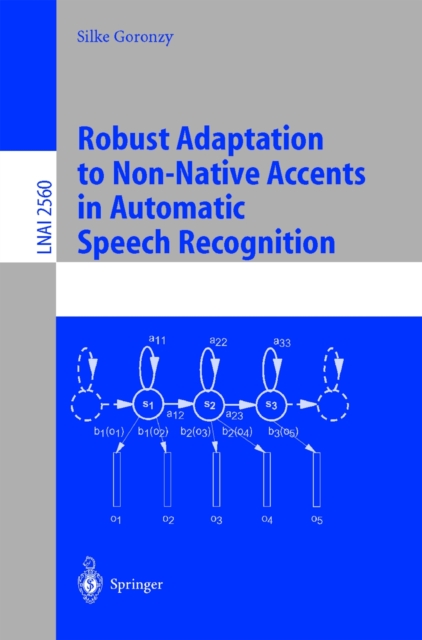
As well as conveying a message in words and sounds, the speech signal carries information about the speaker's own anatomy, physiology, linguistic experience and mental state.
This book constitutes the refereed proceedings of the Third International Conference on Ubiquitous Computing, Ubicomp 2001, held in Atlanta, GA, USA in September/October 2001.
These Transactions publish research in computer-based methods of computational collective intelligence (CCI) and their applications in a wide range of fields such as the Semantic Web, social networks and multiagent systems.
These Transactions publish research in computer-based methods of computational collective intelligence (CCI) and their applications in a wide range of fields such as the Semantic Web, social networks and multiagent systems.
The Hybrid Deliberative Layer (HDL) solves the problem that an intelligent agent faces in dealing with a large amount of information which may or may not be useful in generating a plan to achieve a goal.
This journal subline serves as a forum for stimulating and disseminating innovative research ideas, theories, emerging technologies, empirical investigations, state-of-the-art methods, and tools in all different genres of edutainment, such as game-based learning and serious games, interactive storytelling, virtual learning environments, VR-based education, and related fields.
This book constitutes the refereed proceedings of the Second International Conference on Adaptive Hypermedia and Adaptive Web-Based Systems, AH 2002, held in Malaga, Spain, in May 2002.
After the advent of data mining and its successful application on conventional data, Web-related information has been an appropriate and increasingly popular target of knowledge discovery.