An in depth review of social ergonomics- also known as organizational ergonomics- this book discusses the optimization of sociotechnical systems, including their organizational structures, policies, and processes.
This non-traditional introduction to the mathematics of scientific computation describes the principles behind the major methods, from statistics, applied mathematics, scientific visualization, and elsewhere, in a way that is accessible to a large part of the scientific community.
Broadly defined as the science and technology of systems responding to neural processes in the brain, neuroadaptive systems (NASs) has become a rapidly developing area of study.
Cultural factors, in both the narrow sense of different national, racial, and ethnic groups, and in the broader sense of different groups of any type, play major roles in individual and group decisions.
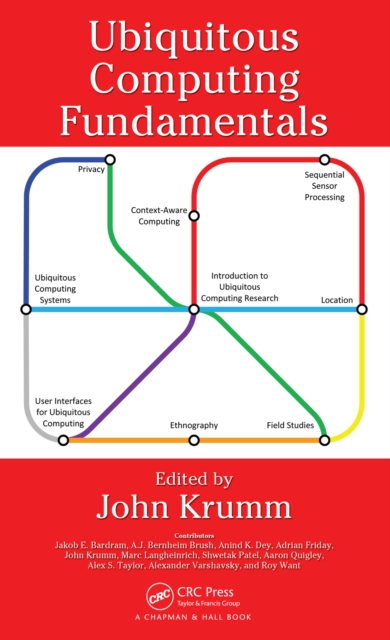
Written for those familiar with the basics and active in the area of mobile and ubiquitous computing, this volume contains papers that aid in understanding key issues and problems being tackled in the field.
Although the precepts of software engineering have been around for decades, the field has failed to keep pace with rapid advancements in computer hardware and software.
A collection of works authored by leading scientists from the US and Russia, Human-Computer Interaction and Operators' Performance: Optimizing Work Design with Activity Theory describes applied and systemic-structural activity theory as it is used to study human-computer interaction, aviation, design, and training.
Taking the field of human factors and ergonomics beyond state of the art, this volume focuses on advances in the use of ergonomics modeling and on the evaluation of usability, a critical aspect of any human-technology system.
Combining emerging concepts, theories, and applications of human factors knowledge, this volume focuses on discovery and understanding of human performance issues in complex systems, including recent advances in neural basis of human behavior at work (i.
The chapters in the book come from an international group of authors with diverse backgrounds including ergonomics, psychology, architecture, computer science, engineering, and sociology.
With the increase of globalization of business and industry, IT products and services are produced and marketed across geographical cultural boundaries without any consideration of culture.
The Handbook of Human Factors in Web Design covers basic human factors issues relating to screen design, input devices, and information organization and processing, as well as addresses newer features which will become prominent in the next generation of Web technologies.
Providing up-to-date, practical advice on how to design, select, and structure telemedicine interventions with older adults, this book discusses the age-related changes that can affect the efficacy of these systems.
Museums and Design Practices explores the increasingly critical role that design is playing in museums by focusing on how human-centred design approaches are being embraced and incorporated into their work practices.
Control engineering seeks to understand physical systems, using mathematical modeling, in terms of inputs, outputs and various components with different behaviors.
JavaFX 8: Introduction by Example shows you how to use your existing Java skills to create graphically exciting client applications with the JavaFX 8 platform.
Learn Design for iOS Development is for you if you're an iOS developer and you want to design your own apps to look great and be in tune with the latest Apple guidelines.
If you’re an Android application developer, chances are you’re using fixed, scrolling, swipe-able, and other cutting-edge custom UI Designs in your Android development projects.
Ubuntu Linux is the fastest growing Linux-based operating system, and Beginning Ubuntu Linux, Fifth Edition teaches all of us-including those who have never used Linux-how to use it productively, whether you come from Windows or the Mac or the world of open source.