Hailed on first publication as a compendium of foundational principles and cutting-edge research, The Human-Computer Interaction Handbook has become the gold standard reference in this field.
Hailed on first publication as a compendium of foundational principles and cutting-edge research, The Human-Computer Interaction Handbook has become the gold standard reference in this field.
Hailed on first publication as a compendium of foundational principles and cutting-edge research, The Human-Computer Interaction Handbook has become the gold standard reference in this field.
In complex sociotechnical systems such as military, health care, and nuclear power systems, poor performance or errors resulting from inadequate designs can have catastrophic consequences.
Content preparation is an integral part of the usability equation: it answers the question of what information is needed for effective decision making.
In recent years, the field of Universal Access has made significant progress in consolidating theoretical approaches, scientific methods and technologies, as well as in exploring new application domains.
First published two decades ago, the first edition of Handbook of Control Room Design and Ergonomics: A Perspective for the Future became a benchmark for the field.
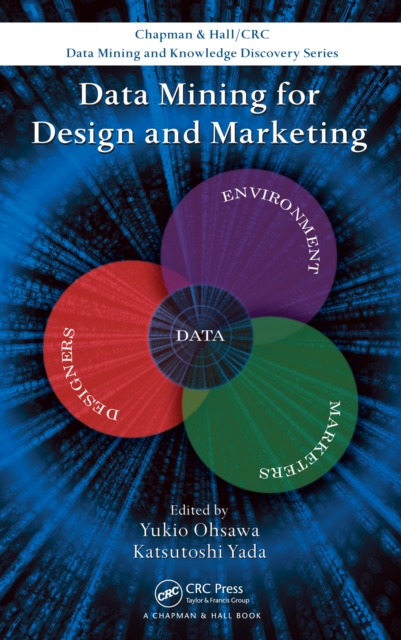
Data Mining for Design and Marketing shows how to design and integrate data mining tools into human thinking processes in order to make better business decisions, especially in designing and marketing products and systems.
Discussing issues and concepts relating to human factors in simulation, this book covers theory and application in fields such as space, ships, submarines, naval aviation, and commercial aviation.
Although the dynamic aspect of the world is widely recognized, information systems have lagged in their ability to represent these dynamics and provide support for users and analysts, especially those who work with dynamic geographic domains.
The world is ever changing, and a comprehensive understanding of the world will not be achieved without theoretical and methodological advances to decode complex dynamics in human and environmental systems.
The explosion of public interest in the natural environment can, to a large extent, be attributed to greater public awareness of the impacts of global warming and climate change.
Written clearly and concisely, using jargon-free language that is easily understood, this book compresses research from the past few decades into an accessible resource.
A close relationship exists between GIS and numerous applications, including cartography, photogrammetry, geodesy, surveying, computer and information science, and statistics, among others.
Advocating a user-centered approach to medical technology design, this book covers the essential processes and specific techniques necessary to produce safe, effective, usable, and appealing medical systems and products.
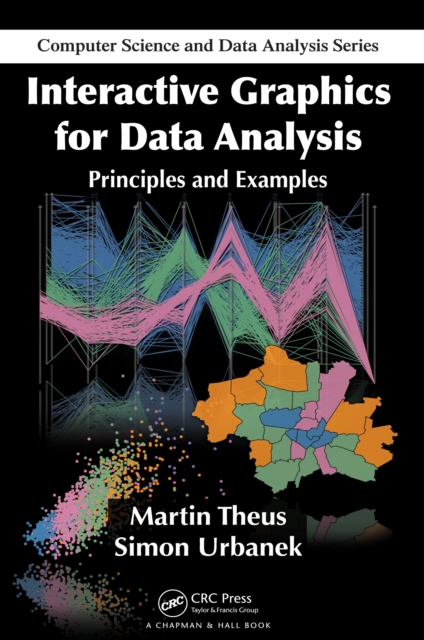
Interactive Graphics for Data Analysis: Principles and Examples discusses exploratory data analysis (EDA) and how interactive graphical methods can help gain insights as well as generate new questions and hypotheses from datasets.
Get an In-Depth Understanding of Graph Drawing Techniques, Algorithms, Software, and ApplicationsThe Handbook of Graph Drawing and Visualization provides a broad, up-to-date survey of the field of graph drawing.
While its importance is widely recognized, the theoretical basis and practical applications of Activity Theory have not yet been firmly established in the field of human factors and ergonomics, experimental, and work psychology.
With the widespread use of PDAs, wireless internet, Internet-based GIS, and 3G and 4G telecommunications, the technology supporting mobile GIS is rapidly gaining popularity and effectiveness.
The past 20 years can be regarded as the adolescence of geographic information science (GIS), as it grew from a burgeoning area of study into a mature and thriving field.
Synthesizing basic results on how to design human work with complex systems, Joint Cognitive Systems: Patterns in Cognitive Systems Engineering provides examples of successful cognitive systems engineering research and design.
With skyrocketing costs due to the increase in the elderly population, a rapid increase in lifestyle-related and chronic diseases, demand for new medical treatments and technologies, and a shortage in the number of available clinicians, nurses, and other caregivers, the challenges facing the healthcare industry seem insurmountable.
Today, more and more Web sites are providing content in multiple languages for targeted countries, and more and more products are being designed for cultural differences in mind.
Covering field history and discussing actual modern-day pilot actions and tasks, the editors of this volume have integrated contributions from leaders in aviation to present psychological principles and research pertinent to the interface between a pilot and the cockpit.
Although cognitive engineering has gained widespread acceptance as one of the most promising approaches to addressing and preventing difficulties with human-machine coordination and collaboration, it still meets with considerable skepticism and resistance in some of the industries that could benefit from its insights and recommendations.
This book describes, for the first time in pedagogical form, an approach to computer-based work in complex sociotechnical systems developed over the last 30 years by Jens Rasmussen and his colleagues at Riso National Laboratory in Roskilde, Denmark.
Human Factors in System Design, Development, and Testing describes engineering system design as a behavioral process, a process which raises questions the designer must answer.
Build your hardware, electronics, and programming skills, and use them to realize your advanced robotics projects with this powerful platformPurchase of the print or Kindle book includes a free PDF eBookKey FeaturesBecome an expert in selecting sensors, motors, and Arduino boards for any robotics projectDiscover how to write effective and reusable code for your Arduino robotics projectsLearn to build a camera-based line follower and a self-balancing telepresence robot on your ownBook DescriptionEvery robot needs a brain, and the Arduino platform provides an incredibly accessible way to bring your Arduino robot to life.
Build your hardware, electronics, and programming skills, and use them to realize your advanced robotics projects with this powerful platformPurchase of the print or Kindle book includes a free PDF eBookKey FeaturesBecome an expert in selecting sensors, motors, and Arduino boards for any robotics projectDiscover how to write effective and reusable code for your Arduino robotics projectsLearn to build a camera-based line follower and a self-balancing telepresence robot on your ownBook DescriptionEvery robot needs a brain, and the Arduino platform provides an incredibly accessible way to bring your Arduino robot to life.
A Dutch policy scientist once said the information and knowledge in the twenty-first century has the shelf life of fresh fish, and learning in this age often means learning where and how to find something and how to relate it to a specific situation instead of knowing everything one needs to know.
Networked learning is learning in which information and communications technology (ICT) is used to promote connections: between one learner and other learners; between learners and tutors; between a learning community and its learning resources.
Parsing the Turing Test is a landmark exploration of both the philosophical and methodological issues surrounding the search for true artificial intelligence.
Fred Boekhorst Steady progress in Information and Communication technology has advanced the Internet, once merely a tool for exchange of scientific infor- tion between universities, to a platform that enables the transformation of our society.