This book describes the teleoperated android Geminoid, which has a very humanlike appearance, movements, and perceptions, requiring unique developmental techniques.
This book explores the digitization of culture as a means of experiencing and understanding cultural heritage in Namibia and from international perspectives.
This book captures the current challenges in automatic recognition of emotion in spontaneous speech and makes an effort to explain, elaborate, and propose possible solutions.
This book proposes complex hierarchical deep architectures (HDA) for predicting bankruptcy, a topical issue for business and corporate institutions that in the past has been tackled using statistical, market-based and machine-intelligence prediction models.
This book presents reports and methods that demonstrate the ease with which cognitive applications can be built using IBM Watson application program interfaces (APIs).
The book represents the culmination of a hugely successful heritage preservation project initiated by the Government of India's Department of Science and Technology.
This volume comprises select proceedings of the International Conference on Humanizing Work and Work Environment organized by the Indian Society of Ergonomics.
This book offers a comprehensive introduction to Subdivision Surface Modeling Technology focusing not only on fundamental theories but also on practical applications.
Mathematical Logic and Foundations of Set Theory, Proceedings of an International Colloquium Held Under the Auspices of The Israel Academy of Sciences and Humanities
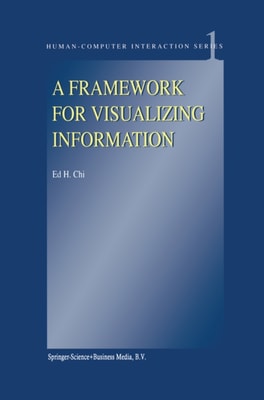
This book provides a systematic review of many advanced techniques to support the analysis of large collections of documents, ranging from the elementary to the profound, covering all the aspects of the visualization of text documents.
As a socially disruptive technology, Ambient Intelligence is ultimately directed towards humans and targeted at the mundane life made of an infinite richness of circumstances that cannot fully be considered and easily be anticipated.
This work explores the power of visual and vocal channels, in conveying emotional cues exploiting realistic, dynamic and mutually related emotional vocal and facial stimuli, and aims to report on a cross cultural comparison on how people from different Western Countries perceive emotional dynamic stimuli.
Neuro-robotics is one of the most multidisciplinary fields of the last decades, fusing information and knowledge from neuroscience, engineering and computer science.
One of the major problems in the development of virtual societies, in particular in electronic commerce and computer-mediated interactions in organizations, is trust and deception.
Public and situated display technologies can have an important impact on individual and social behaviour and present us with particular interesting new design considerations and challenges.
This book is based on contributions to the Seventh European Summer School on Language and Speech Communication that was held at KTH in Stockholm, Sweden, in July of 1999 under the auspices of the European Language and Speech Network (ELSNET).
Computational Models of Mixed-Initiative Interaction brings together research that spans several disciplines related to artificial intelligence, including natural language processing, information retrieval, machine learning, planning, and computer-aided instruction, to account for the role that mixed initiative plays in the design of intelligent systems.
Researchers and educational software developers have talked about building authoring tools for intelligent tutoring systems (ITSs), adaptive and knowled- based instructional systems, and other forms of advanced-technology learning environments (ATLEs) ever since these forms of educational software were introduced in the 1970s.
This book describes the main objective of EuroWordNet, which is the building of a multilingual database with lexical semantic networks or wordnets for several European languages.
Arguing to Learn: Confronting Cognitions in Computer-Supported Collaborative Learning Environments focuses on how new pedagogical scenarios, task environments and communication tools within Computer-Supported Collaborative Learning (CSCL) environments can favour collaborative and productive confrontations of ideas, evidence, arguments and explanations, or arguing to learn.
The advent of the digital era, the Internet, and the development of fast com- puting devices that can access mass storage servers at high communication bandwidths have brought within our reach the world of ambient intelligent systems.
Hypertext/hypermedia systems and user-model-based adaptive systems in the areas of learning and information retrieval have for a long time been considered as two mutually exclusive approaches to information access.
User-adaptive (or "e;personalized"e;) systems take individual character- istics of their current users into account and adapt their behavior ac- cordingly.
Among all information systems that are nowadays available, web sites are definitely the ones having the widest potential audience and the most significant impact on the everyday life of people.
Interdisciplinary inquiry has become more pervasive in recent decades, yet we still know little about the conduct of this type of research or the information problems associated with it.
This book brings together three great motifs of the network society: the seeking and using of information by individuals and groups; the creation and application of knowledge in organizations; and the fundamental transformation of these activities as they are enacted on the Internet and the World Wide Web.
The emergence of network facilities and the increased availability of personal computer systems over the last decade has seen the development of interest in the use of computers to support cooperative work.
A collection of original contributions by researchers who work at the forefront of a new field, lying at the intersection of computer vision and computer graphics.
Computer Supported Cooperative Work (CSCW) is an interdisciplinary research area devoted to exploring the issues of designing computer-based systems that enhance the abilities to cooperate and integrate activities in an efficient and flexible manner for people in cooperative work situations.