Explaining the chromatic methodology for the intelligent monitoring of complex systems, Chromatic Monitoring of Complex Conditions demonstrates that chromatic processing is analogous to human vision yet also extends into a wide range of nonoptical domains.
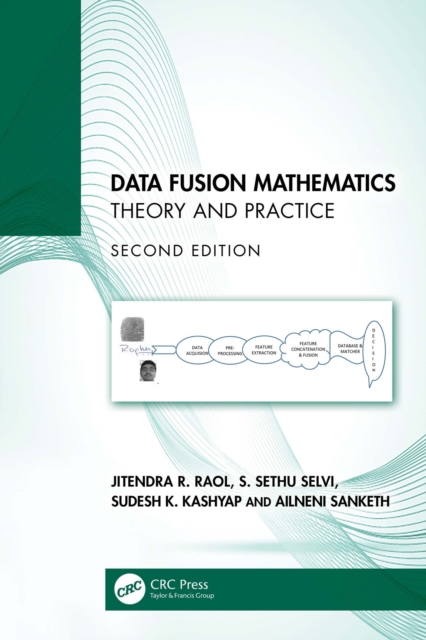
Data Fusion Mathematics: Theory and Practice offers a comprehensive overview of data fusion (DF) and provides a proper and adequate understanding of the basic mathematics directly related to DF.
In the opening chapter of Gesture Recognition: Performance, Applications and Features, the authors discuss gesture recognition and its role in the developing world of technology.
Anomaly detection in video surveillance stands at the core of numerous real-world applications that have broad impact and generate significant academic and industrial value.
Computational Science and Engineering contains peer-reviewed research presented at the International Conference on Computational Science and Engineering (RCC Institute of Information Technology, Kolkata, India, 4-6 October 2016).
For complex operating modalities and dimensionalities, the design and development of high-performance sensing and imaging systems represent the most direct and significant advances in the field of system analysis and signal processing.
MicroComputed Tomography has become the gold standard for studying 3D microscopic structures nondestructively, and this book provides up-to-date coverage of the modality.
As today's organizations are capturing exponentially larger amounts of data than ever, now is the time for organizations to rethink how they digest that data.
Up-to-Date Details on Using Ultrasound Imaging to Help Diagnose Various DiseasesDue to improvements in image quality and the reduced cost of advanced features, ultrasound imaging is playing a greater role in the diagnosis and image-guided intervention of a wide range of diseases.
Both the demographics and lack of resources in the health and well-being industry are increasingly forcing us to find alternative solutions for individualized health and social care.
Consistently rated as the best overall introduction to computer-based image processing, The Image Processing Handbook covers two-dimensional (2D) and three-dimensional (3D) imaging techniques, image printing and storage methods, image processing algorithms, image and feature measurement, quantitative image measurement analysis, and more.
Handbook of Robust Low-Rank and Sparse Matrix Decomposition: Applications in Image and Video Processing shows you how robust subspace learning and tracking by decomposition into low-rank and sparse matrices provide a suitable framework for computer vision applications.
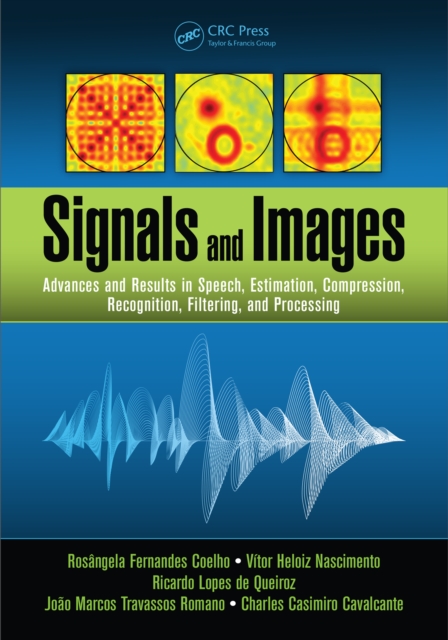
Signals and Images: Advances and Results in Speech, Estimation, Compression, Recognition, Filtering, and Processing cohesively combines contributions from field experts to deliver a comprehensive account of the latest developments in signal processing.
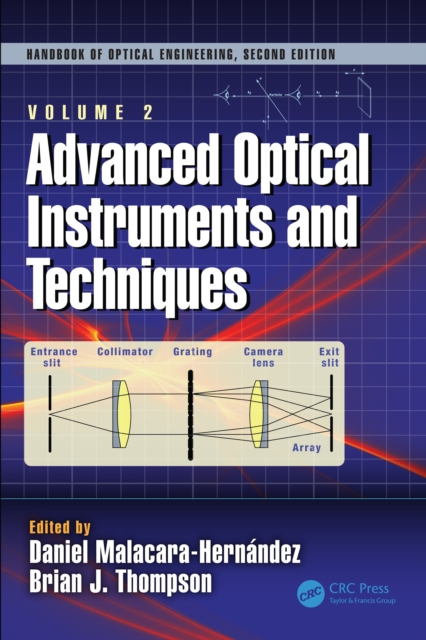
Advanced Optical Instruments and Techniques includes twenty-three chapters providing processes, methods, and procedures of cutting-edge optics engineering design and instrumentation.
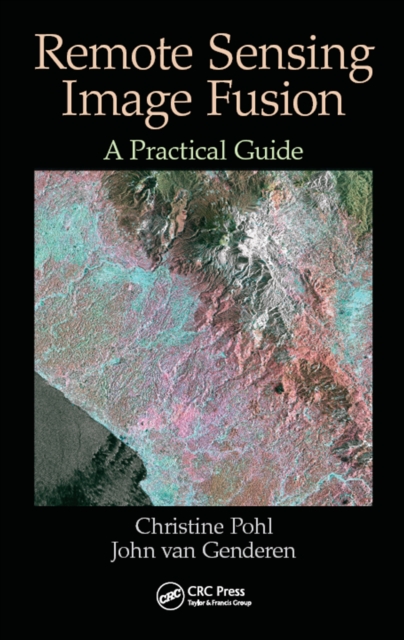
Remote Sensing Image Fusion: A Practical Guide gives an introduction to remote sensing image fusion providing an overview on the sensors and applications.
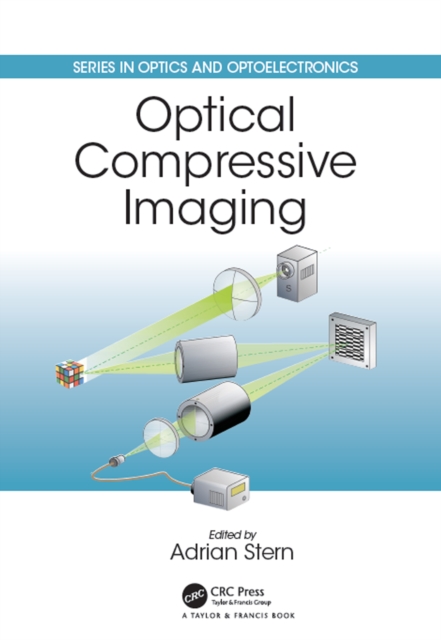
This dedicated overview of optical compressive imaging addresses implementation aspects of the revolutionary theory of compressive sensing (CS) in the field of optical imaging and sensing.
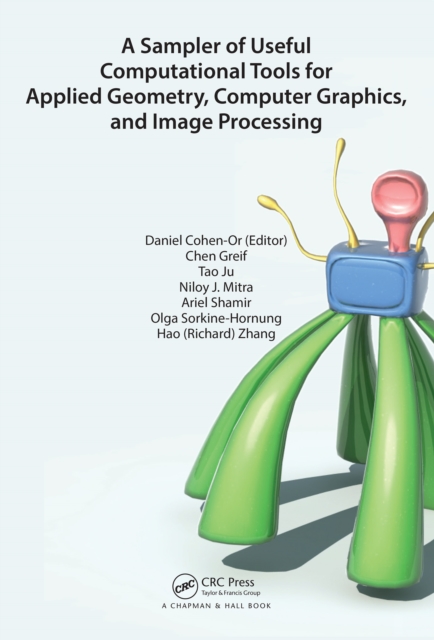
A Sampler of Useful Computational Tools for Applied Geometry, Computer Graphics, and Image Processing shows how to use a collection of mathematical techniques to solve important problems in applied mathematics and computer science areas.
Anomaly detection in video surveillance stands at the core of numerous real-world applications that have broad impact and generate significant academic and industrial value.
Automatic detection and segmentation of anatomical structures in medical images are prerequisites to subsequent image measurements and disease quantification, and therefore have multiple clinical applications.