Marine geochemistry uses chemical elements and their isotopes to study how the ocean works in terms of ocean circulation, chemical composition, biological activity and atmospheric CO2 regulation.
Marine geochemistry uses chemical elements and their isotopes to study how the ocean works in terms of ocean circulation, chemical composition, biological activity and atmospheric CO2 regulation.
This book provides a clear and very broadly based introduction to crystallography, light, X-ray and electron diffraction - a knowledge which is essential to students in a wide range of scientific disciplines but which is otherwise generally covered in subject-specific and more mathematically detailed texts.
The term "e;carbon cycle"e; is normally thought to mean those processes that govern the present-day transfer of carbon between life, the atmosphere, and the oceans.
This book unites studies in the fields of archaeometry, geoarchaeology, and ancient technologies, based on cases from northern Eurasia, and includes archaeometallurgy, stone tools investigation, exploitation of geological resources in the past, bioarchaeology, residue analysis, pottery and lithics investigation, and use of the GIS in archaeology.
This encyclopedia is a reference for aquatic physical, biological and biogeochemical sciences, collecting and connecting a number of topics, concepts and facts about aquatic systems and their scientific investigation.
This book aims to understand, analyze and mitigate the harmful impacts of spontaneous coal combustion in underground mines, a thermal phenomenon that triggers fires and explosions threatening the safety of mine workers globally.
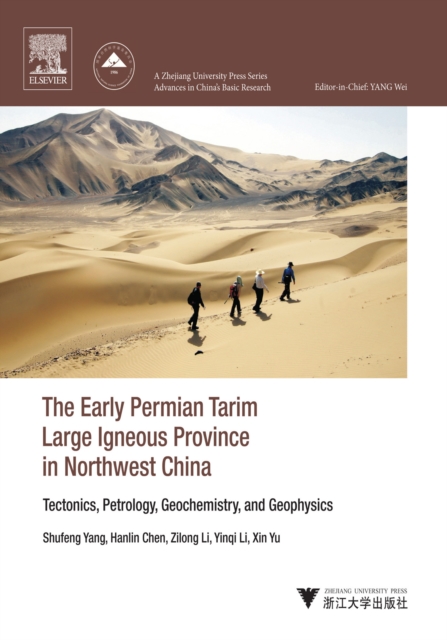
The Early Permian Tarim Large Igneous Province in Northwest China: Tectonics, Petrology, Geochemistry, and Geophysics is the first book to introduce the Early Permian Tarim Large Igneous Province.
Processes and Ore Deposits of Ultramafic-Mafic Magmas through Space and Time focuses on the fundamental processes that control the formation of ore deposits from ultramafic-mafic magmas, covering chromite, platinum-group element (PGE), Ni-sulfides and Ti-V-bearing magnetite.
Authored by one of the world's hydrocarbon exploration experts, Geophysical Exploration Technology: Applications in Lithological and Stratigraphic Reservoirs presents the latest technological advancements and cutting edge techniques in reservoir theory, research and exploration.
Globally, mineral exploration has grown significantly in recent years, driven by the rapid acceleration in prices for gold and diamonds since 2004 and the emergence of a middle class in both China and India-aggressively increased demand.
The book is dedicated to the study and mathematical definition of the biogeochemical patterns of organic and inorganic matter interaction with the marine environment's radioactive and chemical components.
Groundwater Science, Second Edition - winner of a 2014 Textbook Excellence Award (Texty) from The Text and Academic Authors Association - covers groundwater's role in the hydrologic cycle and in water supply, contamination, and construction issues.
After the discovery that elements were commonly composed of isotopes, there developed a range of studies of the variability of isotopic compositions in Earth materials, which was able to add to our understanding of Earth processes and history.
This book is focused on the basics of applying thermochronology to geological and tectonic problems, with the emphasis on fission-track thermochronology.
This volume is for environmental researchers and government policy makers who are required to monitor environmental quality for their environmental investigators and remediation plans.
Fossil hydrocarbons form a continuous series whose"e;heavy"e;members--heavy oils, bitumens, oil shale kerogens, and coal--are important sources of conventional lighter fuels.
The contents of the book are assembled from selected papers presented during the International Conference on Isotopes in Environmental Studies - AQUATIC FORUM 2004 convened in Monaco from 25 to 29 October 2004, which was the most important gathering of the year of isotope environmental scientists.
The environmental impact of the common binders used in construction materials is usually evaluated through life-cycle assessment (LCA), which is an effective process to measure the service life of construction materials.