INTRODUCTION TO Geochemistry This book is intended to serve as a text for an introductory course in geochemistry for undergraduate/ graduate students with at least an elementary-level background in earth sciences, chemistry, and mathematics.
INTRODUCTION TO Geochemistry This book is intended to serve as a text for an introductory course in geochemistry for undergraduate/ graduate students with at least an elementary-level background in earth sciences, chemistry, and mathematics.
Understanding Sea-Level Rise and Variability identifies the major impacts of sea-level rise, presents up-to-date assessments of past sea-level change, thoroughly explores all of the factors contributing to sea-level rise, and explores how sea-level extreme events might change.
Tectonic geomorphology is the study of the interplay between tectonic and surface processes that shape the landscape in regions of active deformation and at time scales ranging from days to millions of years.
Tectonic geomorphology is the study of the interplay between tectonic and surface processes that shape the landscape in regions of active deformation and at time scales ranging from days to millions of years.
The movement of sediment and associated pollutants over the landscape and into water bodies is of increasing concern with respect to pollution control, prevention of muddy floods and environmental protection.
This book is a contribution to the International Year of Planet Earth arising from the 33rd International Geological Congress, held in Oslo, Norway during August 2008.
This book is a contribution to the International Year of Planet Earth arising from the 33rd International Geological Congress, held in Oslo, Norway during August 2008.
The movement of sediment and associated pollutants over the landscape and into water bodies is of increasing concern with respect to pollution control, prevention of muddy floods and environmental protection.
GEOLOGICAL FIELD TECHNIQUES The understanding of Earth processes and environments over geological time is highly dependent upon both the experience that can only be gained through doing fieldwork, and the collection of reliable data and appropriate samples in the field.
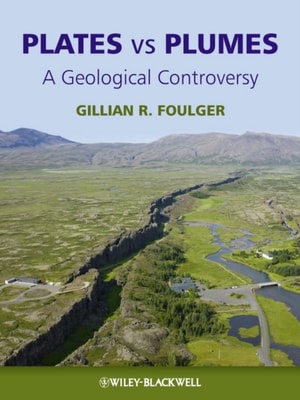
Since the advent of the mantle plume hypothesis in 1971, scientists have been faced with the problem that its predictions are not confirmed by observation.
The material of this book will derive its scientific under-pinning from basics of mathematics, physics, chemistry, geology, meteorology, engineering, soil science, and related disciplines and will provide sufficient breadth and depth of understanding in each sub-section of hydrology.
Understanding Sea-Level Rise and Variability identifies the major impacts of sea-level rise, presents up-to-date assessments of past sea-level change, thoroughly explores all of the factors contributing to sea-level rise, and explores how sea-level extreme events might change.
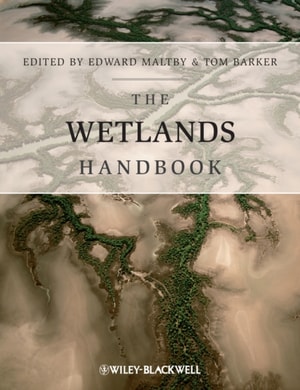
Forty-two chapters by international experts from a wide range of disciplines make The Wetlands Handbook the essential tool for those seeking comprehensive understanding of the subject.
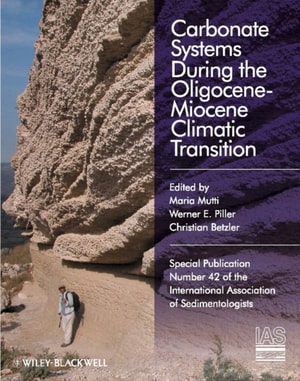
Carbonate rocks (limestones and dolomites) constitute a major part of the geological column and contain not only 60% of the world's known hydrocarbons but also host extensive mineral deposits.
Much new data and many new ideas have emerged in the area of ore geology and industrial minerals since publication of the second edition of this text in 1987.
From AMETHYST to ARTESIAN SPRING, from COAL GAS to CONTINENTAL DRIFT, from SEISMOGRAM to STROMATOLITE, the Encylopedia of the Solid Earth Sciences provides a comprehensive modern reference text for all the subdisciplines of the Earth Sciences.
The innovation and refinement of the techniques and concepts of sequence stratigraphy has been one of the most exciting and profound developments in geology over the past thirty years.
Earth Surface Processes is an introductory text for those studying the dynamics of fluid and sediment transport in the environments, in the context of both present-day patterns as well as the environmental changes decipherable in the geological record.
As it has grown in length and level through successive edtions, the same author's Introduction to Ore Geology (now Ore Geology and Industrial Minerals) has left behind its original audience: first- and second -ear students.
Since the 3rd edition of this publication, emphasis within the petroleum industry has shifted from exploration to appraisal and development of existing hydrocarbon resources.
This book is for students who did not follow mathematics through to the end of their school careers, and graduates and professionals who are looking for a refresher course.
The fourth edition of this highly acclaimed text on the natural environment of the earth has now been thoroughly revised and updated and includes a new chapter on The Organic World, more "e;windows"e;, new illustrations, and a range of other features.
Practical and Theoretical Geoarchaeology provides an invaluable overview of geoarchaeology and how it can be used effectively in the study of archaeological sites and contexts.
This special publication Perspectives in Carbonate Geology is a collection of papers most of which were presented at a symposium to honor the 80th birthday of Bob Ginsburg at the meeting of Geological Society of America in Salt Lake City in 2005.
This fully revised and updated edition introduces the reader to sedimentology and stratigraphic principles, and provides tools for the interpretation of sediments and sedimentary rocks.
The earlier editions of this book have been used by successive generations of students for more than 20 years, and it is the standard text on the subject in most British universities and many others throughout the world.
This book is for geoscience students taking introductory or intermediate-level courses in igneous petrology, to help develop key skills (and confidence) in identifying igneous minerals, interpreting and allocating appropriate names to unknown rocks presented to them.
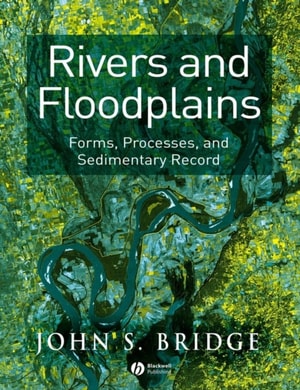
Rivers and Floodplains is concerned with the origin, geometry, water flow, sediment transport, erosion and deposition associated with modern alluvial rivers and floodplains, how they vary in time and space, and how this information is used to interpret deposits of ancient rivers and floodplains.
Introduction to Ore-Forming Processes is the first senior undergraduate postgraduate textbook to focus specifically on the multiplicity of geological processes that result in the formation of mineral deposits.
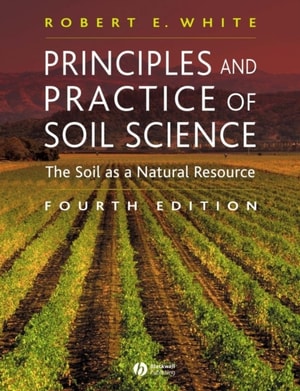
Principles and Practice of Soil Science, Fourth Editionprovides a current and comprehensive introduction to soil science for students in the fields of environmental and agricultural science, ecology, soil and land management, natural resource management and environmental engineering.
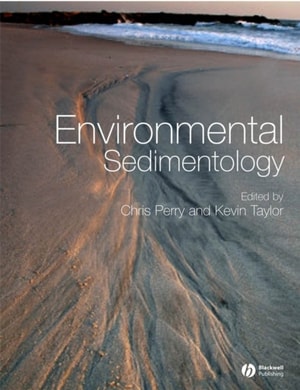
Environmental Sedimentology provides a comprehensive introduction to this rapidly expanding field which addresses the functioning and dynamics of contemporary sediment systems and how these systems respond to a range of both natural and anthropogenically-induced disturbance events.