This book presents an extensive overview of literature published globally in the last decades on REE distribution in minor and accessory minerals from various types of ultramafic, mafic, and other plutonic rocks.
Residual soils are found in many parts of the world and are used extensively as construction materials for roads, embankments and dams, and to support the foundations of buildings, bridges and load-bearing pavements.
Of the known greenhouse gases, political attention to date has primarily focused on carbon dioxide (CO2), whereby it is assumed that underground storages of crude oil and natural gas through Carbon Capture and Storage (CCS) technology could contribute significantly to global climate protection.
Given the recent advances in site investigation techniques, computing, access to information and monitoring, plus the current emphasis on safety, accountability and sustainability, this book introduces an up-to-date methodology for the design of all types of rock engineering projects, whether surface or underground.
This book looks at the distribution, occurrences, potential and prospects for good governance, transparency and sustainable development of geological resources in Sub-Saharan Africa.
In 1936 a German chemist identified certain organic molecules that he had extracted from ancient rocks and oils as the fossil remains of chlorophyll--presumably from plants that had lived and died millions of years in the past.
Soils, invaluable indicators of the nature and history of the physical and human landscape, have strongly influenced the cultural record left to archaeologists.
In recent years, viticulture has seen phenomenal growth, particularly in such countries as Australia, New Zealand, the United States, Chile, and South Africa.
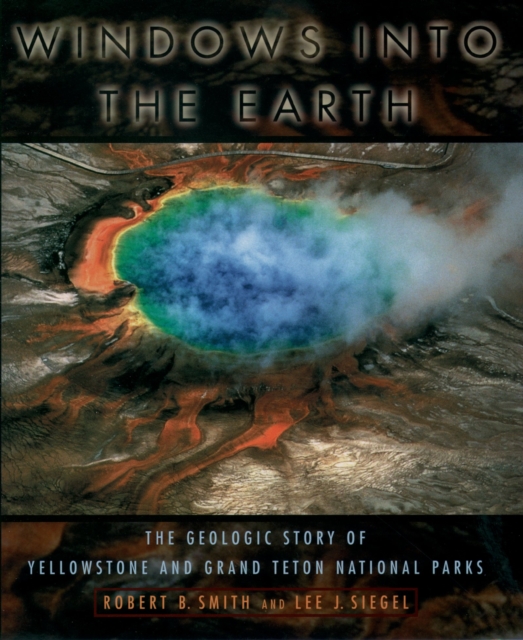
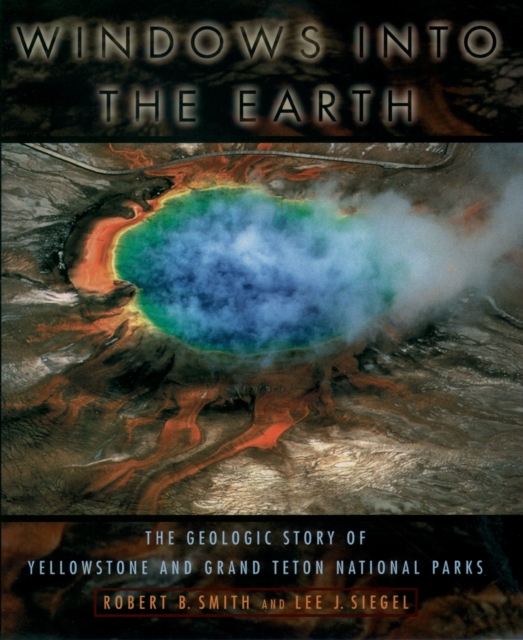
Millions of years ago, the North American continent was dragged over the world's largest continental hotspot, a huge column of hot and molten rock rising from the Earth's interior that traced a 50-mile wide, 500-mile-long path northeastward across Idaho.
Policy makers, mineral exploration experts, and regional planners decide how public lands, which may contain undiscovered resources, should be used or whether to invest in exploration for minerals on a regular basis.
In 1936 a German chemist identified certain organic molecules that he had extracted from ancient rocks and oils as the fossil remains of chlorophyll--presumably from plants that had lived and died millions of years in the past.
The Aqueous Chemistry of Oxides is a single-volume text that encapsulates all of the critical issues associated with how oxide materials interact with aqueous solutions.
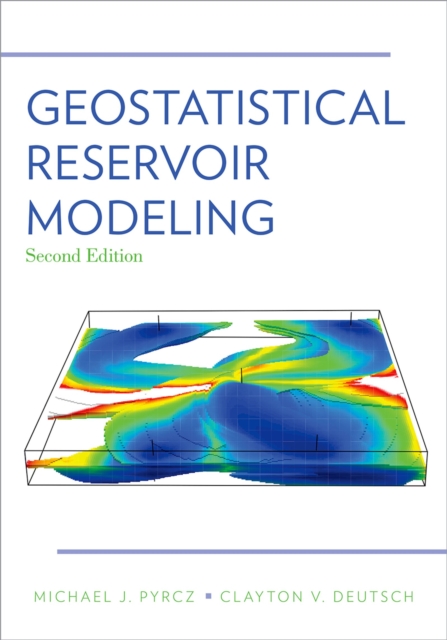
Published in 2002, the first edition of Geostatistical Reservoir Modeling brought the practice of petroleum geostatistics into a coherent framework, focusing on tools, techniques, examples, and guidance.
Constantly in the news and the subject of much public debate, fracking, as it is known for short, is one of the most promising yet controversial methods of extracting natural gas and oil.
Constantly in the news and the subject of much public debate, fracking, as it is known for short, is one of the most promising yet controversial methods of extracting natural gas and oil.
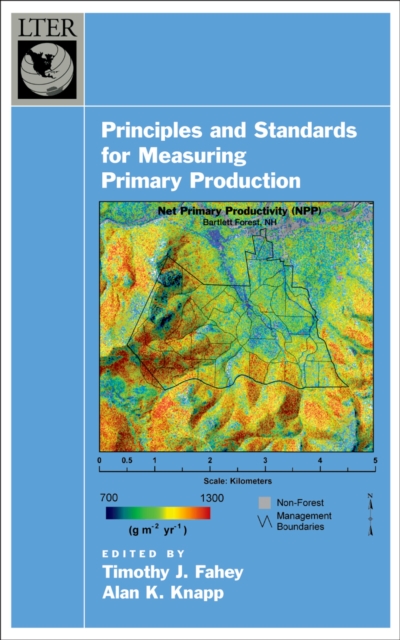
Principles and Standards for Measuring Net Primary Production in Long-Term Ecological Studies is the first book to establish a standardized method for measuring net primary productivity (NPP) in ecological research.
In recent years, viticulture has seen phenomenal growth, particularly in such countries as Australia, New Zealand, the United States, Chile, and South Africa.
Stochastic Subsurface Hydrogeology is the study of subsurface, geological heterogeneity, and its effects on flow and transport process, using probabilistic and geostatistical concepts.
Geochemical reaction modeling plays an increasingly vital role in several areas of geoscience, from environmental geochemistry and petroleum geology to the study of geothermal and hydrothermal fluids.
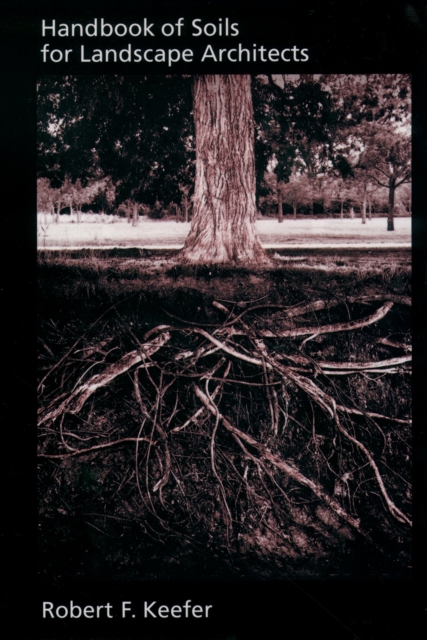
Written in a clear, accessible style, this book covers the fundamental aspects of soil science with an emphasis on topics useful to landscape architects and professionals in related fields.
Article 76 of the United Nations Convention on the Law of the Sea lays down the rules and regulations governing claims to a continental shelf beyond 200 nautical miles for the 130 coastal States and entities that have ratified or acceded to it.
Whether the fossil record should be read at face value or whether it presents a distorted view of the history of life is an argument seemingly as old as many fossils themselves.
A loving portrayal of our precious planet that offers easy-to-grasp discussions of scientific concepts and detailed examinations of Earth's tectonic, biological, and paleontological forces.
A loving portrayal of our precious planet that offers easy-to-grasp discussions of scientific concepts and detailed examinations of Earth's tectonic, biological, and paleontological forces.
This work is based on the observation that further major advances in geochemistry, particularly in understanding the rules that govern the ways in which elements come together to form minerals and rocks, will require the application of the theories of quantum mechanics.
Fluid Physics in Geology is aimed at geology students who are interested in understanding fluid behavior and motion in the context of a wide variety of geological problems, and who wish to pursue related work in fluid physics.
The story of the destruction of Sodom, Gomorrah, and Jericho--three cities situated along a major fault line extending 1,100 kilometers from the Red Sea to Turkey--is the oldest such description in human history.
Students of geology who may have only a modest background in mathematics need to become familiar with the theories of stress, strain, and other tensor quantities, so that they can follow, and apply to their own research, developments in modern, quantitative geology.
Millions of years ago, the North American continent was dragged over the world's largest continental hotspot, a huge column of hot and molten rock rising from the Earth's interior that traced a 50-mile wide, 500-mile-long path northeastward across Idaho.
Lectures on Geophysical Fluid Dynamics offers an introduction to several topics in geophysical fluid dynamics, including the theory of large-scale ocean circulation, geostrophic turbulence, and Hamiltonian fluid dynamics.
With a complex assemblage of largely intact ecosystems that support the earth's greatest diversity of life, the Amazon basin is a focal point of international scientific interest.