Continuing the tradition of excellence established by the first edition, the Second Edition of Applied Wetlands Science and Technology provides the fundamentals for delineating, identifying, and regulating wetlands.
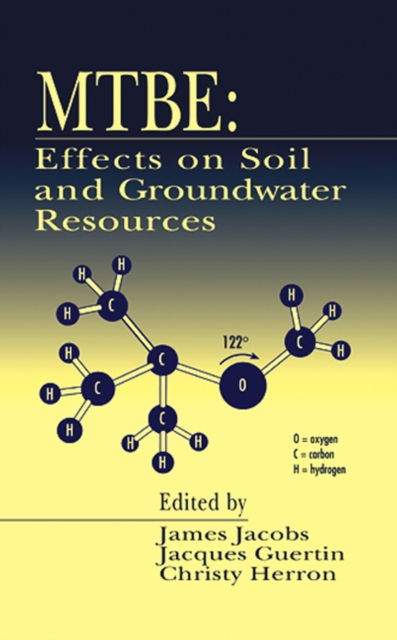
Written by an expert team of scientists, engineers, and toxicologists, MTBE: Effects on Soil and Ground-Water Resources provides complete in-depth coverage of the assessment and potential remediation strategies of methyl tertiary-butyl ether (MTBE).
Modeling hydrologic changes and predicting their impact on watersheds is a dominant concern for hydrologists and other water resource professionals, civil and environmental engineers, and urban and regional planners.
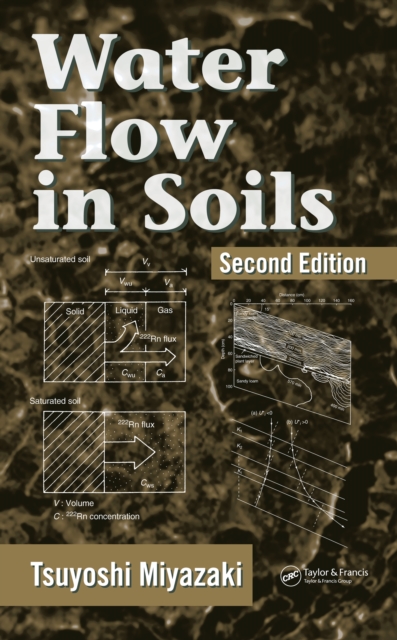
The new edition of a bestseller, Water Flow in Soils bridges the fields of soil physics-where descriptions of water flow tend to be microscopic- and hydrology - where they tend to be macroscopic.
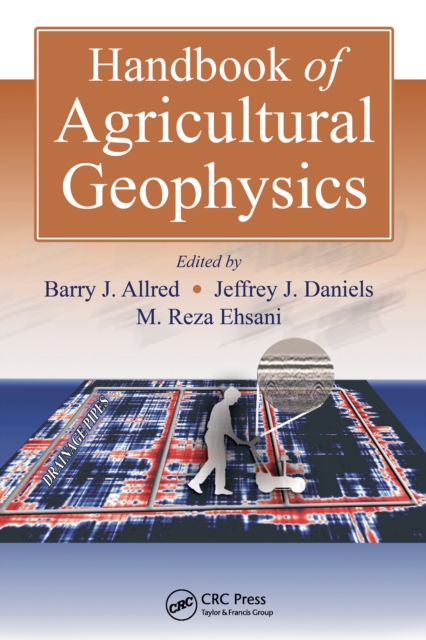
Precision farming, site infrastructure assessment, hydrologic monitoring, and environmental investigations- these are just a few current and potential uses of near-surface geophysical methods in agriculture.
Complete and quantitative, NAPL Removal: Surfactants, Foams, and Microemulsions, belongs to a ten-monograph series that records the results of the Department of Defense/Advanced Applied Technology Demonstration Facility environmental technology demonstrations.
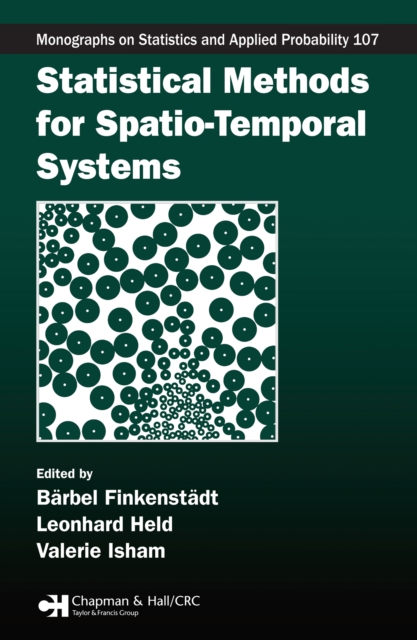
Statistical Methods for Spatio-Temporal Systems presents current statistical research issues on spatio-temporal data modeling and will promote advances in research and a greater understanding between the mechanistic and the statistical modeling communities.
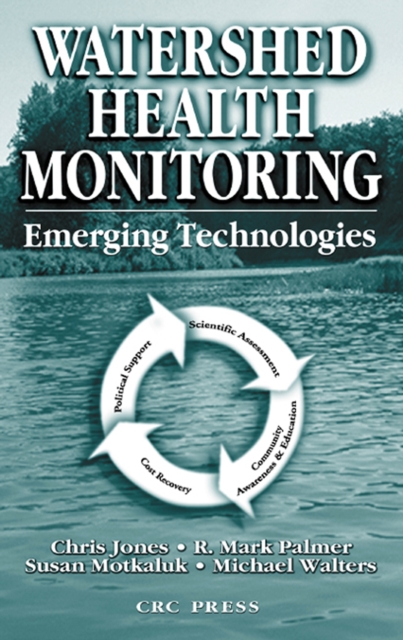
Watershed Health Monitoring: Emerging Technologies is a concise reference that defines the concept of watershed health and explains that monitoring the health of watersheds is a critical precursor to adaptive resource management on a watershed basis.
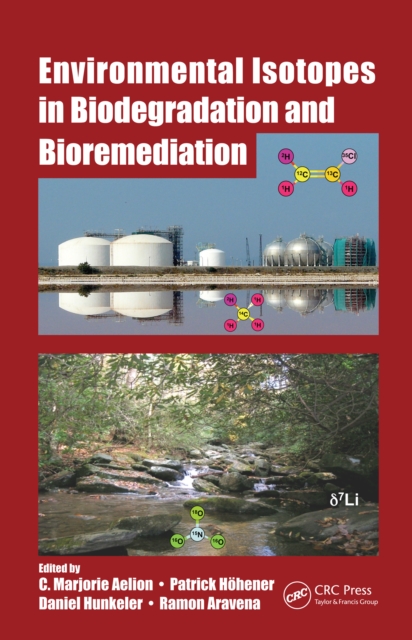
Enhanced analytical capabilities and separation techniques, improved detection limits, and accessibility of instrumentation have led to massive strides in the use of isotopes to assess microbial processes in surface and subsurface sediments.
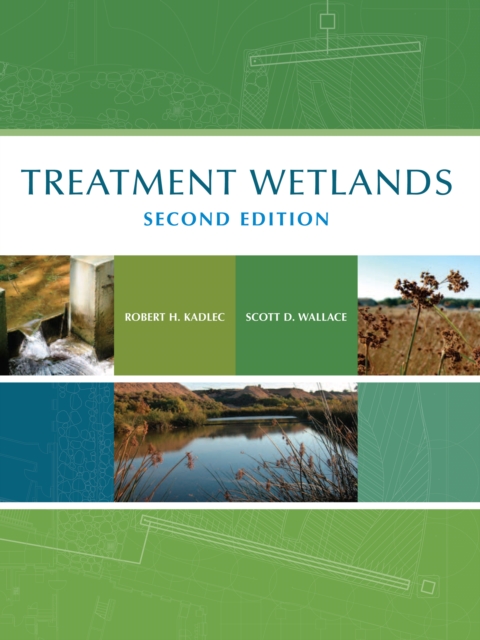
Completely revised and updated, Treatment Wetlands, Second Edition is still the most comprehensive resource available for planning, designing, and operating wetland treatment systems.
This book explores the integration of artificial intelligence (AI) in environmental engineering, emphasizing the unique challenges and approaches required for the accurate modeling of physical phenomena.
Filling a long-standing need for a desk reference that synthesizes current research, Land Use Effects on Streamflow and Water Quality in the Northeastern United States reviews and discusses the impact of forest management, agriculture, and urbanization.
Until now, there has not been any work that systematically presents the subject of acoustic fish reconnaissance, details all major aspects of applying acoustic equipment in commercial fish reconnaissance, and offers sufficient analysis of the effectiveness of fish-finding techniques.
Coupling the basics of hygrogeology with analytical and numerical modeling methods, Hydrogeology and Groundwater Modeling, Second Edition provides detailed coverage of both theory and practice.
In situ treatments involving the arrangement of contact between prospective reactants in complex porous media require a refined understanding of solute migration.
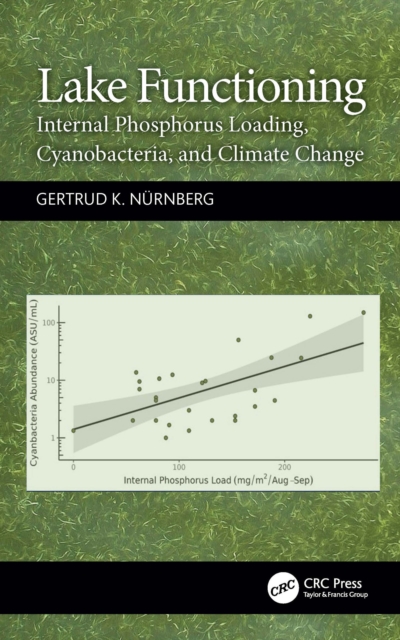
This book explores the interconnections of internal phosphorus loading, cyanobacteria, and climate change and their role in determining water quality in freshwater.
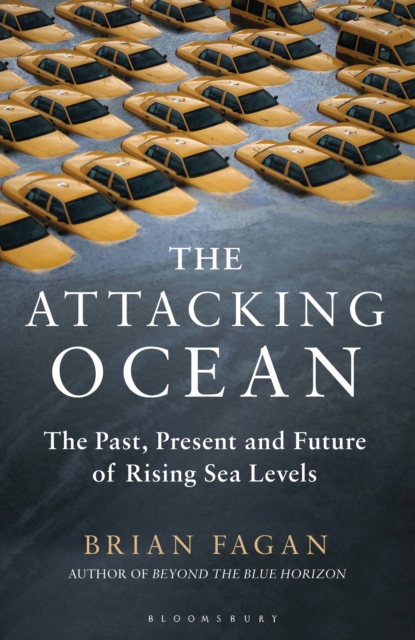
The past fifteen thousand years - the entire span of human civilization - have witnessed dramatic sea level changes, which began with rapid global warming at the end of the Ice Age, when sea levels were more than 700 feet below modern levels.
This groundbreaking book goes beyond conventional approaches and explores how AI is revolutionizing the field of wastewater treatment, offering innovative solutions to pressing challenges.
This is the beautifully told tale of Norton's growing love of the sea, from family holidays in Whitley Bay as a boy, to his first over zealous attempts at diving.
Estuaries are complex and fascinating natural environments, where constantly changing water depths generate rapidly reversing currents and transport vast quantities of salt, heat, and sediment on a daily basis.
In 2005 the CoastGIS symposium and exhibition was once again held in Aberdeen, Scotland, in the UK, the second time that we have had the privilege host this international event in the city of Aberdeen.
Fisheries science in North America is changing in response to a changing climate, new technologies, an ecosystem approach to management and new thinking about the processes affecting stock and recruitment.
In this wide-ranging and comprehensive review of the historical development and current status of ocean circulation models, the analysis extends from simple analytical approaches to the latest high-resolution numerical models with data assimilation.
While a good grasp of the many separate aspects of agriculture is important, it is equally essential for all those involved in agriculture to understand the functioning of the farming system as a whole and how it can be best managed.
Till the very end of the twentieth century tsunami waves (or 'waves in a harbour', translated from Japanese) were considered an extremely rare and exotic natural p- nomenon, originating in the ocean and unexpectedly falling upon the seaside as gigantic waves.
The state of the Northeast Atlantic fisheries in recent years has highlighted - plementation as the Achilles heel of modern fisheries management: discards and unreported or misreported landings are in many cases recognised to effectively subvert sound conservation goals.
Deep-water coral reefs are found along large sections of the outer continental shelves and slopes of Europe, from North Cape to the Gulf of Cadiz, and because they also occur along the Atlantic seaboard of USA, the Gulf of Mexico, off Brazil, in the Mediterranean, and off New Zealand, they are currently being targeted by international groups of marine scientists.
Since its establishment as a policy research institute in 1990, the Institute for In- grated Development Studies (IIDS) has been engaged in promoting public awa- ness and understanding of issues of national importance by undertaking studies and research on contemporary themes.
Although numerous books have been written on both monitoring and modelling of coastal oceans, there is a practical need for an introductory multi-disciplinary volume to non-specialists in this field.
Extreme, freak or rogue waves are produced by a number of physical mechanisms that focus the water-wave energy into a small area, due to wave instability, chaotic behaviour, dispersion (frequency modulation), refraction (presence of variable currents or bottom topography), soliton interactions, etc.
Microbial activities influence water-rock interaction processes and chemical transport between the major geochemical reservoirs and the formation/transformation of minerals and rocks, whereas geological processes and geochemical controls influence the microbial ecology in extreme environments.