Congress has promoted fisheries science for over a century and its involvement in fisheries management took a great leap forward with passage of the Fisheries Conservation and Management Act of 1976.
This report provides guidance to the Gulf Ecosystem Monitoring (GEM) program to help ensure that it is based on a a science plan that is robust, far-reaching, and scientifically sound.
Legionnaires' disease, a pneumonia caused by the Legionella bacterium, is the leading cause of reported waterborne disease outbreaks in the United States.
Produced waterwater from underground formations that is brought to the surface during oil and gas productionis the greatest volume byproduct associated with oil and gas production.
Gulf Coast communities and natural resources suffered extensive direct and indirect damage as a result of the largest accidental oil spill in US history, referred to as the Deepwater Horizon (DWH) oil spill.
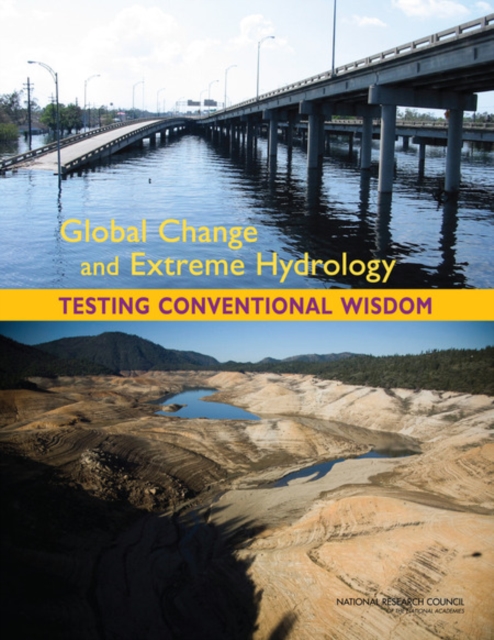
Floods take a heavy toll on society, costing lives, damaging buildings and property, disrupting livelihoods, and sometimes necessitating federal disaster relief, which has risen to record levels in recent years.
Summary of a Workshop on Mississippi River Water Quality Science and Interstate Collaboration summarizes presentations and discussions of Mississippi River and basin water quality management, monitoring, and evaluation programs that took place at a workshop that was held in St.
The Federal Emergency Management Agency's (FEMA) Federal Insurance and Mitigation Administration (FIMA) manages the National Flood Insurance Program (NFIP), which is a cornerstone in the U.
Increasing renewable energy development, both within the United States and abroad, has rekindled interest in the potential for marine and hydrokinetic (MHK) resources to contribute to electricity generation.
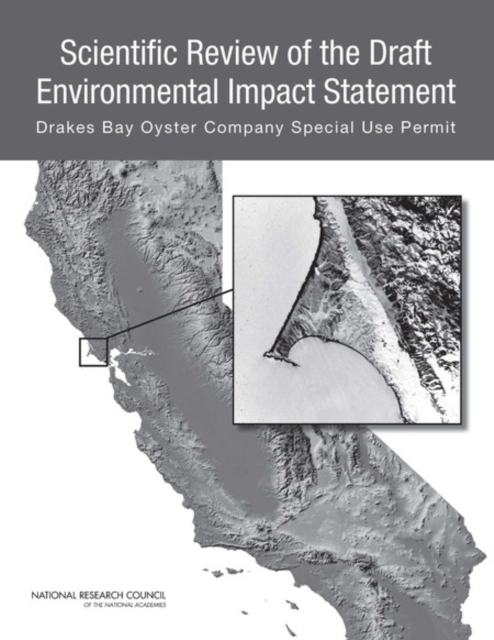
In May 2012, the National Park Service (NPS) asked the National Research Council to conduct a scientific review of a Draft Environmental Impact Statement (DEIS) to evaluate the effects of issuing a Special Use Permit for the commercial shellfish operation in Drakes Estero for a ten year time span.
Climate theory dictates that core elements of the climate system, including precipitation, evapotranspiration, and reservoirs of atmospheric and soil moisture, should change as the climate warms, both in their means and extremes.
The Grand Canyon Monitoring and Research Center began long-term planning at its inception and, in May 1997, produced a Long-Term Monitoring and Research Strategic Plan that was adopted by stakeholder groups (the Adaptive Management Work Group and the Technical Work Group) later that year.
This book reviews the performance and effectiveness of the Community Development Quotas (CDQ) programs that were formed as a result of the Sustainable Fisheries Act of 1996.
Scientific databases relating to the environment, natural resources, and public health on the African continent are, for various reasons, difficult to create and manage effectively.
A growing appreciation for how variations in climate affect society and the environment has increased the demand for fast and accurate predictions of climate variability.
This report contains a collection of papers from a workshopStrengthening Science-Based Decision-Making for Sustainable Management of Scarce Water Resources for Agricultural Production, held in Tunisia.
This book summarizes three symposia that were convened in the California, Gulf of Maine, and Gulf of Mexico regions to seek new ways to improve the use of science in coastal policymaking.
The Bering Sea, which lies between the United States and Russia, is one of the most productive ecosystems in the world and has prolific fishing grounds.
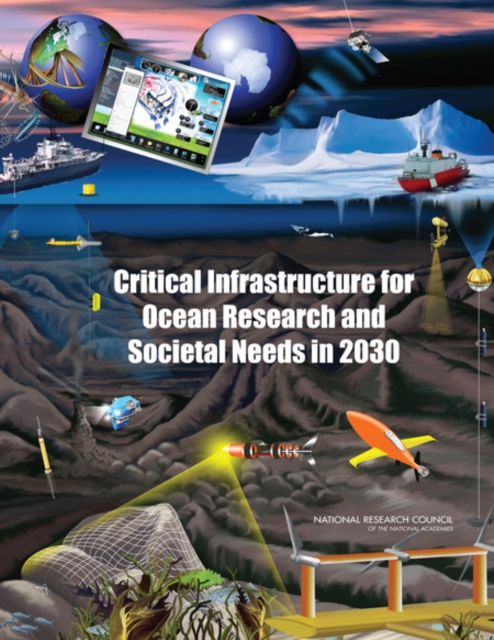
The United States faces decisions requiring information about the oceans in vastly expanded scales of time and space and from oceanic sectors not accessible with the suite of tools now used by scientists and engineers.
To offer security in the maritime domain, governments around the world need the capabilities to directly confront common threats like piracy, drug-trafficking, and illegal immigration.
On January 8 and 9, 2009, the Ocean Studies Board of the National Research Council, in response to a request from the Office of Naval Research, hosted the "e;Oceanography in 2025"e; workshop.
This book reviews the practice of reclaiming treated municipal wastewater for agricultural irrigation and using sewage sludge as a soil amendment and fertilizer in the United States.