Reports of closed beaches, restricted shellfish beds, oil spills, and ailing fisheries are some of the recent evidence that our marine environment is in trouble.
Commerce and the general publicespecially those living in increasingly crowded, highly developed low-lying coastal communitiesrely heavily on accurate forecasts of marine conditions and weather over the oceans to ensure the safe and productive use of the sea and coastal zone.
This book reviews the practice of reclaiming treated municipal wastewater for agricultural irrigation and using sewage sludge as a soil amendment and fertilizer in the United States.
The flood that greeted the new year in 1988 brought home the uncomfortable realization that many suburban areas of eastern Oahu are at risk from sudden and, in some cases, unpredictable flooding.
This book presents key conclusions about the controversial killing of thousands of dolphins each year during tuna fishing in the eastern tropical Pacific.
The Bering Sea, which lies between the United States and Russia, is one of the most productive ecosystems in the world and has prolific fishing grounds.
Large ships transporting hazardous cargoes, notorious marine accidents, and damage to marine ecosystems from tanker spills have heightened public concern for the safe navigation of ships.
The pervasive, widespread problem of contaminated marine sediments is an environmental issue of national importance, arising from decades of intentionally and unintentionally using coastal waters for waste disposal.
Scientific databases relating to the environment, natural resources, and public health on the African continent are, for various reasons, difficult to create and manage effectively.
The site of a proposed repository for high-level radioactive waste from the nation's nuclear power plants is not at risk of ground water infiltration, concludes this important book.
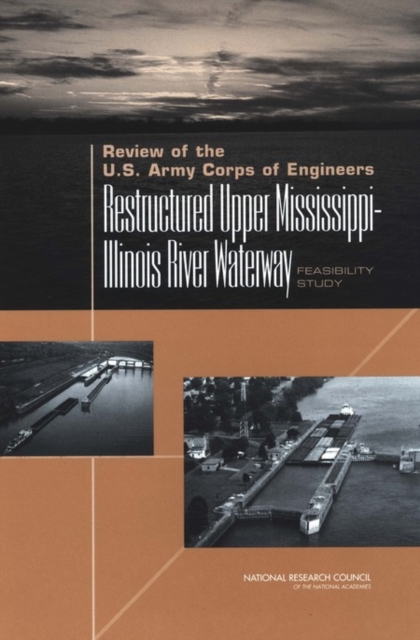
From the Executive Summary:There are some concerns that the current Corps planning and construction budget has not kept pace with expanding national water management needs for flood hazard management, water transportation, and other purposes.
From warning the public of impending floods to settling legal arguments over water rights, the measurement of streamflow ("e;streamgaging"e;) plays a vital role in our society.
Experts in the areas of water science and chemistry from the government, industry, and academic arenas discussed ways to maximize opportunities for these disciplines to work together to develop and apply simple technologies while addressing some of the world's key water and health problems.
Analytical Methods and Approaches for Water Resources Project Planningis part of a larger study that was conducted in response to a request from the U.
The Bureau of Reclamation and Sandia National Laboratories jointly developed the Roadmap to serve as a strategic research pathway for desalination and water purification technologies to meet future water needs.
Recent and forecasted advances in microbiology, molecular biology, and analytical chemistry have made it timely to reassess the current paradigm of relying predominantly or exclusively on traditional bacterial indicators for all types of waterborne pathogens.
The book endorses the National Science Foundation's concept of the National Ecological Observatory Network (NEON) for providing a nationwide network of facilities and infrastructure for ecological and environmental research that is impossible with existing infrastructure.
In recent years there has been growing interest in having fisheries stakeholders involved in various aspects of fisheries data collection and experimentation.
This book reviews the performance and effectiveness of the Community Development Quotas (CDQ) programs that were formed as a result of the Sustainable Fisheries Act of 1996.
Hydrologic science, an important, interdisciplinary science dealing with the occurrence, distribution, and properties of water on Earth, is key to understanding and resolving many contemporary, large-scale environmental issues.
The number of hazardous waste sites across the United States has grown to approximately 217,000, with billions of cubic yards of soil, sediment, and groundwater plumes requiring remediation.
In 1997, New York City adopted a mammoth watershed agreement to protect its drinking water and avoid filtration of its large upstate surface water supply.
In the summer of 1803, Thomas Jefferson sent Meriwether Lewis and William Clark on a journey to establish an American presence in a land of unqualified natural resources and riches.
For the 119 species of marine mammals, as well as for some other aquatic animals, sound is the primary means of learning about the environment and of communicating, navigating, and foraging.
The Office of Naval Research (ONR) contracted with the Naval Studies Board (NSB) of the National Research Council (NRC) to establish a committee to review ONR's Air and Surface Weapons Technology (ASWT) program.