This book is a collection of the lectures, held at the International Summer School ISSAOS-2000 in L'Aquila (Italy), given by invited lecturers coming from both Europe and the USA.
A three-thousand-year history of the Yellow River and the legacy of interactions between humans and the natural landscape From Neolithic times to the present day, the Yellow River and its watershed have both shaped and been shaped by human society.
An eye-opening introduction to the complexity, wonder, and vital roles of coral reefsWhen mass coral bleaching and die'A 'Aooffs were first identified in the 1980s, and eventually linked to warming events, the scientific community was sure that such a dramatic and unambiguous signal would serve as a warning sign about the devastating effects of global warming.
An engaging call to understand and protect groundwater, the primary source of drinking water for almost half of the world's populationGroundwater is essential for drinking water and food security.
From Lake Coeur dAlene to its confluence with the Columbia, the Spokane River travels 111 miles of varied and often spectacular terrainrural, urban, in places wild.
In this lively history and celebration of the Pacific razor clam, David Berger shares with us his love affair with the glossy, gold-colored Siliqua patula and gets into the nitty-gritty of how to dig, clean, and cook them using his favorite recipes.
The Gulf Stream: A Physical and Dynamical Description (Second Edition) offers a comprehensive exploration of one of the ocean's most iconic and complex phenomena.
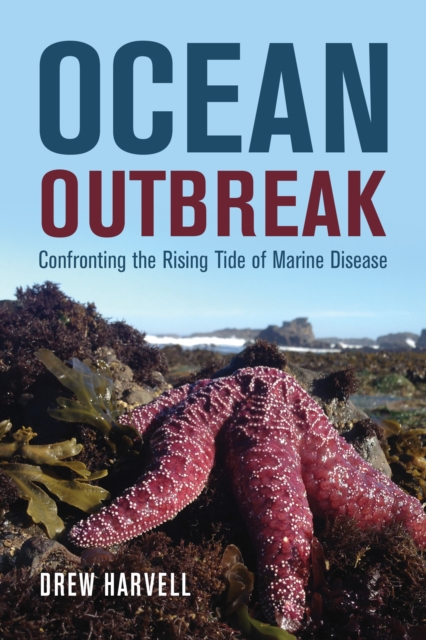
Winner of the Sustainability Science Award 2020, Ecological Society of America Winner of the PROSE Award (Biological Sciences category) 2020, Association of American PublishersThere is a growing crisis in our oceans: mysterious outbreaks of infectious disease are on the rise.
Millions upon millions of salmon and steelhead once filled California streams, providing a plentiful and sustainable food resource for the original peoples of the region.
The Gulf Stream: A Physical and Dynamical Description (Second Edition) offers a comprehensive exploration of one of the ocean's most iconic and complex phenomena.
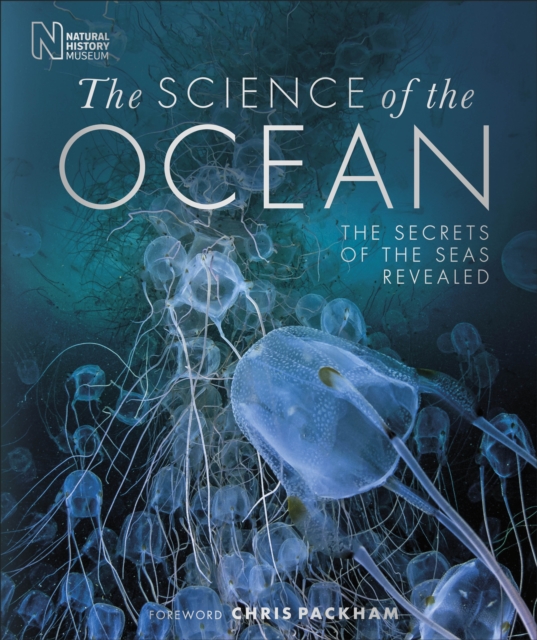
Dive into this uniquely elegant visual exploration of the sea An informative and utterly beautiful introduction to marine life and the ocean environment, The Science of the Ocean ebook brings the riches of the underwater world onto the printed page.
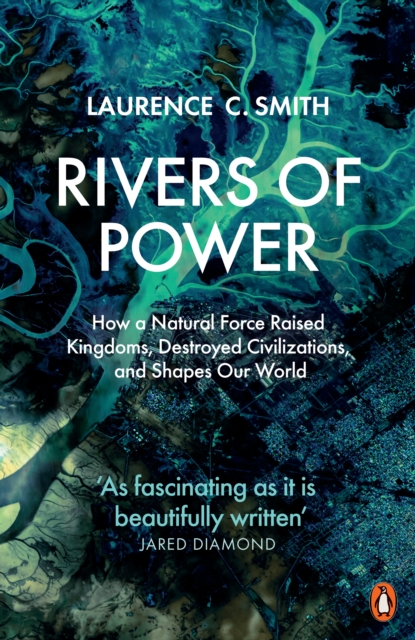
'As fascinating as it is beautifully written' JARED DIAMOND, Pulitzer Prize-winning author of Guns, Germs and SteelRivers, more than any road, technology or political event, have shaped the course of civilization.
This book presents the results of basic and applied studies on the solution of burning issues within the analysis of anomalous changes in marine environment under the influence of climatic changes and economic activities in the Azov-Black Sea basins.
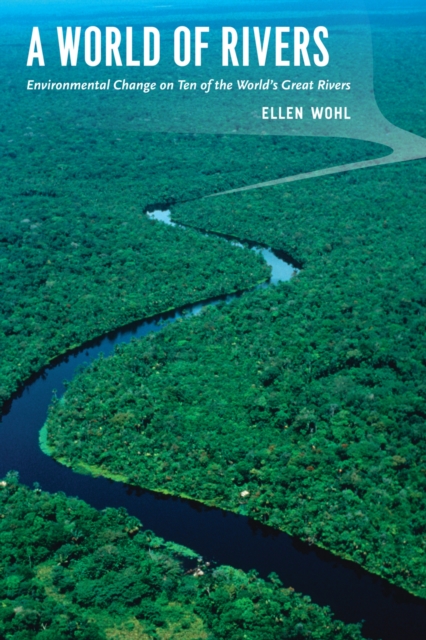
Far from being the serene, natural streams of yore, modern rivers have been diverted, dammed, dumped in, and dried up, all in efforts to harness their power for human needs.
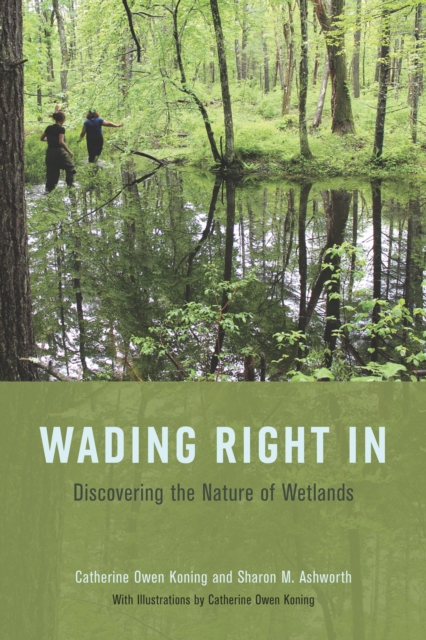
Where can you find mosses that change landscapes, salamanders with algae in their skin, and carnivorous plants containing whole ecosystems in their furled leaves?
Where can you find mosses that change landscapes, salamanders with algae in their skin, and carnivorous plants containing whole ecosystems in their furled leaves?
As cities grow and climates change, precipitation increases, and with every great storm-from record-breaking Boston blizzards to floods in Houston-come buckets of stormwater and a deluge of problems.
Mathematical modelling has become an indispensable tool for engineers, scientists, planners, decision makers and many other professionals to make predictions of future scenarios as well as real impending events.
Environmental Fluid Mechanics provides comprehensive coverage of a combination of basic fluid principles and their application in a number of different situations-exploring fluid motions on the earth's surface, underground, and in oceans-detailing the use of physical and numerical models and modern computational approaches for the analysis of environmental processes.
Advances in Subsurface Contamination of Porous Media: Indicators, Processes and Modelling provides a high level understanding of the processes concerning common and emergent contaminants through their passage from soil to groundwater.
Urban water conflicts manifested first in Europe in the 19th century and are observed nowadays in various forms throughout the world; in particular, in developing countries.
This collection of papers represents the outcomes of the International Symposiumheld in Delft, The Netherlands, on June 13-15, 2007, at the occasion of the 50thanniversary of the UNESCO-IHE Institute for Water Education.
Though the modern Spanish State was formed in the mid Fifteenth Century, historical records show that water works, statues, and the utilization of water dates back to centuries BC.
In the 1950s, the residents of the southwestern coastal areas of Taiwan suffered greatly from Blackfoot disease (BFD) due to the consumption of arsenic-contaminated groundwater.
This textbook is a practical guide to real-time streamflow forecasting that provides a rigorous description of a coupled stochastic and physically based flow routing method and its practical applications.
Water Engineering and Management - Learning from History explores the pair technology / water use (an indivisible pair, since the first member of the binomial determines the second) which, in the light of the knowledge available in the 21st century and with a conception focused on the near future, goes beyond the limits set by nature itself.
This book presents a unique and up-to-date summary of what is known about groundwater on our planet, from a global perspective and in terms of area-specific factual information.
Dams and Appurtenant Hydraulic Structures, now in its second edition, provides a comprehensive and complete overview of all kinds of dams and appurtenant hydraulic structures throughout the world.