This book provides a succinct but comprehensive presentation of key geomorphological locations and topics including information about geomorphological heritage and maps to visit the most important sites.
The African Seas include marginal basins of two major oceans, the Atlantic and the Indian, a miniature ocean, the Mediterranean Sea, and an infant ocean, the Red Sea.
Natural hazards such as earthquakes, landslides, floods, volcanic eruptions, tsunamis, and hurricanes cause environmental, economic as well as sociological problems worldwide.
Within the realm of quantitative geography, systems modelling is specifically concerned with understanding those relationships that influence the attributes of phenomena located in space and time.
The purpose of this book is to introduce land planners to the principles of remote sensing and to the applications remote sensing has to the land planning process.
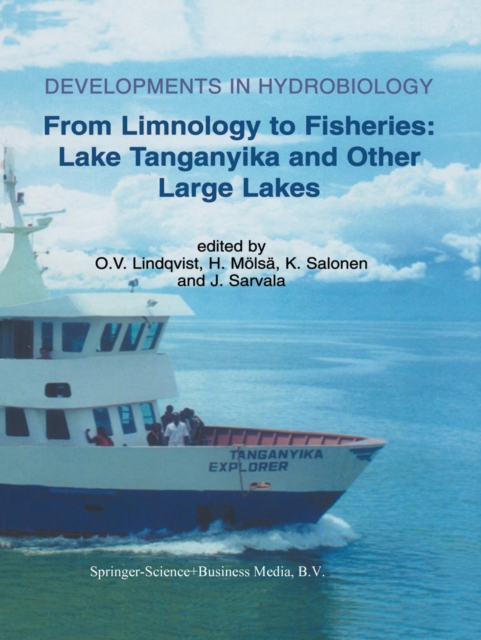
Based on modern limnology and environmental research, syntheses of the composition, functions and production of pelagic ecosystems are being provided in the Great Lakes of Africa.
Terrain has a profound effect upon the strategy and tactics of any military engagement and has consequently played an important role in determining history.
The effects of light pollution on flora, fauna -including humans and their widely varying night-time activities- are often subtle and need extensive field studies to be quantified in a sensible manner.
During ten years serving with the USDA Soil Conservation Service (SCS), now known as the Natural Resources Conservation Service (NRCS), I became amazed at how millions of dollars in contract monies were spent based on simplistic hydrologic models.
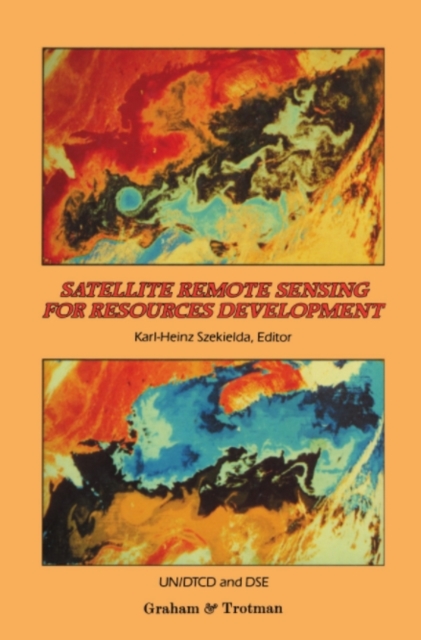
An Interregional Expert Meeting on the Use of Satellite Imaging RADAR and Thematic Mapping in Natural Resources Development, organized by the Economic and Social Develop- ment Center of the German Foundation for International Development - DSE - in co-operation with the United Nations Department of Technical Co-operation for Develop- ment - DTCD - was held in Berlin (West) from 21 November to 4 December 1984.
Forests comprise the greatest storage of carbon on land, provide fuel for millions, are the habitat for most terrestrial biodiversity, and are critical to the economies of many countries.
A comprehensive source book for anybody interested in the potential of remote sensing and GIS technology for the Eastern Europe countries in transition, and less developed countries in general.
This book presents the proceedings and the outcomes of the NATO Advanced Research Workshop (ARW) on Integrated Technologies for Environmental Monitoring and Information Production, which was held in Marmaris, Turkey, between September 10- 14, 200 I.
Optics of Cosmic Dust describes what we currently know about cosmic dust, how we know it, and the research efforts undertaken to provide that knowledge.
Geographical Information Systems (GIS) have developed rapidly in recent years and now provide powerful tools for the capture, manipulation, integration, interrogation, modelling, analysis and visualisation of data - tools that are already used for policy support in a wide range of areas at almost all geographic and administrative levels.
The 15th anniversary of the Chernobyl nuclear power plant disaster offered a timely opportunity for an expert assessment of the current situation and suggestions for approaches to managing the information associated with the site and surrounding contaminated territories.
Recent assessment of progress in coastal management at the national level shows an impressive growth of efforts after the 1992 Earth Summit, particularly in Europe and the Mediterranean.
Satelli te oceanography, as the term is used in this book, is a generic term that means application of the technology of aerospace electromagnetic remote sensing to the study of the oceans.
Optical Metrology is a rapidly expanding field i'n both its scientific foundations and technological developments, being of major concern to measurements, quality control, non-destructive tes- ting and in fundamental research.
Ten years ago, de Loor and co-workers at TNO, The Netherlands, were the first to report bottom topography patterns in real aperture radar (RAR) images of the southern North Sea.
Within the framework of Ispra Courses, a course on "e;Applications of Remote Sensing to Agrometeorology"e; was held from April 6th to 10th, 1987 at the Joint Research Centre of the European Communities, Ispra Italy.