Transportation asset management delivers efficient and cost-effective investment decisions to support transportation infrastructure and system usage performance measured in economic, social, health, and environmental terms.
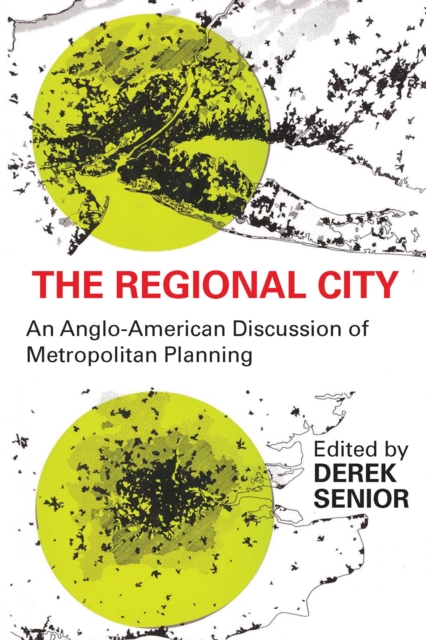
In this volume leaders in the fields of urban design and planning from both sides of the Atlantic examine the structure and functioning of the urban region, discuss the strategies and machinery required to make regional planning effective, compare experiences in urban renewal, and analyze the part played by transportation and land values in the shaping of regional development.
In this volume leaders in the fields of urban design and planning from both sides of the Atlantic examine the structure and functioning of the urban region, discuss the strategies and machinery required to make regional planning effective, compare experiences in urban renewal, and analyze the part played by transportation and land values in the shaping of regional development.
This book brings together the collective thinking, ecological perspectives, and experiences of individuals from air quality, land use and transportation disciplines who are working to advance and operationalize sustainable development.
This book brings together the collective thinking, ecological perspectives, and experiences of individuals from air quality, land use and transportation disciplines who are working to advance and operationalize sustainable development.
Originally published in 1972, this volume, supplemented extensively with maps and tables, and employing sophisticated institutional and empirical analyses, discusses a number of important issues relating to the viability of the Trans-Alaska Pipeline and the natural environment.
Originally published in 1972, this volume, supplemented extensively with maps and tables, and employing sophisticated institutional and empirical analyses, discusses a number of important issues relating to the viability of the Trans-Alaska Pipeline and the natural environment.
Originally published in 1985, this volume examines the determinants of transport energy consumption and discusses policies which could modify rising transport energy consumption while still providing the transport services necessary for economic development.
Originally published in 1985, this volume examines the determinants of transport energy consumption and discusses policies which could modify rising transport energy consumption while still providing the transport services necessary for economic development.
In an era of rapid change, uncertainty, and hyperpartisanship, when wicked problems abound, tools for solving public problems are more essential than ever.
In an era of rapid change, uncertainty, and hyperpartisanship, when wicked problems abound, tools for solving public problems are more essential than ever.
Transport and the spatial location of population and activities have been important themes of study in engineering, social sciences and urban and regional planning for many decades.
Transport and the spatial location of population and activities have been important themes of study in engineering, social sciences and urban and regional planning for many decades.
Since the passing of the Housing, Town Planning, etc, Act, 1909, there have been published a considerable number of books and a vast number of pamphlets and magazine articles dealing with the subject of Town Planning.
Since the passing of the Housing, Town Planning, etc, Act, 1909, there have been published a considerable number of books and a vast number of pamphlets and magazine articles dealing with the subject of Town Planning.
This collection of field-based case-studies examines the role and contributions of Africa's informal public transport (also referred to as paratransit) to the production of city forms and urban economies, as well as the voices, experiences, and survival tactics of its poor and stigmatised workforce.
This collection of field-based case-studies examines the role and contributions of Africa's informal public transport (also referred to as paratransit) to the production of city forms and urban economies, as well as the voices, experiences, and survival tactics of its poor and stigmatised workforce.
Planning at a metropolitan scale is important for effective management of urban growth, transportation systems, air quality, and watershed and green-spaces.
Planning at a metropolitan scale is important for effective management of urban growth, transportation systems, air quality, and watershed and green-spaces.
With an expected population of 400 million by 2040, America is morphing into an economic system composed of twenty-three 'megapolitan' areas that will dominate the nation's economy by midcentury.
One of the American Planning Association's most popular and influential books is finally in paperback, with a new preface from the author on how thinking about parking has changed since this book was first published.