This book reframes the purpose of infrastructure from being an input to economic growth to becoming a major instrument in reducing socio-economic inequalities in both industrialized and developing countries.
Written by two of Europe's leading robotics experts, this book provides the tools for a unified approach to the modelling of robotic manipulators, whatever their mechanical structure.
Of the 300 papers presented during IROS '94, 48 were selected because they are particularly significant and characteristic for the present state of the technology of intelligent robots and systems.
Uber's April 2016 launch in Buenos Aires plunged the Argentine capital into a frenzied hysteria that engulfed courts of law, taxi drivers, bureaucrats, the press, the general public, and Argentina's president himself.
This book provides knowledge into Cognitive Digital Twins for smart lifecycle management of built environment and infrastructure focusing on challenges and opportunities.
This book aims to fill the knowledge gap on how to plan, develop and manage innovation districts that are competitive in terms of both productivity and quality of living, justifying the massive investment put into place and at the same time doing both in a delicate and harmonious way.
Artificial Vision is a rapidly growing discipline, aiming to build computational models of the visual functionalities in humans, as well as machines that emulate them.
A wide-ranging cultural history centered around the concepts of real estate, the family home, and the American dream, and how they evolved over the years, Home Ownership in America: A Socio-Cultural History of Housing in the United States traces narratives around home ownership from the 1920s to today.
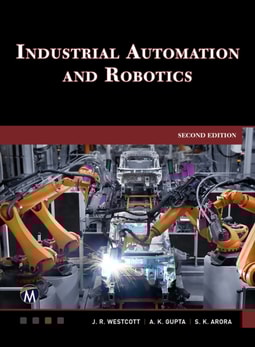
Comprehensive guide to industrial automation and robotics, covering fluid power systems, control mechanisms, and AI integration for enhanced operational efficiency.
Comprehensive guide to industrial automation and robotics, covering fluid power systems, control mechanisms, and AI integration for enhanced operational efficiency.
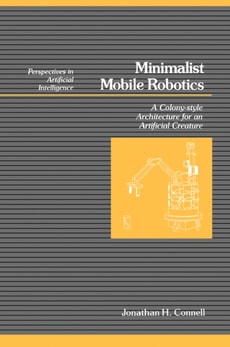
Rather than using traditional artificial intelligence techniques, which are ineffective when applied to the complexities of real-world robot navigaiton, Connell describes a methodology of reconstructing intelligent robots with distributed, multiagent control systems.
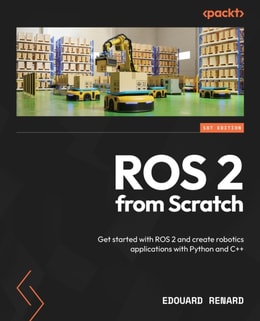
A comprehensive, step-by-step guide to understanding the basics of robotics and creating your own robotics applications within days, not monthsGet With Your Book: PDF Copy, AI Assistant, and Next-Gen Reader FreeKey FeaturesBuild a strong foundation in ROS 2 and instill confidence for future robotics projectsLeverage best practices to create scalable ROS 2 applications with Python and C++Follow a step-by-step process to create and simulate a custom robot using ROS 2Book DescriptionROS 2 from Scratch, written by the cofounder of a robotics company with years of experience in teaching and engineering, will equip you with the skills necessary to develop cutting-edge robotic systems efficiently.
La obra surge de una búsqueda colectiva de herramientas y métodos de aproximación y comprensión de las dinámicas, patrones y acciones de ocupación y construcción de los asentamientos espontáneos, que se han sucedido en Colombia a través del tiempo y que en los últimos sesenta años, se han intensificado por razones de desplazamiento forzado, violencia y falta de oportunidades en el campo.
Accessible to all readers, including students of secondary school and amateur technology enthusiasts, Robotics, Mechatronics, and Artificial Intelligence simplifies the process of finding basic circuits to perform simple tasks, such as how to control a DC or step motor, and provides instruction on creating moving robotic parts, such as an "e;eye"e; or an "e;ear.
This book offers in-depth ethnographic analyses of key informants' interviews on the ecological urbanism and ecosystem services (ES) of selected green infrastructure (GI) in Yoruba cities of Ile-Ife, Ibadan, Osogbo, Lagos, Abeokuta, Akure, Ondo, among others in Southwest Nigeria.
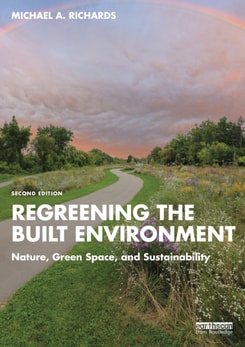
Now in its second volume, Regreening the Built Environment provides an overview of physical and social environmental challenges that the planet is facing and presents solutions that restore ecological processes, reclaim open space, foster social equity, and facilitate a green economy.
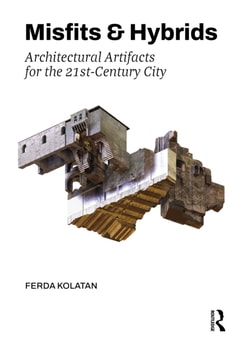
Contemporary cities are shaped by the unlikely adjacencies of objects that are vastly different in kind, origin, and scale: buildings, infrastructure, and other urban components that over time accumulate into mismatched configurations.
The declared goal of this book, an extended and revised translation of the German edition (2021), is to show how a unified model of the psyche and body can be developed via insights from psychoanalysis, neurology and computer technology.
This book offers in-depth ethnographic analyses of key informants' interviews on the ecological urbanism and ecosystem services (ES) of selected green infrastructure (GI) in Yoruba cities of Ile-Ife, Ibadan, Osogbo, Lagos, Abeokuta, Akure, Ondo, among others in Southwest Nigeria.
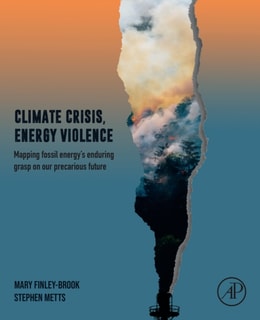
Climate Crisis, Energy Violence: Mapping Fossil Energy's Enduring Grasp on Our Precarious Future communicates the breadth and scope of fossil fuel infrastructure and its global impact.
This book considers and examines the concept of a Smart City in the context of improving the quality of life and sustainable development in Central and Eastern European cities.
This book considers and examines the concept of a Smart City in the context of improving the quality of life and sustainable development in Central and Eastern European cities.
Architecture and Social Behavior (1977) is a groundbreaking study that presents the findings from a five year programme of research concerned with evaluating the impact of architectural design on behavior.
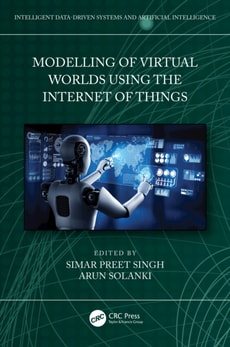
The text presents aspects of virtual worlds and highlights the emerging trends in simulation and modeling, comprising machine learning, artificial intelligence, deep learning, robotics, cloud computing, and data mining algorithms.
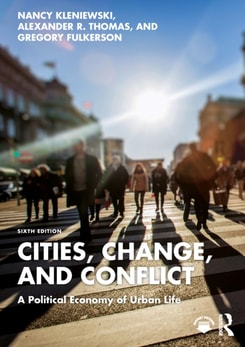
Cities, Change, and Conflict was one of the first texts to embrace the perspective of political economy as its main explanatory framework, and then complement it with the rich contributions of human ecology as well as perspectives derived from critical approaches to social theory.