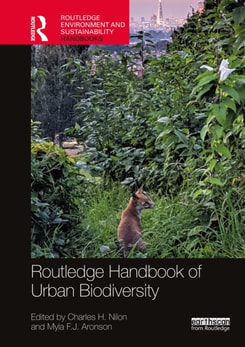
This new handbook provides a platform to bring together multidisciplinary researchers focusing on greening high-density agglomerations from three perspectives: climate change, social implications, and people's health.
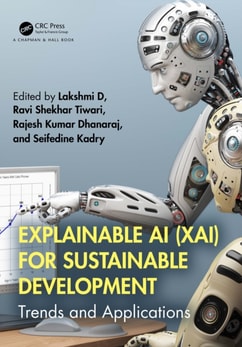
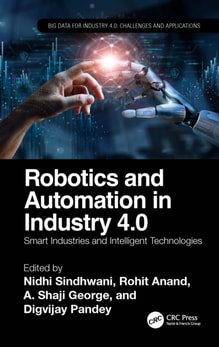
The application of internet of things (IoT) technologies and artificial intelligence (AI)-enabled IoT solutions has gradually become accepted by business and production organizations as an effective tool for automating several activities effectively and efficiently and developing and distributing products to the global market.
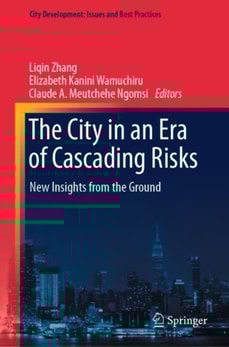
This book provides unique perspectives into newly changed political and socioeconomic urban landscapes due to COVID-19 in diverse cities and aims to provide ways to improve the resilience of cities using a global perspective, especially in a post-pandemic era.
This book explores the attributes of an integrated model for infrastructure delivery as a means to achieve high impact investing, sustainable growth and development in a developing economy.
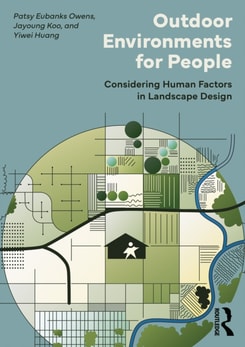
Outdoor Environments for People addresses the everyday human behavior in outdoor built environments and explains how designers can learn about and incorporate their knowledge into places they help to create.
Outdoor Environments for People addresses the everyday human behavior in outdoor built environments and explains how designers can learn about and incorporate their knowledge into places they help to create.
Recurring and worsening flood incidence around the world has necessitated the understanding and strengthening of community-based flood risk management from an international perspective.
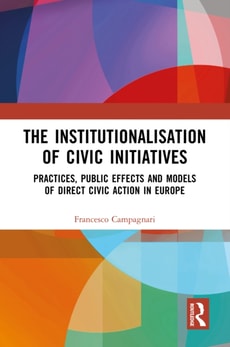
This book examines two civic initiatives in Europe and analyses their evolution through the institutionalisation of their practices, local public effects, and established models for action at broader scales.
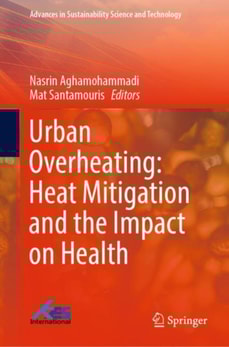
The book reviews and reports the recent progress and knowledge on the specific impact of current and projected urban overheating as well as of the urban mitigation technologies on mortality and morbidity and urban vulnerability.
This book examines two civic initiatives in Europe and analyses their evolution through the institutionalisation of their practices, local public effects, and established models for action at broader scales.
This book begins with a brief background on greenhouse gases sources and sinks and continues with a discussion in different sectors including forest fluxes to human health and modeling techniques to policy measures.
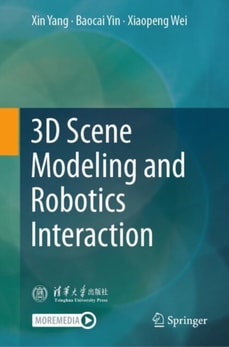
This book focuses on the intelligent perception and interaction module in intelligent robotic systems, establishes a multidisciplinary cross-fertilization knowledge system, explores the related technology frontiers and research frontiers as comprehensively as possible from the perspective of scene modeling and understanding, and develops a practical exposition of practical application tasks such as robotic navigation, obstacle avoidance, and grasping.
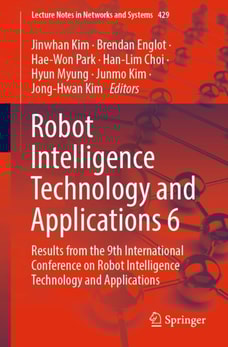
This book aims at serving the researchers and practitioners in related fields with a timely dissemination of the recent progress on robotics and artificial intelligence.
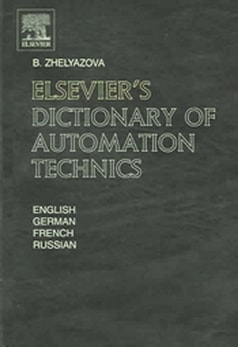
This dictionary contains 13,000 terms with more than 4,000 cross-references used in the following fields: automation, technology of management and regulation, computing machine and data processing, computer control, automation of industry, laser technology, theory of information and theory of signals, theory of algorithms and programming, philosophical bases of cybernetics, cybernetics and mathematical methods.
Artificial Intelligence: An Introduction to Big Ideas and their Development, Second Edition guides readers through the history and development of artificial intelligence (AI), from its early mathematical beginnings through to the exciting possibilities of its potential future applications.
Mobile Roboter besitzen das Potenzial, zu deutlichen Effizienzsteigerungen in der Fertigung kohlenstofffaserverstärkter Kunststoffe zu führen, wenn sie die aktuell üblichen Sondermaschinen ersetzen.
Covering theory and practical industry usage of the finite element method, this highly-illustrated step-by-step approach thoroughly introduces methods using ANSYS.
This book takes an interdisciplinary, institutional, and historically informed approach to the economics of transport, providing a more nuanced and complete understanding of human transport choices, individually and collectively, and the related choice of location, including the formation of cities.
A complete, up-to-date infrastructure planning resourceThoroughly revised to address sustainability and the latest codes and regulations, Infrastructure Planning, Engineering and Economics, Second Edition, describes the full range of skills necessary to plan, implement, upgrade, and maintain infrastructure projects in the public sector.