The hardy, multipurpose Dominique chickens that came to the New World with the Pilgrims and later traveled in pioneer saddlebags to help settle the West were once too numerous to count; by 1990 a mere 500 hens survived.
Perhaps it is not possible to experience all the mysterious sounds, the unfamiliar smells, and the spectacular sights of a tropical rainforest without ever visiting one.
From the world-famous expert on chimpanzees - the powerfully compelling sequel to the international bestseller IN THE SHADOW OF MAN: 'An instant animal classic' Time'I can't imagine a more vivid or unexpectedly moving introduction to chimpanzees in the wild than Jane Goodall's' New York TimesEquipped with little more than a notebook, binoculars, and her fascination with wildlife, Jane braved a realm of unknowns to give the world a remarkable window into humankind's closest living relatives.
'One of history's most impressive field studies; an instant animal classic' TIMEJane Goodall's classic account of primate research provides an impressively detailed and absorbing account of the early years of her field study of, and adventures with, chimpanzees in Tanzania, Africa.
As human activity and environmental change come to be increasingly recognized as intertwined phenomena on a rapidly urbanizing planet, the field of urban ecology has risen to offer useful ways of thinking about coupled human and natural systems.
From the Flint water crisis to the Dakota Access Pipeline controversy, environmental threats and degradation disproportionately affect communities of color, with often dire consequences for peoples lives and health.
Using the lens of nutrition security and equity for the living beings and living systems of the planet, Nutrition Security for Planetary Health takes an integrated, systems approach that not only delineates the antecedents of the multifaceted environmental crises-but offers solutions including the extensive co-benefits of whole plant foods nutrition as the foundational dietary pattern for improving planetary health.
An examination of whether accountability mechanisms in global environmental governance that focus on monitoring and enforcement necessarily lead to better governance and better environmental outcomes.
Analyses of the international climate change regime consider the challenges of maintaining current structures and the possibilities for creating new forms of international cooperation.
How solar could spark a clean-energy transition through transformative innovation—creative financing, revolutionary technologies, and flexible energy systems.
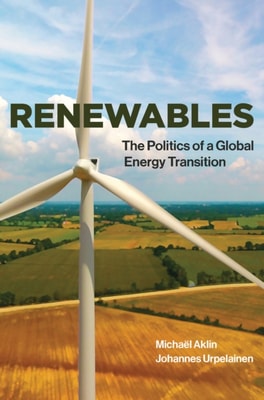
A comprehensive political analysis of the rapid growth in renewable wind and solar power, mapping an energy transition through theory, case studies, and policy.
The first comprehensive political science account of energy poverty, arguing that governments can improve energy access for their citizens through appropriate policy design.
An examination of why NGOs often experience difficulty creating lasting change, with case studies of transnational conservation organizations in Southeast Asia and the Pacific.
A proposal to reframe the Anthropocene as an age of actual and emerging coexistence with earth system variability, encompassing both human dignity and environmental sustainability.
The politics of scientific advice across four environmental conflicts in Chile, when the state acted as a “neutral broker” rather than protecting the common good.
The response from the jewelry industry to a campaign for ethically sourced gold as a case study in the power of business in global environmental politics.
What it means for global sustainability when environmentalism is dominated by the concerns of the affluent—eco-business, eco-consumption, wilderness preservation.
How the Regional Greenhouse Gas Initiative created a new paradigm in climate policy by requiring polluters to pay for their emissions for the first time.
Concepts and their role in the evolution of modern environmental policy, with case studies of eleven influential concepts ranging from “environment” to “sustainable consumption.
A comprehensive assessment and analysis of the validity, trustworthiness, and effectiveness, of such environmental ratings as ENERGY STAR, LEED, and USDA Organic.
A proposal for a new chemicals strategy: that we work to develop safer alternatives to hazardous chemicals rather than focusing exclusively on controlling them.
Essays that put noted political thinkers of the past—including Plato, Machiavelli, Hobbes, Wollstonecraft, Marx, and Confucius—in dialogue with current environmental political theory.
An analysis of how responsive governance has shaped the evolution of global fisheries in cyclical patterns of depletion and rebuilding dubbed the “management treadmill.
An account of the movement for sustainable development in Ecuador through four eras: movement origins, neoliberal boom, neoliberal bust, and citizens'' revolution.
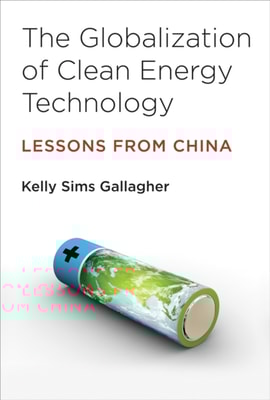
An examination of barriers that impede and incentives that motivate the global development and deployment of cleaner energy technologies, with case studies from China.
Campus leaders describe how community colleges, publicly funded universities, and private liberal arts colleges across America are integrating sustainability into curriculum, policies, and programs.
How the success and popularity of recycling has diverted attention from the steep environmental costs of manufacturing the goods we consume and discard.