Unlike nearly all science books which tell of successful ventures and satisfactory conclusions, this book reveals the harsher but more common side of scientific research.
During the late 1960s and 1970s, massive herds of poisonous crown-of-thorns starfish suddenly began to infest coral reef communities around the world, leaving in their wake devastation comparable to a burnt-out rainforest.
The evolutionary, ecological and behavioral questions posed by obligate brood parasites are among the most intriguing of all contemporary ornithological topics.
Ecology, Engineering, and the Paradox of Management is the first book that addresses and reconciles what many take to be the core paradox facing environmental decision-makers and stakeholders: How do they restore the environment while at the same time provide ever more services reliably from that environment, including clean air, water and energy for more and more people?
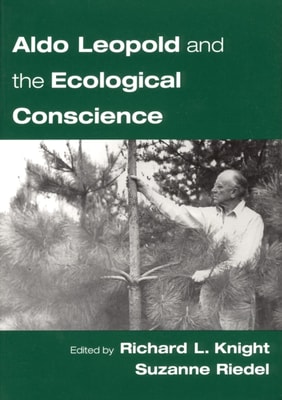
In Aldo Leopold and an Ecological Conscience ecologists, wildlife biologists, and other professional conservationists explore the ecological legacy of Aldo Leopold and his A Sand County Almanac and his contributions to the environmental movement, the philosophy of science, and natural resource management.
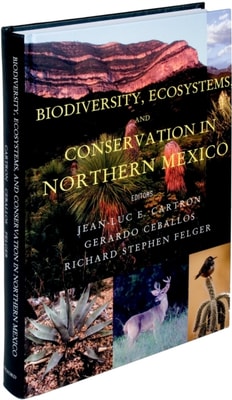
This book describes the biodiversity and biogeography of nothern Mexico, documents the biological importance of regional ecosystems and the impacts of human land use on the conservation status of plants and wildlife.
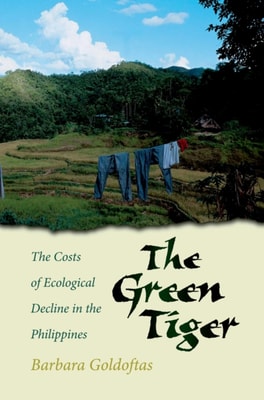
Once famous for the beauty of its white beaches, reef-ringed islands, and lush forests, today the Philippines is known as an example of the deep costs of ecological decline.
Molecular techniques are proving invaluable in determining the phylogenetic status of potentially endangered species, for investigating mechanisms of speciation, and for measuring the genetic structure of populations.
Two of the great mysteries of biology yet to be explored concern the distribution and abundance of genetic variation in natural populations and the genetic architecture of complex traits.
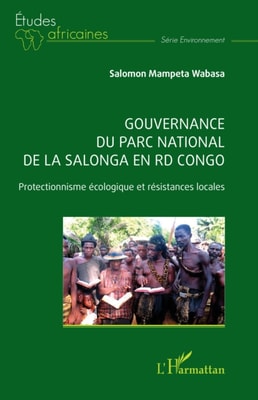
Cet ouvrage a l’ambition d’offrir un éclairage novateur au débat sur l’avenir des aires protégées en Afrique, et plus largement, sur la construction de modèles de gouvernance qui respectent à la fois la biodiversité et les réalités humaines.
Biogeography is the study of geographic variation in all characteristics of life - ranging from genetic, morphological and behavioural variation among regional populations of a species, to geographic trends in diversity of entire communities across our planet's sufrace.
Biogeography is the study of geographic variation in all characteristics of life - ranging from genetic, morphological and behavioural variation among regional populations of a species, to geographic trends in diversity of entire communities across our planet's sufrace.
Conservation physiology is a rapidly expanding, multidisciplinary field that utilizes physiological knowledge and tools to understand and solve conservation challenges.
News headlines would often have us believe that conservationists are inevitably locked in conflict with the people who live and work on the lands they seek to protect.
Life histories can be defined as the means by which individuals (or more precisely genotypes) vary their age- or stage-specific expenditures of reproductive effort in response to genetic, phenotypic, and environmental correlates of survival and fecundity.
Since the first edition of this book published in 2005, there has been an immense amount of new and fascinating work on the history, ecology, and evolution of the Mediterranean flora.
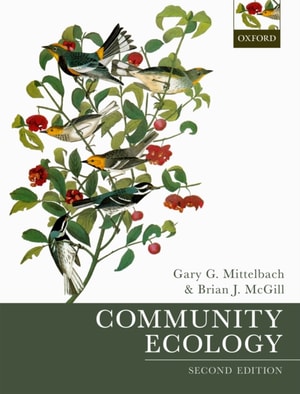
Community ecology has undergone a transformation in recent years, from a discipline largely focused on processes occurring within a local area to a discipline encompassing a much richer domain of study, including the linkages between communities separated in space (metacommunity dynamics), niche and neutral theory, the interplay between ecology and evolution (eco-evolutionary dynamics), and the influence of historical and regional processes in shaping patterns of biodiversity.
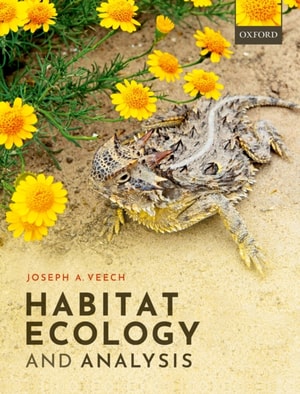
The identification and analysis of the particular habitat needs of a species has always been a central focus of research and applied conservation in both ecology and wildlife biology.
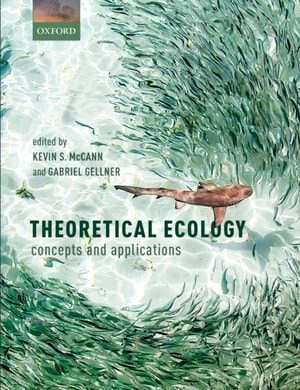
Theoretical Ecology: concepts and applications continues the authoritative and established sequence of theoretical ecology books initiated by Robert M.
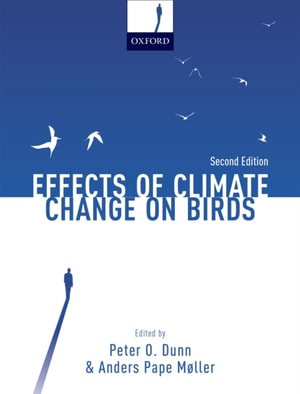
Climate change issues are attracting rapidly increasing interest from a wide range of biologists due to their unprecedented effects on global biodiversity, although there remains a lack of general knowledge as to the environmental consequences of such rapid change.
The second edition of this widely cited textbook continues to provide a concise but comprehensive introduction to cave and subterranean biology, describing this fascinating habitat and its biodiversity.
Sampling theory considers how methods for selection of a subset of units from a finite population (a sample) affect the accuracy of estimates of descriptive population parameters (mean, total, proportion).
Most people are familiar with the dodo and the dinosaur, but extinction has occurred throughout the history of life, with the result that nearly all the species that have ever existed are now extinct.
Most people are familiar with the dodo and the dinosaur, but extinction has occurred throughout the history of life, with the result that nearly all the species that have ever existed are now extinct.