There is a gap between the ecology of health and the concepts supported by international initiatives such as EcoHealth, One Health or Planetary Health; a gap which this book aims to fill.
Interest in the use of biomass for non-food applications has grown strongly in recent years, mainly as a consequence of its potential as a prime renewable energy resource.
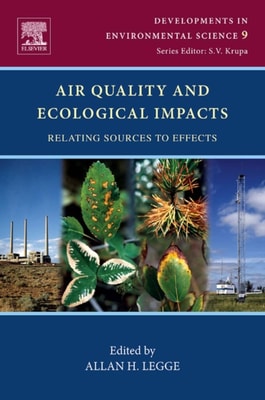
Air Quality and Ecological Impacts reviews the characterization of air quality as it pertains to specific emission sources and their environmental effect.
This edited volume examines how to develop a planning and design process with green infrastructure that creates technical answers to the social and ecological function of the city's climate change adaptations demands.
This book uncovers, explores and analyses the cultural and social factors and values that lie behind waste making, recycling and disposal in the Asia Pacific region, where impressive economic growth has led to significant increases in production, consumption and concomitant waste production.
A thorough revision and update of the first edition, this Second Edition is designed to create an awareness of the rapidly developing field of allelopathy.
Systemic change is required to move to a circular economy (CE) model which can meet the demands of a growing population in a manner that is decoupled from resource use and waste generation.
Systemic change is required to move to a circular economy (CE) model which can meet the demands of a growing population in a manner that is decoupled from resource use and waste generation.
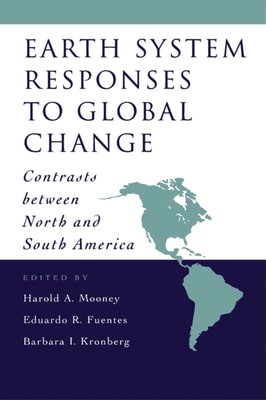
This book examines the differences and similarities in the earth system components - the ocean, atmosphere, and the land - between western portions of the northern and southern Western Hemispheres, past, present, and projected.
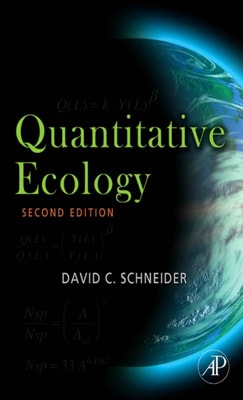
A follow-up to the highly successful first edition, this book reviews the manifold ways that scale influences the interpretation of ecological variation.
This book examines the impact and implications of Japan's withdrawal from the International Convention for the Regulation of Whaling (ICRW), which came into effect in July 2019.
Global climate change has created unprecedented challenges for human civilization due to its widespread adverse consequences, including a reduction in crop yield and threatening food security across the globe.
Australia is home to many distinctive species of birds, and Aboriginal peoples have developed close alliances with them over the millennia of their custodianship of this country.
The Rise of Green Extractivism tackles the understudied interconnections between extractivism and climate-smart policies and their implications for rural livelihoods, both theoretically and empirically.
This book provides a theoretical and empirical examination of the links between environmental change, land grabbing, and migration, drawing on research conducted in Senegal and Cambodia.
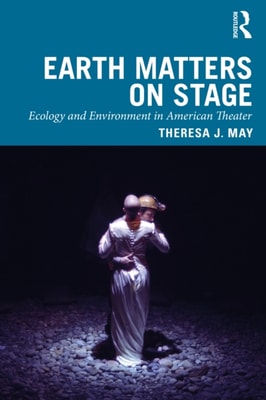
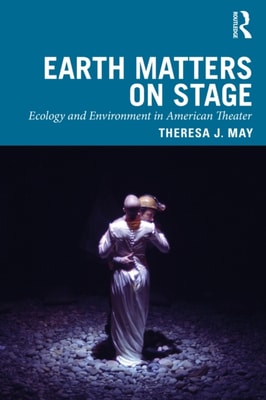
Earth Matters on Stage: Ecology and Environment in American Theater tells the story of how American theater has shaped popular understandings of the environment throughout the twentieth century as it argues for theater's potential power in the age of climate change.
Earth Matters on Stage: Ecology and Environment in American Theater tells the story of how American theater has shaped popular understandings of the environment throughout the twentieth century as it argues for theater's potential power in the age of climate change.
The proposed book aims to understand the mechanism of survival of microorganisms in response to chemical stress in various ecological niches that suffer direct human intervention, more so the agricultural, domestic and hospital settings.
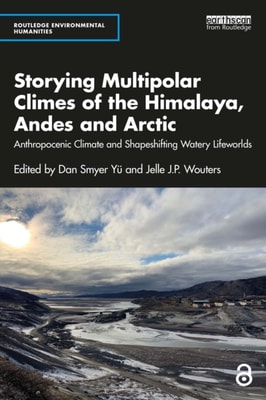
This book initiates multipolar climate/clime studies of the world's altitudinal and latitudinal highlands with terrestrial, experiential, and affective approaches.
This book is an important guide for individuals seeking to develop and grow their leadership skills in the wildlife conservation sector, across varied disciplines such as environmental management, conservation biology, and ecotourism.
This book is an important guide for individuals seeking to develop and grow their leadership skills in the wildlife conservation sector, across varied disciplines such as environmental management, conservation biology, and ecotourism.
From the Reviews of Previous Volumes"e;In reviewing this volume as a whole, one is struck by the quality and scholarship of the various chapters and the obviously efficient editing.
This book offers comprehensive insights into the latest developments in biodiversity, sustainability, and agri-food supply chains, fostering an informed approach to policymaking decisions in the agriculture and agri-food industry within the global economy.
This book offers comprehensive insights into the latest developments in biodiversity, sustainability, and agri-food supply chains, fostering an informed approach to policymaking decisions in the agriculture and agri-food industry within the global economy.
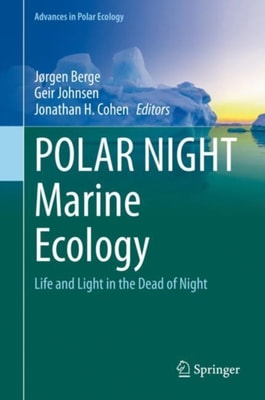
Until recently, the prevailing view of marine life at high latitudes has been that organisms enter a general resting state during the dark Polar Night and that the system only awakens with the return of the sun.
The Routledge Handbook of Law and the Anthropocene provides a critical survey into the function of law and governance during a time when humans have the power to impact the Earth system.
Global climate change has created unprecedented challenges for human civilization due to its widespread adverse consequences, including a reduction in crop yield and threatening food security across the globe.
Recognizing the increased interest in forest management world wide, this book addresses the current knowledge gap by defining sustainable forest management, clarifying methods by which ecological knowledge can be applied and how traditional silvicultural methods can be improved.
Utopianism, alongside its more prevalent dystopian opposite together with ecological study has become a magnet for interdisciplinary research and is used extensively to examine the most influential global medium of all time.
The book addresses the interdisciplinary and multiscale theme of the design of sustainable, inclusive and creative urban green spaces in relation to the socio-ecological transition and in line with the systemic vision promoted by the 2030 Agenda, the 17 Sustainable Development Goals (SDGs) and the principles outlined by the New European Bauhaus (European Commission, 2021).