Nine nautical miles off the east coast of peninsular Malaysia, strung along the middle arc of the Seribuat Archipelago, the roving eye will spot a clutch of sun-washed islands.
Volume IV of the Six Volume Remote Sensing Handbook, Second Edition, is focused on the use of remote sensing in forestry, biodiversity, ecology, land use and land cover, and global terrestrial carbon mapping and monitoring.
At 37 trillion individuals per year, wild-caught shrimp and prawns appear to be the single most numerous group of animals directly killed for human food consumption on the planet.
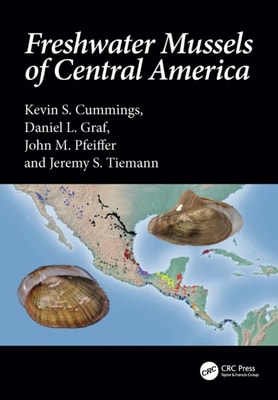
This book describes a fauna of global conservation concern and provides a framework for researchers to begin to test hypotheses regarding the evolution of freshwater mussels in Central America.
Technological improvements have greatly increased the ability of marine scientists to collect and analyze data over large spatial scales, and the resultant insights attainable from interpreting those data vastly increase understanding of poplation dynamics, evolution and biogeography.
This book presents a review of the state-of-the-art knowledge on the interactions between biodiversity and wind energy development, focused on the Portuguese reality.
Extending law beyond the human, the book probes the conceptual openings, methodological challenges and ethical conundrums of law in a time of deep socio-ecological disturbances and transitions.
This book brings a unique perspective to animal movement studies because all cases came from tropical environments where the great diversity, either biological and structurally (trees, shrubs, vines, epiphytes), presents the animal with several options to fulfill its live requirements.
Global Wild Edibles of Deserts: Food Security and Sustainability provides coverage of topics in food and health in desert rangelands, using an interdisciplinary approach that considers health not only in a functional and human sense, but also in terms of external factors including aridity.
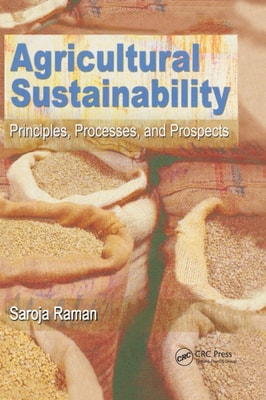
Take a balanced look at ways to ensure food security and to work to erase hunger around the worldAgriculture is the most aggressively managed ecosystem.
Partant de l’étude du geste de l’homme à cheval du XVe au XXe siècle à travers les traités d’équitation classique, l’auteur explore l’hypothèse selon laquelle il existerait « un code partagé » au cœur des communications interspécifiques entre humains et non-humains.
A fully up-to-date, comprehensive wind energy engineering resourceThis thoroughly updated reference offers complete details on effectively harnessing wind energy as a viable and economical power source.
En una época en que la lealtad humana hacia el mundo natural parece en entredicho, 'Parentesco' ofrece historias de solidaridad que subrayan la profunda interdependencia existente entre los humanos y el mundo no humano.
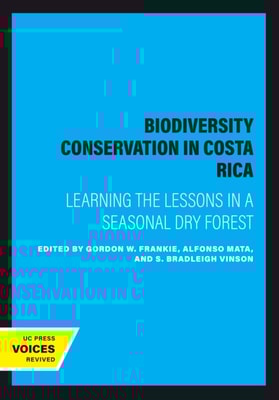
The beautiful tropical dry forest of northwest Costa Rica, with its highly seasonal rainfall and diversely vegetated landscape, is disappearing even more rapidly than Costa Ricas better-known rain forest, primarily because it has been easier to convert to agriculture.
This book proposes a conceptualisation of Multilateral Environmental Agreements as a form of International Organisations, exploring the ways in which they have expanded over time by discussing the nuances of authority in global governance.
These papers derive from a workshop on "e;Quaternary Sedimentary Records in Central Africa and their Palaeoenvironmental Interpretation"e;, held at the 15th INQUA Congress.
These papers derive from a workshop on "e;Quaternary Sedimentary Records in Central Africa and their Palaeoenvironmental Interpretation"e;, held at the 15th INQUA Congress.
This reference provides up-to-date information on research in many different disciplines which give an overall insight into the environmental history of Africa.
This reference provides up-to-date information on research in many different disciplines which give an overall insight into the environmental history of Africa.
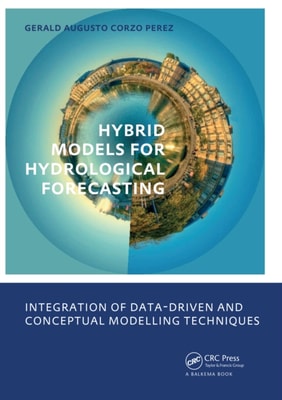
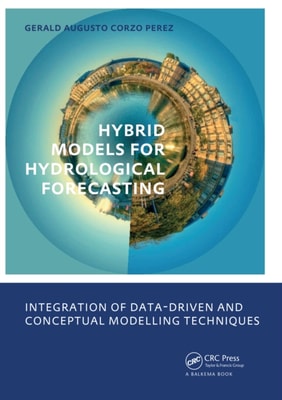
This book presents the investigation of possibilities and different architectures of integrating hydrological knowledge and conceptual models with data-driven models for the purpose of hydrological flow forecasting.
This book presents the investigation of possibilities and different architectures of integrating hydrological knowledge and conceptual models with data-driven models for the purpose of hydrological flow forecasting.
This volume in the Fundamentals for the Water and Wastewater Main Operator series covers the basics of piping and valves in water and wastewater plants, including details on fittings, strainers, filters, traps and control systems.
This volume in the Fundamentals for the Water and Wastewater Main Operator series covers the basics of piping and valves in water and wastewater plants, including details on fittings, strainers, filters, traps and control systems.
Take the Power Back is a practical and inspiring guide for anyone ready to rethink energy, including individuals, communities, companies and institutions.
In an era defined by unprecedented environmental challenges and technological breakthroughs, Smart Technologies for a Sustainable Environment stands as a visionary compendium of cutting-edge research and transformative solutions.
Take the Power Back is a practical and inspiring guide for anyone ready to rethink energy, including individuals, communities, companies and institutions.
In an era defined by unprecedented environmental challenges and technological breakthroughs, Smart Technologies for a Sustainable Environment stands as a visionary compendium of cutting-edge research and transformative solutions.