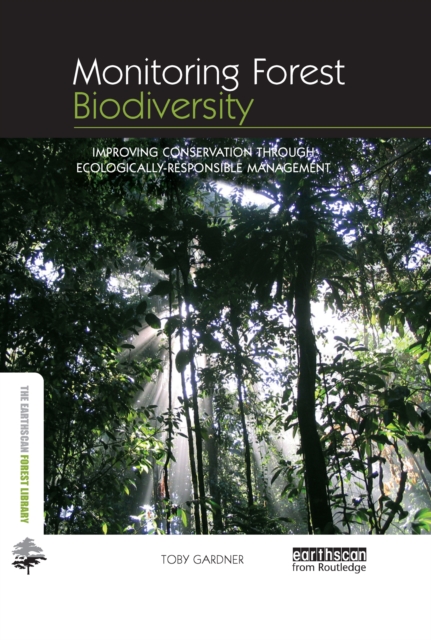
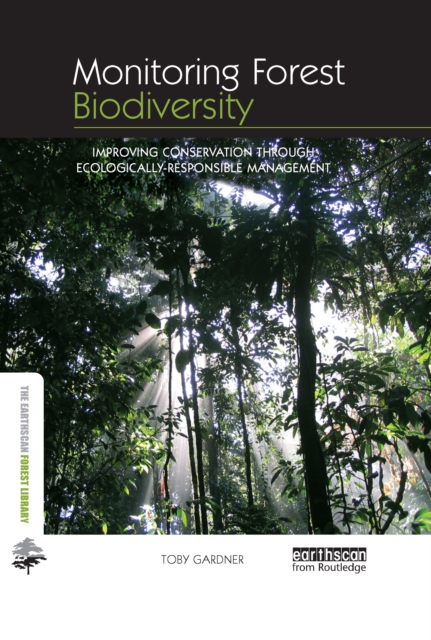
The fate of much of the world's terrestrial biodiversity depends upon our ability to improve the management of forest ecosystems that have already been substantially modified by humans.
The fate of much of the world's terrestrial biodiversity depends upon our ability to improve the management of forest ecosystems that have already been substantially modified by humans.
The dry forests and woodlands of Sub-Saharan Africa are major ecosystems, with a broad range of strong economic and cultural incentives for keeping them intact.
The dry forests and woodlands of Sub-Saharan Africa are major ecosystems, with a broad range of strong economic and cultural incentives for keeping them intact.
Global environmental change (GEC) represents an immediate and unprecedented threat to the food security of hundreds of millions of people, especially those who depend on small-scale agriculture for their livelihoods.
Global environmental change (GEC) represents an immediate and unprecedented threat to the food security of hundreds of millions of people, especially those who depend on small-scale agriculture for their livelihoods.
Food is increasingly traded internationally, thereby transforming the organization of food production and consumption globally and influencing most food-related practices.
Food is increasingly traded internationally, thereby transforming the organization of food production and consumption globally and influencing most food-related practices.
This book provides a critical assessment of the contemporary global food system in light of the heightening food crisis, as evidence of its failure to achieve food security for the world's population.
This book provides a critical assessment of the contemporary global food system in light of the heightening food crisis, as evidence of its failure to achieve food security for the world's population.
In spite of the expanding role of public participation in environmental decisionmaking, there has been little systematic examination of whether it has, to date, contributed toward better environmental management.
In spite of the expanding role of public participation in environmental decisionmaking, there has been little systematic examination of whether it has, to date, contributed toward better environmental management.
Prato and Fagre offer the first systematic, multi-disciplinary assessment of the challenges involved in managing the Crown of the Continent Ecosystem (CCE), an area of the Rocky Mountains that includes northwestern Montana, southwestern Alberta, and southeastern British Columbia.
The vast size of the United States and extensive variation of its climate, topography, and biota across different regions contribute to both the richness of the nation's natural heritage and the complexities involved in managing its resources.
The vast size of the United States and extensive variation of its climate, topography, and biota across different regions contribute to both the richness of the nation's natural heritage and the complexities involved in managing its resources.
Environmental Management Systems (EMSs) offer an approach to regulatory policy that lies somewhere between free-market and traditional command-and-control methods.
Environmental Management Systems (EMSs) offer an approach to regulatory policy that lies somewhere between free-market and traditional command-and-control methods.
Nutrients from farms in the Mississippi River Basin are the leading cause of the Gulf of Mexicoa s 'Dead Zone,' a 5,000 to 7,000 square mile region where declining oxygen levels are threatening the survival of marine life.
Nutrients from farms in the Mississippi River Basin are the leading cause of the Gulf of Mexicoa s 'Dead Zone,' a 5,000 to 7,000 square mile region where declining oxygen levels are threatening the survival of marine life.
As a low-lying delta region with a high population density, the Netherlands has long focused on the prevention of flooding catastrophes and the reclamation of valuable land.
As a low-lying delta region with a high population density, the Netherlands has long focused on the prevention of flooding catastrophes and the reclamation of valuable land.
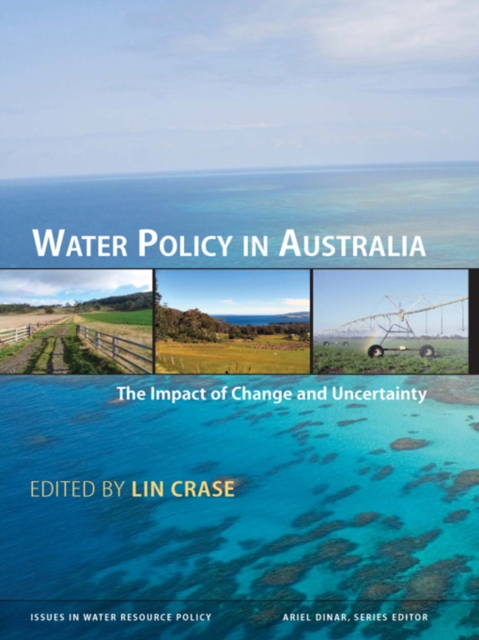
In the last twenty years, policy makers in Australia have been forced to acknowledge that it is not possible to perpetually supply more water at a low cost.
In the last twenty years, policy makers in Australia have been forced to acknowledge that it is not possible to perpetually supply more water at a low cost.
Leveraging the Private Sector offers the first sustained analysis of public and private sector initiatives designed to encourage firms and industries to use their own management expertise to improve their environmental performance.